
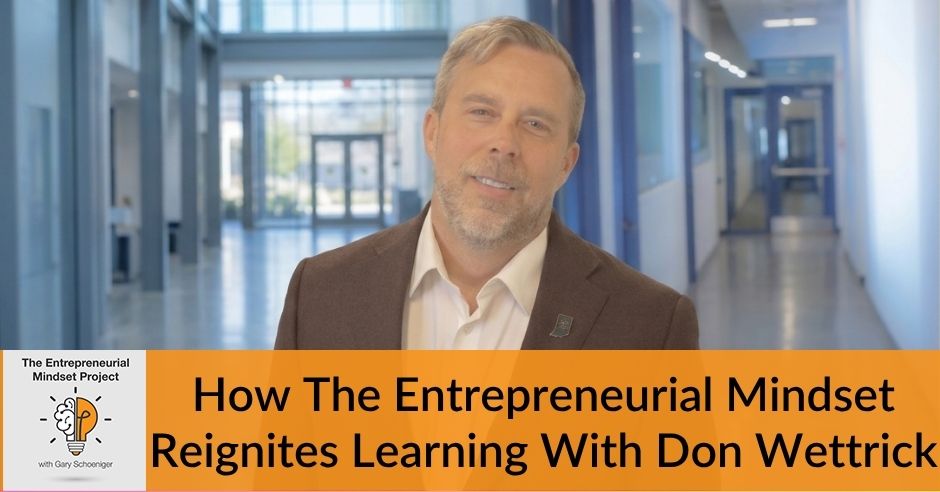
What if the future belongs not to those who follow directions, but to those who can think for themselves?
That’s the question at the heart of this conversation with Don Wettrick — an educator, speaker, and founder of the Innovate Within movement. Long before “future-ready skills” became an educational buzzword, Don was building classrooms where students were given something rare: autonomy, purpose, and the freedom to pursue problems that actually mattered to them.
In this episode, Gary and Don explore why so many entrepreneurs dislike school but love to learn, why traditional education often suppresses the very capacities students need to thrive, and why agency, adaptability, and self-directed value creation may be the most important human skills in an AI-driven world.
This is a conversation about motivation, discovery, and what becomes possible when we help young people solve problems they genuinely care about.
—
Listen to the podcast here
How The Entrepreneurial Mindset Reignites Learning With Don Wettrick
What if the future belongs not to those who can follow directions, but to those who can think for themselves? Welcome to another episode of the show, where we explore the hidden logic that enables ordinary people to accomplish extraordinary things. My guest is Don Wettrick, an educator, speaker, and founder of the Innovate Within movement. Long before phrases like future-ready skills became educational buzzwords, Don was busy building classroom environments where students were given something increasingly rare.
A sense of autonomy, purpose, and the freedom to pursue meaningful goals. What emerged was not just higher engagement, it was something much deeper. Students began to launch real-world projects that helped them gain confidence and develop real-world skills. As a result, they began to discover levels of engagement, adaptability, and resilience they did not know they had.
In this conversation, we discuss why so many entrepreneurs dislike school but love to learn, why traditional education systems often suppress the problem-solving capacity, the creative energy, and the self-directed initiative that every student will need to adapt and thrive in a rapidly changing world. We also discuss why agency, adaptability, and self-directed value creation may be the most important human capacities in an AI-driven world.
We also unpack the psychology of motivation, the power of entrepreneurial discovery learning, and why the simple act of helping young people solve meaningful problems may completely change the trajectory of their lives. This interview gives us some insight into how to prepare students to thrive in a world that we can barely comprehend. Without any further ado, I hope you enjoy my conversation with Don Wettrick.
—
Don, thanks for joining the show. Don, talk to me about how you got mixed up in the entrepreneurship education game.
Origins Of The Innovation And Open Source Learning Class
By accident, I guess that would probably be the quickest answer. I always regret that I do not have this email anymore. I was teaching at a different school. This was like 2012. I just got this email during lunch, and it was a link to this TED talk by a guy named Daniel Pink who said, “You’ve got to watch this. It is all said.” I click on it, I watch it on my lunch break, and I am like, “We should do that in school.” It was an earlier TED Talk, and it talked about what motivated people, and it was Master of Autonomy and Purpose.
I am sitting there thinking, “We do some of these things in school, but not enough.” Quite frankly, I was always stopped by my parents, and they would say, “They should teach in today’s school.” A lot of times, it would revolve around money, leadership, and a few other things. I get into this whole thing about what they were doing at Atlassian and then, more famously, Google, that they were giving their employees one day a week that they could work on whatever they wanted to work on.
Google just wanted to glean what information and what you are doing. Long story short, I introduced this class, and I recruited students and said, “The class is going to be called innovation and open source learning.” It is innovative because it is going to be what you want to do. It is open source because 90% of the things my kids said they wanted to do, I had no background in, and that was fine.
What age group are you talking about here?
High school students. There is a right place, right time. This was right when YouTube started to monetize. It was in those early days. I started off with some kids going, “I want to learn how to do this and put it to use.” Looking back on it, that is the building block of entrepreneurship. What we were not doing was that this was not a class where we would put together a business plan. We would not do a speech competition. No kids were dressing up, matching ties, and doing a plan competition.
It was like, “What do you want to do with this class, and who do you want to connect with?” That is where we hit again, we were at the right place, right time. We started reaching out to some people, and the number one group of people that kept getting back to us were entrepreneurs. I have never met a group of people who struggled or even disliked school, but loved learning more than entrepreneurs.
They were calling into our class, and they were like, “How did you get away with this? Where was this class when I was sixteen?” That was when it dawned on us that we had an entrepreneurship class. Ironically enough, it was Tim Ferriss who pointed out to us, “No, this is an entrepreneurship class. It is an innovation class. You guys are acquiring skills and putting them to use and starting something.
This isn’t just an entrepreneurship class—it’s innovation in action. You learn skills, apply them, and start something. That’s true entrepreneurship. Share on XThat is an entrepreneurship class in the truest sense.” That is how it started. We just kept asking people. The open source learning part is where, again, we hit the jackpot because some of our kids were just like, “Why not us?” We were reaching out to people and saying, “Can you spare 35 to 40 minutes to Skype into our classroom and impart some knowledge on us?” We got more yeses than nos.
Applying The Principles Of Autonomy, Mastery, And Purpose
There is so much unpacked there, Don. Let’s go back to the Daniel Pink thing for a second. I want to help the listener understand what you are talking about. I have watched the TED talk, and he took the work of Deci and Ryan, who are like very prominent social psychologists. That I would describe as the guys that basically brought us out of the dark ages of behaviorism, like do this and you will get that, like punished reward systems, which we now know are impoverished. They are just a very limited, weak form of human motivation. Nevertheless, they are very deeply embedded in the standard education system. Can you talk a little bit about that, Don? What is it in the Daniel Pink TED Talk that got you?
He would start talking about what motivates people to master autonomy and purpose, and everything made sense to me. I am 53, so they did not have a term for attention deficit disorder when I was a kid. I am sure I have it, but the desire for mastery.
Can I interrupt you for a second?
Yeah.
I do not think that is a disorder. I am sorry.
It is a freaking superpower.
Do you know what it is? It is a label they put because I just think it is inhumane, specifically for little boys. They will put them in a classroom and lecture to them all day long.
I do not want to go off on a side tangent, but all the things we steered people away from were ushering back. Right now, smiling ear to ear, a lot of schools like, “We should take a look at the trades again.” ADD is a superpower. I stand by it.
Just take the last D off of it. Let’s rename it.
Shiny Object Syndrome. Excitement for Life Syndrome.
Let’s call it boredom evasion syndrome.
That is a good one. Although I eventually learned what Enneagram 7 was, I am like, “That is ADD.” I am listening to it and watching it, and I am like, everything rang true to me. The desire for mastery. That was, to me, video games of the 80s. It was some pattern recognition. It was like, “Donkey Kong was insanely hard, but easy enough to keep going to a certain level after so many quarters. Autonomy. Would you leave me alone? This is important to me. Purpose, this is important to me.” I was asking myself, when do I have that kind of environment in my classroom?
Luckily enough, a decent amount because I taught one section of freshman English, but then I had several sections, like video editing and even a documentary film class. I am like, “He has just described my documentary class.” I was only getting the students who really wanted to do film and videography. I was like, “What if I opened up the floodgates and said, ‘I have got this class for anybody?’” That was how I was recruited.
I would ask them, if school did not get in your way, what would you want? You had to be here. I can hold you accountable. What were the things you would want to learn and acquire, and how could you put them to use? That was the class. I am very blessed at the right place, right time, but this whole thing of you could be a YouTuber, and you are going to be able to make money on YouTube was the easiest dangling carrot for a lot of my students that I already currently have, and I recruited some more. Listening to that Ted Talk, everything was like, “I should do that in school.”
Also, the power of how we launched the class. I was just naive enough to go, “I should give that guy a call, and maybe he will help me.” I did not know who Dan Pink was back then. I’m shocked that he called back and was like, “How can I be helpful?” His introductions allowed my schools to take it more seriously. We just kept open-sourcing and kept learning from other people, and then training our kids to go like, “Why not us? Why wouldn’t we reach out to Tim Ferriss? Why wouldn’t we reach out to fill in the blank name? We want to learn, and we keep realizing.
A lot of those bigger-name people respond to a seventeen-year-old before they will respond to a 40-year-old. You leverage that, right?
We had a formula. I am so glad you said that, Gary. We had a formula, and we did it by accident. One day, there was an influential person who was not responding to us. Essentially, there were three girls in my class, and they said, “Take a picture of us.” I am like, “What?” Like, “Just take a picture of us looking really sad.” Because we had used it back when it was Twitter before, it was a political hellscape.
We had like 30 kids in my room. We took this picture of us looking sad and tweeting to the person, like, “We are so sad that you are ignoring our request.” They would like it, comment on it, and retweet it so that person would get 90 interactions like that. That made people go, “Okay.” To your point, if a sixteen-year-old is like, “Please, it is so disappointing you are not getting back with us. It had power in it.”
Teaching Students The Strategy Of Reaching Out To Influential People
Don, let me just double-click on that for a second. That in and of itself can be a life-changing experience for a seventeen-year-old. It is just not backing down at the first no. Anyway, that in itself. If there could be a class just on that. I am going to reach out to people who are more successful public figures, richer than you, smarter than you, and more successful than you, and try to have an interaction with them. That should be a class.
It is funny you say that because I will give away who that person was because it was like chapter five of a four-hour work week. We read this thing from a four-hour work week, and Tim Ferriss visited a college classroom, and he is like, “I think he put up a cash reward for whoever could get back to the person they really wanted to interview.” The crux of the story of it none of the kids tried. That is when the kids go, then let us have this guy call into our classroom. When he did not respond to it, they were like, “Let us guilt him into it. We are taking your own advice from chapter five.”
By the way, the most magical thing happened, this is literally when I saw in their eyes like a lot more things were accomplishable. I thought this was like a landmark moment. I remember where it was. It was October 30th, Halloween 2015, or maybe it was 2016. One of those two. Just seeing them come up with the strategy and them getting on social media, liking it, commenting on it, nudging them. It took less than two minutes, literally. I put the phone in my pocket.
I am whiteboarding, and all of a sudden, I hear the little notification buzzer going off. I am like, “Wait.” I look at my phone, “Tim Ferriss now follows you.” I am like, “Guys, he saw it. He acknowledged it.” Tim Ferris liked your comment and then DM 30 seconds later, “You got me. Let’s set up a call tomorrow.” The kids were like, they were immediately going to, “Who else should we ask?” By the way, we had some people, but they never got back to us. We did not bat a thousand. We were batting better than Ted Williams.
It is like rejection therapy. If Tim Ferriss talks like that is the superpower you’re actually teaching.
They eventually also figured out that if I asked, “Why do you want to talk to this person?” I’ll just give you an example, and this did not happen. A kid says, “I want to interview Peyton Manning.” I said, “Why?” “It’s because he is awesome.” This is not the Chris Farley show. Peyton, you are awesome. If they had said, “I want to interview Peyton.” “Why?” “I would let them know what it is like to come over a neck injury and then come back from that and then win another Super Bowl.”
I would ask them, “Who do you really want to talk to?” They would say, “His orthopedic surgeon or his physical trainer.” That person will say yes to you. If they really enjoyed your interaction in class, they may introduce you to Peyton. We would do those kinds of things, where if they wanted to interview a YouTuber, they knew the sweet spot was somebody who had at least 200,000 followers, but not more than 3 million. More than 3 million, they were not seeing it.
Their team was seeing it, and they had gatekeepers. The kids were getting really good at strategy, too. All that was just, as you’re pointing out, its own class. Honestly, it gave them such a sense of, even if it is a humble brag. That one time when I was talking to Tim and I asked him a question about blah, blah, blah, it was cool. It gave them the confidence and also the strategy of knowing how to reach out to people. They also gleaned from the fact that can I pick your brain will never work. I have noticed that you have posted this maybe helpful.
Transitioning From Other-Directed To Self-Directed Value Creation
We are in trouble, Don, because we are never going to get this conversation done in 90 minutes. My bad. No, it is so good. I have been thinking a lot about this very concept, and I love that you’re doing this for kids in high school because a psychologist would call those somatic markers, which have a lasting impact on mindset. I want to unpack this part of the story right here. Part of what I want to get at with you, Don, is that knowledge and skills are important.
I am not saying they are not, but people are missing a mindset. Mindset is not really about knowledge. It is not about skill. It is about agency and adaptability. Your ability to make your way in the world, your ability to create value, like self-directed value creation. I was just doing some work in Mexico two weeks ago at the university system in Mexico, training non-entrepreneurship faculty on how to cultivate entrepreneurial thinking in the classroom. It comes down to something that you intimated at the beginning of this conversation.
People are telling you, “Don, that is entrepreneurship.” You are like, “No, it is not. It is open source. It is whatever.” The fundamental shift that has to happen is away from other-directed value creation towards self-directed value creation. That is the differentiator. That is how I would define entrepreneurship. It is like you are engaged in self-directed value creation. You could do that at your job at Taco Bell. You are doing what is expected of you, but you are going a little bit above and beyond.
I do not want to get too goddamn academic here, Don, but Julian Rotter had this idea of like locus of control, perceived locus of control, like external versus internal has a huge impact on your life, but you’re not even aware of it. I am trying to come up with a quasi-academic, pseudo-scientific term like perceived locus of value creation. I met some really smart people with lots of letters after their name that find them like in the absence of somebody telling them how to make themselves useful, are lost. I have met some people who could not like IQ tests their way out of a wet paper bag. That is crushing it. That is what your story is getting at.
It is. The hardest part in our journeys is the people who like, but have not thought of, “No, I am not. I am just doing this.” No, this way of thinking, ironically, is now the gold standard.
What way of thinking?
Thinking like an entrepreneur, seeing where things are, because a lot of educators, by the way, it is nobody’s fault.
It is everybody’s fault.
It is true. Everybody learns how to code. Everybody, stop what you’re doing and learn how to code. Everybody, good kids go to good colleges, and they get good grades. That magical job is waiting for them. By the way, they had history on their side. They had a long way. As people started to see the horizon, things like this no longer make sense. Now people want to say the quiet part out loud of what is in demand. Ironically enough, I just saw The Diary of the CEO. There was a guy there who had to look it up.
Steven Bartlett was going down this rabbit hole of like, there are some bad things coming. Where are the jobs? Daniel Priestley was his name. He said, “What are the skillsets that we need? He goes, “That is easy. Entrepreneurial skill set. People who know where things are and know where the problems are so they can solve them.” Those are the businesses of the future. We were smiling ear to ear on our team because in things that we do for our teachers and our curriculum, we do not say the word entrepreneurship for a while.
See a problem as an opportunity. We have a little fun rhymey saying that every time I myself say it, I sound like Johnny Cochran, but the majority of people are moaners and groaners. They have their place. The other twenty percent are seekers and peekers. Moaners and groaners are giving you ideas. They are complaining about things. “I will tell you what s***. It is not fair. Somebody ought to do something about blah, blah, blah.”
Seekers seek that out and go like, “You’re right. Somebody should.” Peekers are the most dangerous ones. This is where the class got so ridiculously awesome that the peekers were peeking around the corner and going, “Wetrick, this thing’s coming.” This is going to be a thing because they got discernment and they understood pattern recognition. I am not saying this to brag about my class. It was my kids coming up with it, but we had some kids demand that I save some money and get an e-sports dojo put in the school. This was ten years ago. This is going to be big, Wetrick. Why?
It is growing in these countries, and there are enough gamers here in the United States that we are switching over from consoles to PC and everything else. They were peaking. I had some kids do a podcast with a kid, 7 or 8 years ago, instructing everyone on how to get a digital wallet, this thing. This is well before the pandemic because they were like, “This is going to be big.” They were peaking. I hate the word soft skills because it makes it sound secondary, but those skills are what people are now begging for.
“Can you look me in the eye? Can you have a conversation? Can you collaborate with other teammates without looking at your phone every five seconds?” What used to be commonplace, “We’re hiring for that.” That is our mania is showing the kids that are distracted because they’re uncomfortable. They have identified something, and they want to do something about it. They’re restless to do that. Go do something about it. That is why our organization exists. Every high school needs that zone. It is usually a zone meant for the C and D students.
Eventually, it becomes not, it becomes more than that. We have got a lot of straight A students that are in our program too, but the people who are like, “I really want to do something about that.” As a Matter of fact, I will share one more story that got me in a lot of trouble, and I hope this lady is not listening to it. I am not going to say where it was, but I was at a high school, and this was right when the class, I am giving it away. This was right when the class kicked off. I had a young man who was very intelligent, but he was also very opinionated.
He raises his hand, and he goes, “Can I leave and just give me the test now? I can ace it, and I will leave.” She is like, “What?” He goes, “I do not feel like I should have to listen to you. I can ace this thing right now. I would like to leave.” She was incredulous. “Where do you think you’re going to go?” He is like, “The innovation class, Mr. Wetrickstrom.” She is like, “No, sit down, shut up.” She comes down in between classes, and she is mad.
She goes, “Can you believe the gall of that kid?” I was not trying to be mean, but was like, “Think about it. If you could pass a driver’s test, why would you have to sit through a two-hour course on how to drive?” If you like, “I know how to drive. Can I just get this over with?” She stopped me, and she said, “You just think that your class is more important than mine.” To which I said, “It is.”
I did not mean it in a mean way. If the kid says, “I do not need this instruction, if the point is to get a good grade on the test, then he goes, I can take the test now.” It is more important that he comes to a place where he struggles with something and learns how to build something as opposed to sitting idly by and waiting for her to stop. Again, I meant that lady no harm. I was a little perturbed.
Let me try to thread a needle here, Don. It is as if the students in that class are having the exact opposite experience. There is a somatic marker that is landing in them that says learning is other-directed. It is boring. It is pointless. I want to escape it as soon as possible. There is a quote I put in my book, and it is attributed to John Dewey. Do not know if he actually said it in these exact words, but it was something like, “Imagine how many young people lose interest in learning because of the ways in which it is presented to them.”
I want to go back to the Daniel Pink thing, the Daniel Pink, Deci, and Ryan. Deci and Ryan would call it autonomy, competency, and relatedness. Those are academic terms. Dan Pink he just made a more accessible autonomy, mastery, and purpose. What I want to drill into and connect back to your core, what you’re doing, and it is so important, is that what Deci and Ryan showed us that Dan Pink elevated, is that we have these three fundamental psychological needs, autonomy, competency, and relatedness, or autonomy, mastery, purpose, however you want to say it.
When those psychological, Deci and Ryan call them, are attainable, like human flourishing, self-actualization, lifelong learning, psychological wellbeing, all those things ensue. What Deci and Ryan also pointed out, Don, that is interesting, it is like two out of three will not cut it, baby, sorry. It is a three-legged stool. You need all three. We know that this is 30-plus years of established research. I say this to educators every chance I get. Deci and Ryan wrote about this. A meta-analysis, I want to say the number was 124 studies.
Dan Pink talks about it. Extrinsic rewards or the threat of punishment undermine the intrinsic desire to learn. How is it possible that we’re still doing that? Two-thirds of kids leave high school not engaged in learning. The longer they stay in school, the less engaged they become. That data has been available for decades. Gallup does student engagement surveys every year.
Moving Education Beyond Standardized Testing To Problem Solving
Yet we march on. This is why parents are so frustrated, especially now. People do not really get frustrated until it hits the wallet, because now we have a lot of students who were good at being students who got into good colleges, who were unemployed. That started to make people go like, “Wait, why are we doing it this way?” Again, this is not all high schools. This is not all colleges that want to say that, but you’re right when you talk to some people, you’re like, “What did you take away? What did you learn?”
“I do not know. They told me stuff, and I recited it back. I had to get through it.” We were asking, I remember I went to a workshop for Microsoft, and it was like a Microsoft innovative educators thing. He says, “If you ask yourself, why is this on the test or why are you teaching it?” The early answer is because it is on the test. It is not worth it. If you’re asking yourself what problems it is solving, now you’re onto something. My favorite quote is from Seth Godin. I think it is from a lunchman. He likes education. If you really want to, you can boil it down to two things.
Solving interesting problems. The leadership to see it through. There is a pre one. There are identifying interesting problems, solving interesting problems, and leadership. How many successful people do we know that are like, “Dude, you’re just describing Montessori.” I am like, “I know.” Learning by doing is super cool. Learning by passively observing and not engaging, and like, why are we learning this? I do not know, we have always done it that way. By the way, there are certain foundational things you just gotta learn. I get that, but you’re 100%. Without that engagement, without that, why are we doing this? You cannot answer it. It is dead.
Let’s go back. I want to touch on the Montessori thing for a second. I coined the term entrepreneurial discovery learning. I am leaning more and more towards something you said earlier, Don, which is like pushing the word entrepreneur to the background a little bit because people hear that word and they have a binary response to it.
You’re going to start a business, or you’re going to be an employee.
The discovery learning piece is like entrepreneur discovery learning. There was a guy named Jerome Bruner. He was a Harvard psychologist who wrote about the act of discovery. He really helped me understand that that is what is missing from the curriculum. There is no discovery. It is all delivery. He was very clear on this, as it is not the discovery of something new to mankind. It is just allowing students to discover knowledge for themselves through their own effort, through their own initiative.
He went to great lengths about how important that learning to stick as deeply as possible. It is a much more profound way of learning. I just put entrepreneurship on the front of that in order to say, to give direction, or to figure out how to use your interests and abilities to make yourself useful to other humans without the guidance of a professional teacher telling you how to do it, without the benefit of a predetermined path. A predetermined outcome. It is like a myth, entrepreneurial discovery learning is like it is inquiry based learning. It is Montessori, it is Bruner. It is, but it has entrepreneurial usefulness. It is the vector.
That resonates, and a lot of times when we are explaining the class to other people, I have had a student say this is the most selfish class in the world. There is a pause, he goes, “I am allowed time and space to pursue the things that bother me and acquire skills that I want to do, not what is told of me.” He was like, “That is awesome.” When he is like, it is the most selfish class in the world. I am like, “What do you mean?” We would always have a lot of visitors. The class made waves. People would come in and like, “I need to observe this.” Every now and then, we would live-stream the class from time to time. It’s very experimental. When the kid goes, “This is the most selfish class in the world. It is about me. It is about what I want.”
I do not think selfish is the right word. I get the sentiment.
I know I do.
It is a human-centered way of learning.
It is.
I mean, the learner at the center of it.
It does, which means it is selfish. It is for himself. Literally, he is like, “I am identifying the things that I have always wanted to do. I just never had time to do it or could not do it in school.” He was trying to make people go because we had some visitors, and he was like, “This is the most selfish class in the world.” He was doing that a little bit performatively, but I get it. No other time during the class period, the class, or the school day am I allowed to choose what I want to do solely.
In the beginning, we were having to submit like proposals so the school could make sure that you’re actually knocking out some of the standards, which you can substantiate a lot of things. Ironically, the other thing we always had was a rule of thirds. The first rule is basically, are you passionate and interested in this topic and the skill? Number two, how will you be using it, and how will it apply? Number three, who does it serve other than you? I also wanted you to ironically not be too selfish because if it only benefits you, then it is like literally it is a dead end.
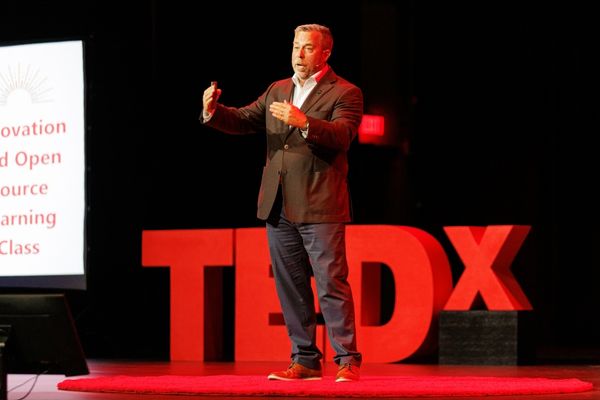
No entrepreneur has ever designed something for themselves without any consideration for anybody else. As the kids were even like applying to, I do this? We always did things in two-week increments. That was enough time to learn something like, “I hate this, and I am going to stop, and I am going to repivot or whatever.” Who does it serve other than you, who allowed us to go? “I should also learn how this could help other people?”
The Importance Of Intrinsic Motivation And Other-Orientation
Let me just double-click on that one, Don. That is precisely where you tap into the deeper level of motivation. That is what people miss about the kind of learning you and I are talking about. It is not just that it is self-directed. It is intrinsically motivated. I love this term like self-endorsed difficulty. What you’re tapping into is by making the other orientation, which is where you’re putting the final level of, that is where the level of engagement comes from.
The work starts to matter. There is meaning in it. I just do not want that point to get overlooked in this conversation. That is a really important point. I will go get a law degree to make a lot of money, but how many lawyers want to blow their brains out by the time they get 40 years old, or insert whatever career track?
It is funny you say that because like, I would use this visualization and I would always entice them a little bit because I said, “I want you to close your eyes. I am going to have you visualize something.” I am like, “Technically, it is against the law.” I said, “Close your eyes. I want you to visualize it there. There was a filling station, not too far from the school, within walking distance, that said, ‘Imagine yourself walking down to the gas station and you buy a lottery ticket. I know you’re not eighteen yet.’” Most of you aren’t. Just pretend that you’re eighteen.
I said, “You buy a scratch off, and you scratch it off, and you have won $3 million. I am sorry to tell you that, after taxes, that is not enough for you to retire on. You have $1.5 million dollars. What do you do on a day-to-day basis? Do not tell me I am going to invest in it. That is not what you do on a day-to-day basis. You are not going to tell me I am going to buy a house. That is not what you do. These are things that you buy one time.” I said, “You have $1.5 million, tell me what you’re going to do for the next two years?”
Immediately, they’re like, “I am going to go to college.” “Why? It is paid for. Why are you going?” Do you know what almost always happens? They would identify something to save themselves. I would get a lot of, “You know what I would like to,” and then they start talking about how almost all of them were working with people and helping people, and they identified problems that they wanted to work on. Technically, they had struggled with it. Sometimes in our pursuit of being selfish, we are still trying to save ourselves.
When I said, “If money is off the table and you cannot say, ‘I am just going to retire and chill and drink my tales in the sand,’ and no, you still have to do something. What do you do on a day-to-day basis for the next two years?” Shockingly, all of them became altruistic because they know just the easy answer is “I am going to buy a Lamborghini,” and do what? I am going to travel by myself. After a week, you’re going to be bored and homesick. That is true. I love the fact that we’re talking about not being selfish. It is when you say, “I am going to be a lawyer.” “Why?” “To make good money.” “Why?” “I do not know.” That last thing, master autonomy, purpose.
At the end of the day, we all want to make a purpose, but I think we’re misguided and compartmentalized. If you change your profile picture to stand with now, it is the purpose. No, it is not. You have changed your profile picture. That is the epidemic that we’re trying to fight. The keyboard culture of somebody else’s problem pisses me off, and I signed a petition, and now I feel like I have accomplished something. No disrespect if you want to point out something wrong, dig that. The ability just to say somebody else should do something about it is really misguided.
You had a phrase earlier. It caught my attention like the peekers and seekers versus something else.
Moaners and groaners.
I came across this concept in psychology, like literally a week ago. The brain naturally defaults to coping strategies rather than solutions. It is an evolutionary default. That is what the moaners and groaners are. When does the problem get bad enough that you start to. It is the avoidance of new behavior, new people. It is the discomfort with ambiguity and that. We just default to it. It is amygdala versus prefrontal cortex, like who cares? That is a natural phenomenon. Part of my theory is for entrepreneurial people, so many of them, we’re not great students.
Traditional career paths do not work for them. They come from some sort of adversity, whether it is a learning disability or whether they come from poverty, but the pain is bad enough to force them into a solution orientation, like moaning and groaning will not get it anymore. What you’re doing and, Don, here’s how I think about it. I said this a minute ago. I am trying to walk back from the word entrepreneur a little bit. Three things I am thinking about are agency, adaptability, and the ability to create value in any context, like self-directed value creation.
Those are the mindset things I care about. You have these abilities. You can go get a job at Taco Bell, and you can thrive, as opportunity will find you. In a world where knowledge is at our fingertips, traditional pathways are increasingly unstable. Those are the things that matter. That is the human infrastructure. Why the whole world is not like shining a light on what you’re doing is a mystery to me. There is another idea I want to come back to. The redefinition of entrepreneurship, that is something we have struggled with for two decades, Don.
People hear that word, and they think of it in binary terms. You’re going to start a business. That is the 250, 300-year-old definition that came from a French dictionary, like somebody who organizes and operates a business. What makes me even more insane is when people describe it as someone who takes a risk in exchange for a profit. They’re characterizing the motive as profit orientation. I have interviewed 800 entrepreneurs all over the planet, and very rarely have I found someone who does not have a purpose-driven component to their work, a problem they want to solve.
To characterize it as profit as the motive is a gross mischaracterization in my view. What I am trying to help folks understand is to broaden the aperture here. Here’s what the future looks like. Your students will probably be using AI to create value for. I do not know five employers at the same time. Fractional is the new term that describes this, but you cannot have this binary thing like, “That is for the kids that want to start a business.” If we just think about entrepreneurship in terms of starting new companies, we’re only going to appeal to a tiny fraction.
Amen, brother. That is the part where you’re tapping into something. As a part of my work, I go and visit a lot. We have a network of teachers. I normally need between 2 and 3 hours for every high school. The disparities and the differences in high schools are staggering. Some of our teachers are doing the best they can, but it is the culture. Ironically enough, it is the bookends that are the hardest part. The bookends being at one end of the bookend is like our kids going to famous colleges. We do not have time for innovation. We have time for them to get great SAT scores.
Fostering entrepreneurship in schools like that is very difficult. They do not have time. We do not have time for freedom, mastery, autonomy, and purpose because we’re just needing them to graduate and not hurt each other. That is the other bookend. It is the ones that are in the middle that are freaking out and paranoid, but you’re correct in just getting it over with, so they graduate. It is the dangerous part. By the way, it is not their fault. What’s measured is treasured.
If the schools are receiving incentives and they’re getting graded on how well they performed on that test, which ironically, if you’re in school to be a teacher, they keep telling you standardized tests have no bearing on. Yet it is the be-all and end-all on how we grade our schools. That is another podcast, another time. You can be a hired gun, because if you know how to juggle and discern and break down things, like you are the most important person in the company, and yet we’re not providing that.
That is the interesting thing. Being his educator for twenty years, I did the educational speaking circuit and things of this nature, and I love those people, I do. It was when I started doing more corporate things, listening, and being a barometer of both sides, because now the CEOs are pissed. What are you guys turning out?
By the way, it is not the school’s fault only, but these people who are trying to employ, like, they cannot hold their attention for more than five seconds. I know that is a societal thing. It is not school, it is TikTok and everything else. It is listening to the people saying, “You guys have a job. It is to prepare kids for the future. We need some future-ready things that we want to work on, and you guys are banning it.”
Preparing Students With Authentic Future Ready Skills
Future-ready is the money shot right there.
That is the most cliched thing to say about school. “Why does your school exist?” “To prepare kids for the future.” “Great.” “What does the future look like?” “We do not allow kids to do that.” You’re missing the point here. That is our biggest frustration.
I agree that you cannot lay the problem. Solely on the feet of education. There is a parental societal riptide you’re already swimming against. School can go a long way to correct it by doing what you are doing.
Ironically enough, it is going to take the parents voting with their feet. Again, I was a public school teacher. I am not bashing it at all. Unless you guys start opening up some opportunities, because now parents are really looking at the ROI of this. I know that there is some fact from fiction on what jobs are going away and what could be, and all these other things. Now it is more on the psyche, like more and more people are, “Do not worry about it. He or she will go to a decent college, and everything will work itself out.” A lot of millennials are in a lot of debt.
It is not just that, Don. I was listening to Arthur Brooks this morning on a Rich Roll podcast. Kids are lost. There is a real mental health epidemic. Have you seen those numbers? You get out in the workplace, you have quiet quitting, like. Something you alluded to earlier, like employers aren’t saying. We need kids with entrepreneurial competencies, but that is what they’re asking for.
It sure is.
They’re calling it something else.
That is where a disconnect is, Gary, is that you have, I do not want to go down this rabbit hole without you taking a bunch of letters, but money, entrepreneurship, bad. Fluffy feelings for everyone, good. If I take ownership over a problem and I make somebody else successful, you’re not profiting. You’re helping the company be better. You did not get a cut. You start the business. That is where it just drives me nuts, is that we vilified business owners, and I love having these conversations with people because, like, first of all, no one’s perfect, but like, “That person was already born rich.”
“You’re mad because they started a business? You’d rather be a trust fund kid?” Interesting. No, it is not fair. Whenever you play out the scenario, either you become successful, and you can acknowledge, by the way, I do not want you to be an asshole. I hope that if you become successful, you allow other people to be successful with you. The whole the world’s against you, so why try hard for something that you’re not going to profit from? I am like, that is ridiculous.
If the world is against you, why work hard for something you won’t profit from? Share on XIt is beyond ridiculous. It is debilitating. It is harmful.
It is a hundred percent. This societal thing of like, if you’re successful, you need to socially signal that you need to atone and you need to give equity away to your employees. That is between you and you. You cannot demand people do that. At the same time, if you feel so compelled to be charitable, then go and be charitable. Start your thing, man. Which is why I loved opening up our classroom to people like Naveen Jain. He is like, “Do you want to be a billionaire? Help a billion people. They will throw money at you.” You can be as charitable.
Actually, there was an episode of Shark Tank, this is like years ago. When the whole Tom’s model is like, “I will give twenty percent of my product.” There was a guy there who had a little bit of righteous indignation because everybody was passing on the thing that he wanted to sell. He is like, “You do not understand. I am going to give 30% back to blah, blah, blah.” He was mad, “You should invest in my product.”
I am pretty sure it’s Daymond John. He is like, “There are three M’s you need to consider here. First, you have to make it and make it good. You have to master it. You have got to make those pivots. You’ve got to make those changes. You can matter, and only then can you matter.” If you want to give back to your community, selling a shitty product is not going to get you anywhere.
I was like beating your customer.
He is like, “I cannot believe you guys do not want to invest because I want to be good to the world.” He is like, “You cannot matter like that. You have got to make it and master it.” That was a microcosm for a lot of where we’re at, like, feeling good that you have identified something and felt like you have done something. You have not. You have done an important thing. You have identified, “This over here is unfair, unjust, or sucks.” Awesome. That is phase one, bud. Somebody else now needs to take my idea and run with it. Ain’t nobody going to.
One of the things that I stumbled into, and I chalk it up to dumb luck, but I’ve always been interested in the mindset of an entrepreneur rather than the mechanics. The thing that was really lucky for me, Don, was that I was not really interested in the mindset of Elon Musk, Jeff Bezos, or Richard Branson. Whatever, that is fine. I do not denigrate. Somebody making a billion dollars is not where I am going. I wanted to know how underdogs win.
How do people who come from behind get ahead? How do people who start with nothing create something? That turned out to be dumb luck, but those are the entrepreneurs I have interviewed all over the world. People who start with $100 or $50, or who do not have big ideas. They are not changing the world. They do not invent new products and services. They are not billionaires. They are everyday people who are creating meaning and prosperity in their lives. End of story. Even if they have not made a shitload yet, it is that journey that you actually like.
I am talking about like Uncle Cleve here, Who Owns The Ice House? book. This is a story about an African-American guy in the Jim Crow South in the 1950s who teaches his little nephew how to think like an entrepreneur. He was not a millionaire. He was not doing anything special in his ice house. He was empowering himself. There are a couple of things I think you and I are dancing around, and I want to try to zero in a little bit. I see entrepreneurial thinking as a pathway to individual empowerment, like economic mobility. Those two things, I cannot really separate them. The empowerment comes from the fact that you’re fully engaged.
You have a purpose, and you’re on a mission.
Life has meaning. That is it, right?
Can you indulge me for a second? I am going to try not to get emotional reading this because you just made me think of something. My first year teaching, first of all, I got to give credit where credit’s due in the beginning. I was not always a teacher. I was in another sector for my first two years after college. If I am being honest with myself, my dad was a teacher. The only thing I have really ever aspired to be is as good as my dad. He is a wonderful man. All of a sudden, I get the second degree that I paid for. My mom and dad paid for my first degree.
I read this book called The 7 Habits of Highly Effective People. There was a quote in there by George Bernard Shaw. I am so bad at art, Gary, so bad at art. I felt compelled to hand-draw this quote, and it stuck on my wall. Unfortunately, I lost it somewhere in the transition. I had it on my wall in my sloppy-ass handwriting. It said this because it talks about what we’re talking about here. “This is the true joy in life, that being used for a purpose is recognized by yourself as a mighty one. Being a force of nature instead of a feverish, selfish little clod of ailments and grievances, complaining that the world will not devote itself to making you happy.
I am of the opinion that my life belongs to the whole community. As long as I live, it is my privilege to do for it what I can. I want to be thoroughly used up when I die because the harder I work, the more I live. I rejoice in life for its own sake. Life is no brief candle for me. It is a splendid torch which I have got to hold up for the moment, and I want to make it burn as brightly as possible before handing it on to future generations. I still get emotional reading that thing.”
I do not know what I could say. I am like stunned.
Is it not the most moving quote ever?
That is the essence of like, I do not want to use the E word, but that is the essence of it. It is like, I try to say this to specifically the young people, like, “If I can help you experience learning and work as fun, as meaningful, as something you lean into, you look forward to, your life will never be the same because that genie is not going back in the bottle.” If your life is not like Gary Vaynerchuk said, “If you live for weekends and holidays, your s*** is broken.” The way I think about this, Don, is what your quote so beautifully addresses.
George Bernard Shaw, by the way.
George Bernard Shaw, I am going to use that till the cows come home. I am not going to say steal it because you stole it.
We are attributing it.
The other aspect of entrepreneurship is that, you know, it is definitely an accessible pathway to individual empowerment, economic mobility. I have interviewed so many entrepreneurs who come from all manner of adversity. I am talking about South Africa and Cameroon, not just Appalachia or inner cities. It is available to anyone. You do not need money. You do not need a certificate. You do not need credentials. You do not need charisma or inventiveness.
You need a bus pass and a pressure washer. There is another dimension to it, Don, that I think we’re nibbling at that I want to double-click on. The entrepreneurial mindset provides a framework that enables us to access a deeper dimension of human potential. I have interviewed so many entrepreneurs, and very often, not always, I am struck by the banality of the person. I cannot detect any brilliance, any inventiveness, any charisma, or anything that would be just a different logic model that does not require anything.
I interviewed this guy on the show. Same as Joe Jaros. He is a pizza delivery guy who now owns eight Marco’s Pizza franchises, a multimillionaire. I said, “Joe, I hope this does not offend you, but what makes your story so powerful? You’re just an average guy.” He got this big smile, and he goes, “I am less than average.” He was saying it emphatically, but as an educator. That is what you’re getting at. There is a way to unlock something that you cannot get to with other-directed punishment rewards. You need to learn this because I said so learning.
Back to what we were saying earlier, it is because I said so. There is a place for that in some cases, like foundational stuff needs to be foundational, but all we’re really asking for is a part of your day where that is part of your day. The time to try something and absolutely get your butt handed to you is now. That is one of the things that no entrepreneur ever takes you seriously. If you are like, “I started a business. Which one? Just one. It was successful on the first try.” That is why we’ve resonated with why we’ve got a pretty interesting network of entrepreneurs that go, wait a second, where was this when I was sixteen?
It is the ability to get your butt kicked at age 15, 16, 17, 18. It is the ability to get feedback that you are like, “No, your idea is not good. Wait a second, does that mean that I got a B?” “No, it means you got an F, and you’re that much closer.” When you take away grades, and you’re like, if you’re really trying to build something meaningful, it does not look like an A or an F. If it is an A or an F, it is rewarding like, “Cool, it is not there yet, so what’s the next iteration?”
I remember the first time I watched Meet the Robinsons, maybe one of the most important Disney films there is, right when they started abandoning traditional animation, when Pixar was dominating, but it is basically a story about a young inventor. He is an orphan, like everything in Disney, but he does not know his mom and dad, and the kid is an inventor, and this wacky family throws a party every time his invention does not work. They celebrate failure. They throw this party, and they’re like, “You’re that much closer to understanding how it works.”
That is the furthest thing from the original framework of school. Again, some really unique programs are starting. Some teachers are opening up experiential things of this nature and all that good stuff. Not enough, but that embracing of like, “Are you so glad you do not have a mortgage and kids? This is awesome. It failed, it blew up in your face.” The other thing is that I should have said this earlier, because when people are like, “What do your teachers do?” One, we give them a bite-sized curriculum to weave in, because we have a lot of teachers who are in engineering, biomed, and robotics.
We’re in a lot of different departments. They do three things. Number one, they use time to let students know that there is a problem out there, and it is an opportunity. There is a problem in biomed. There is a problem in the trades. There is a problem in a lot of areas. Number two, they give the gift of time. If you’re one of our teachers, we’re going to ask that you carve out an extra 15 or 20 minutes a week and say, “What are you out there searching for? What is the problem you’ve identified?” Giving them real feedback.
“What do you think of my idea, Mr. Smith?” “It is not good. Have you talked to people? Have you gotten product market fit?” Third, this is my favorite part, when people are like, “The world’s so unfair.” It is not what you know, it is who you know, Don. Factually speaking, nobody knows more people than teachers. When kids need introductions and like, I actually, I am at this point now, I need to talk to people in the industry.
If you’ve taught for ten years, you know who those people are. If you do not, we sure as heck do. This is why we have this big network of teachers, like, “We got a kid who has a special request. Does anybody know anybody in plastic injection molding?” Inevitably, four or five hands go up. Like, “Yeah.” It is that network effect that enough of these teachers are providing time and space, and at the forefront. What problem are you wanting to solve?
Reframing Challenges Into Opportunities For Problem Solving
That is the forefront. Jaime Casap from Google Education said that stop asking kids what they want to be when they grow up and start asking them what problems they want to solve and what they need to learn in order to solve them. That is the mic drop question right there or comment. I have trained facilitators who came back to me and said, “I had a conversation with my students the next day.” I started by asking what do you want to be? It was a bunch of mealy mouths, not a lot of energy. I started asking what problems they want to solve. The classroom came alive. It gets back at something, Don, that we have not said yet. People do not realize that it is not like everybody wants to start a business, but we are inherently wired to want to contribute.
It is easier to get people fired up talking about the things that they hate, not the things that they love.
It’s easier to get people fired up about what they hate than what they love. Share on XThat is the amygdala response. That is the moaning and groaning.
Yes, because it is also less vulnerable, like negative is a strong about, like if you like, and I jokingly say this, but like if you go and ask people, “Who is your favorite band?” People are like, “I do not know.” You are like, “I do not know if I should say Pearl Jam, you may make fun of me.” We were like, “What band sucks? You are like Nickelback.” It is cool to say things that suck. It is cool to be a contrarian, but ironically, you can flip that and go awesome. What do you not like about the city, the school?
Answers are abundant. What are you going to do about it? Those are the dinner conversations that I am trying to foster with more of our parents. I am like, get your kid to say, “Yes, this sucks. Awesome. What are you going to do about it? Do not tell me what the president or Congress should do. What do you think you could do in your small way? If the answer is, “There is nothing I can do,” then stop worrying about it. If it is out of your control, they’ll soon realize there are some things you can do that are in your control.
Let me ask you this, Don. I do not know how to reconcile this, but I have personally trained 4,500 educators on five continents over the last sixteen years since we launched the Ice House program. We like to take them, like in the exercises, asking essentially the same question. What problems do you want to solve? Very often, I want to end food insecurity and homelessness, and then I want to cure cancer. I am not trying to discourage big thinking, but I do understand that if you do not get some traction relatively early, you are going to give up.
That is Bandura’s mastery. You want homelessness, or you want a food desert, like in what neighborhood? You said this earlier, like problem finding is the most, I want to say misunderstood, but overlooked component. You just think you have an idea, and you are going to run out with a solution without engaging with the people who have the problem, and understanding it from their perspective is foolish on many levels. What do you think about that?
I love this question. We do this with them. We ask why three times. Each time you go backward, you go a little bit more granular. I want to help stop food insecurity. Why? So that people can eat good food. Why, and who? I do not know, like maybe the people in this community, why? It’s because this community needs it. You want to stop food insecurity in this zip code. Got it. Saying the big grandiose thing makes you feel good, makes you feel proud, but like, “What does that even mean? Why?”
I love doing that because, like, when a three-year-old starts asking why, you have to explain to the three-year-old, you are like, “Damn it, you are getting to the heart of the matter.” Ironically enough, it becomes less and less convenient to just say why. Even like, “I want to lose weight.” “Why?” “It’s because I am overweight.” “Why?” “It’s because I make poor decisions and I snack at night.” “Why?” “It’s because I have succumbed to salty foods at 10:00 PM.” “You do not really want to lose weight. You want to stop snacking at 10:00 PM?” “Yes.” That is a good point. That is why three times or four.
I remember being at this event at Kauffman, like a one million cup at the Kauffman Foundation in Kansas City. They had this guy talking about how he wanted to solve the food desert problem in his community. He was going door to door, handing out free produce, like in the inner city. This is probably going to get me pilloried for saying this, but I am thinking to myself, “Dude, that whole thing is designed to make you feel better about yourself.
It does nothing to address a real problem. You have no idea.” Let’s get Don Wettrik in here. Why? What is underneath the food security? Let us dig into that problem. That makes you feel really good. You are knocking on somebody’s front porch with a basket full of zucchini, somebody like a single mom with three kids, her car just got towed because she cannot pay parking tickets, and you are showing up on her porch with a box of zucchini. How is that going to help her?
Performative stuff.
It is performative. Let me get to the essence. I do not want to discourage people from trying to do good things. It does require asking yourself, why am I doing this? Here’s the thing, Don, and we can expand this in a couple of different directions, but I think the impetus, the power, the inclination to want to contribute is a very potent motivational force. As Dan Pink pointed out, we have this really strong desire to want to contribute, but that desire makes us vulnerable to all manner of cognitive biases.
For a lot of people, it is just like, “I am going to hand out fresh zucchini in the inner city, and that is going to help solve a food desert problem.” They are not really solving a problem. In the other sense, people can become just enamored of their ideas. Forget the altruistic part of it. We become enamored of our ideas. I like to use this phrase from Richard Feynman, as he said it to science, I say to entrepreneurship, “The first rule of entrepreneurship is not to fool yourself. You are the easiest person to fool.”How do we harness that impulse to do good, to contribute? How do we give voice to it?
You are talking about some major societal forces, too, because I think a lot of people feel like they are doing their part because they changed their profile picture. I went and made a sign.
Even complaining gives your brain the idea.
I am going to do this. I like that. That is tough. What did I say? Moaners and groaners, seekers and peekers. Unfortunately, 80% of the people I know, and I am being generous, are pointing out things that are not good. There is a place for that. It is the twenty percent of the people who go, “It is cool, man. I will run with that.”
One of the key things in our entrepreneurial mindset framework that I observed from interviewing all these entrepreneurs, Don, is that they look at problems as opportunities, where the 80% are looking at problems as problems. The entrepreneur is like looking for problems to solve. It is just an opening of the aperture. It is like a notice.
People give away great ideas all the time because very few people want to execute on them. Unfortunately, I just think that’s just how we adjust that? I do not know, I am doing my part, I guess, but in the end, this is unplugged. I also think that there is something nice about being nice, but there is also something lost somehow in being respectful and not giving people the feedback that they deserve. That whole, “Why are you giving away zucchini that you are not doing?”
People give away great ideas all the time because few are willing to execute them. Share on XYou can say it nicer, like, “Why are you giving away the zucchini, especially in this neighborhood?” “It’s because they need to eat healthier.” There are a lot of things they may need. What else? There is a part of me that is like, “You want to, dude, why are you doing this?” At the same time, as if that person is taking that journey, they’re probably going to learn that there are a lot of other things they can do. I would never like to be dictatorial, like you should not do this because you are going to figure it out. At least people who really want to see things through.
That is why, again, going back to like, that is why I liked this during the school day. Like “I took away a lot. I wanted to give away zucchinis. This was not a good idea.” No offense to the zucchinis, because you had time to process it, and you had time at age seventeen. Get to have more learning experiences. If you do want to start dipping your toe into really making an impact and starting something, it is really cool if you have a muscle memory and did it a lot earlier.
Don, we’re already like an hour and twenty minutes into this conversation. Talk to me about what you did when you first saw Dan Pink’s TED Talk. It inspired you. You started doing open-source learning. What problems do you want to solve in the classroom? You weren’t even calling it entrepreneurship, and people were telling you to call it entrepreneurship. I still think you should not call it entrepreneurship because you’ll just limit it. Where did you go from there? What are you doing now?
Empowering Students Through The “Innovate Within” Movement
I started speaking, ironically started a podcast because the kids were like, I cannot believe they’re calling into the class. That turned into a podcast or a book. The book did better than I thought. It turned into public speaking, which was interesting. That’s also when, like our governor and our secretary of commerce, they had an idea in their head of wanting to do a Shark Tank for kids. They asked me what I thought about it and if I would help. Ironically, I just was not a big fan of big idea contests that did not go anywhere. What would you do differently?
There was this thing called Innovate Within, which was the Shark Tank for kids, just in Indiana. I changed around some structure. In year two, I ran it with them until year three. They’re like, “This is yours to run with it.” We start reaching out to people like you, so that we can have these Zoom calls for all of our educators. We worked with some people who were name-worthy. About once a month, we have those people call our classrooms. The people who, as you said, are exactly our instruction. What problem did you see as an opportunity?
We have had some big-name people who, sometimes, you did not know that they were entrepreneurs. The kids like them because they’re TikTok famous or they’re movie famous, and they’re like, “You built an organization for foster care kids,” or “You started a thing.” They never embellish how easy it was. If anything, they’re like, “I had an idea, and everybody shot it down, but man, I made some twists and turns.”
It turned into that. Once we got that ship right, we worked directly with the teachers. Do not just market the kids like turning in a business idea. We have them work with our teachers. They have the school year to incubate something and see it through. We’re really proud because we’ve had some very high optic wins. I hate to embellish, as one team got into, like when you get into Y Combinator, that is a pretty big deal, but like it is the thousands of other kids that went through it.
They’re like, “My attitude shifted from here to here.” That’s actually what I am most impressed by. Not the kid that got the venture deal, the kid that was like, “I was about ready just to do this. I have realized I can have so many opportunities if I connect with people, if I listen to, if I build teams, if I try and error things, that’s where we’re. We now work with thousands of kids, again, through the lens of working with teachers in 5 to 15-minute increments here and there to build to Crescendo.
Something you just said, I wanted to dig into a little bit, that I do not know, a couple of hundred thousand people have been through our Icehouse program. I do not have any data, but I would imagine a few thousand started businesses, and you do not know if ten years later they’re going to find themselves in a spot where they’re going to go, “Now I need this,” and start a business. The broader point that you just made is so important that they just need a mindset shift.
Cultivating A Mindset Shift For Economic Mobility And Personal Growth
They show up differently in life, with increased agency, adaptability, and value creation. They’re more employable. They just like they’ll rise faster in their career. They’re better able to contribute to the organizations and their communities. That’s the whole enchilada. Yes, we will probably be doing the thing that you and I do. We’ll probably increase the number of small businesses that are created, which in the aggregate have a phenomenal impact on the economy.
It is a numbers game. The more small businesses and mom-and-pop side hustles that start, the greater the number of high-potential startups that arise from that. I think the work you’re doing is absolutely essential. I just want to shout this from the rooftops about what you’re doing and how people can reach you. What’s the name of your book? How can people get a hold of the materials that you’re providing and the training and support?
The best place is because social media is so weird right now, but LinkedIn is still pretty professional there. STARTedUPFoundation.org. It looks like a startup, but with Ed in the middle. Book number two needs to be released, and it is done. Dag on it. I’m working on that. Hopefully more to that in a little bit. I’m reviving the podcast. I just did five episodes, and I am going to probably crank them out here in another couple of weeks. We’re always interested, but I’ll say, like our new rebranded audiences, more parents used to be a lot of educators and people like that, but educators still listen, but we’ve had a lot of our parents go, “What am I going to do with my son?”
You just reach out to me via LinkedIn and whatever. If you’re in the Indianapolis area in June, you can come to our state finals. It is pretty impressive. We got a big speaker coming this year. I cannot say who it is yet, but we’re really excited. Most importantly, if you’re tuning in to this and you’re a parent, you’re like, “Wait a second, I know exactly the teacher that would run with this.” Give me a call. That’s really how we’ve started it.
We’ve identified the right teacher at the right place, and we try to shower them with really cool incentives. We have locked our way into a lot of really interesting things where we get to do things. We get to send our teachers to different parts of the world in some cases, but not all of them. If you’re like, “Dude, I know exactly what teacher you need to talk to, and you’re in there, a high school teacher,” give a call.
I love it. Don, thanks for sharing the story on the show. You’re a mindset guy. That’s it. It is like that little shift in a young person’s mind, in a high schooler’s mind, that little shift can alter. That’s the thing from the ice house. I’ve interviewed all these entrepreneurs. I have not found a story yet that so powerfully demonstrates not only the impact of entrepreneurship as a means of economic mobility, accessibility, and so forth, but also when we expose other people to it.
Uncle Cleve is teaching his young nephew Clifton, who was born to a teenage mom in a cotton community in 1945. He is teaching his thirteen-year-old nephew how to think like an entrepreneur. Wouldn’t you know it, his nephew grows up to be like a twelve-time author, Pulitzer nominee, major motion picture, and friends like Sandra Day O’Connor. That’s the impact. These little experiences land in a young person’s brain. Thank you. That’s all I could say.
My pleasure. Thanks for having me on, Gary.