
Many people at work just go through the motions because they have never been permitted to contribute in a meaningful way. But if they are given a chance to build an entrepreneurial movement, they can unlock so much more in their career journey. Gary Schoeniger is joined by Maria Racho, an intrapreneur, angel investor, and former organizational effectiveness leader at Allstate, who explores what happens when an entrepreneurial spirit enters a compliance-driven organization. They discuss why the managerial culture built for reliability tends to suppress the very creativity they need, as well as the right way to make the most of our innate nature to contribute.
—
Listen to the podcast here
Building An Entrepreneurial Movement Inside A Large Organization With Maria Racho
Workplace engagement is a big problem. Research shows that the vast majority of workers are phoning it in, not because they don’t care, but because they’ve not been given permission to contribute in a meaningful way. Welcome to another episode of the show, where we explore the hidden logic that enables ordinary people to accomplish extraordinary things.
Our guest is Maria Racho, an entrepreneur, angel investor, and former organizational effectiveness leader at Allstate, one of America’s largest insurance companies. Maria spent years inside a 90-year-old institution doing what most people in large organizations rarely do, which was building things from scratch, creating teams where none existed, and eventually launching a grassroots entrepreneurial movement from inside the organization.
Maria’s story begins not in a boardroom or a business school, but in a basement. She grew up as a latchkey kid, creating carnival games and other after-school adventures with her friends. Little did she know that those early childhood experiences would one day enable her to thrive in Corporate America. In this conversation, Maria and I explore what happens when an entrepreneurial spirit enters a compliance-driven organization and what it takes to create the conditions for that spirit to survive and eventually flourish.
We talk a lot about how systems designed to ensure reliability and efficiency predictably suppress the problem-solving capacity and the creative energy they need to adapt and thrive in this rapidly changing world. We also talk about what Maria discovered when she finally created a space for people to bring their ideas forward, that the entrepreneurial impulse was never gone. It was waiting for permission. Without any further ado, I hope you enjoy my conversation with Maria Racho.
‐‐‐
Maria, thank you for being a guest on my show.
It’s an honor. Thank you for inviting me.
This is the first of its kind in all these interviews I’ve done over the years to interview somebody as an intrapreneur, somebody who’s been entrepreneurial inside an organization. I know you’ve done things as an entrepreneur. We could talk about that as well. We met a couple of years ago. When my new book came out, I gave a talk at DuPage in Chicago.
You were the keynote. You were the highlight for me, for sure. Your talk was incredible.
Getting Into The Entrepreneurial-Intrapreneurial Mindset
Thank you. How did you get into the entrepreneurial-intrapreneurial arena mindset or way of thinking and being? How did that happen?
I’ve reflected on this a lot. My father is an entrepreneur. He started the first Filipino production company here in Chicago. It helped connect a lot of immigrants to movies that were coming out in the Philippines. He brought artists here and would do concerts. I was inspired by that. Even as a young child, I had these little ventures to raise money so that my friends and I could go to the hot dog stand to buy French fries.
The one that I would joke about as my first venture was that I was a latchkey kid, so I was home alone very often. Some friends and I wanted to go to a sticker shop, but we didn’t have that much money to be able to go and buy the stickers that we wanted. I had an idea, like, “Let’s make a carnival.” I invited my friends to bring old toys, books, or things that they wanted to get rid of, and we set up a carnival in my basement. Those books and toys were the prizes. We would charge people to come into my home to play at the carnival in my basement. When we had had enough, we went on our little adventure. We always had a little lemonade stand and things like that.
I went the traditional corporate route. My father was also an agent at Allstate. I started in sales at his agency. There were always things that I had questions about. I had questions about our processes. I had questions about our technology. I went back to school for IT and then went into corporate. I spent a number of years in corporate, but I kept moving around, coming up with ideas, or pitching new employee resource groups wherever I saw a gap. I felt like I was always creating and building.
Sometimes, I was even creating my own teams. In one of the departments that I was in, we had multiple teams, and we needed to do project estimates for IT projects. We had a dozen different teams that were submitting estimates. I saw a need to synthesize that and to have one representation of an estimate. That became a mini PMO or Project Management Office, in our department. I pitched this new team. Each team gave me a dedicated resource to do that. We developed new processes, new procedures, and policies. It became a formal team even after I left that. I was always creating, building, taking action, asking for forgiveness, and asking permission sometimes.
That’s so interesting to me. I can’t help making the connection between as a kid, you’re left to your own devices to figure things out. That’s part of the latchkey experience. The thing that I am trying to get my head around is that it’s like bamboo. Before the thing ever shoots out of the ground, all this stuff is happening underneath the soil that you can’t see. As a kid, you’re figuring out how to earn money and coming up with ideas, A) Because you saw your dad doing it.
I saw my dad doing it. I was also mischievous as a child, so I’d always get in trouble. I always had to figure out how to save myself from getting grounded forever and things like that. I was always needing to figure out how to problem solve because I would get myself into some issues. It was problem-solving, and I felt like there were always possibilities.
My dad, being a salesperson and being entrepreneurial, had messages that I remember him teaching me, like, “No means no right now. It may not be the right time, but you can’t take that at face value.” He always believed that there was always a solution. He came here as an immigrant with no family and no friends. He and my mom had to figure it out. Those are the messages that shaped my thinking.
No means no. Right now may not be the right time, but you cannot take that at face value. Share on XThat’s fascinating. What you’re saying is that your dad was optimistic. That’s a throughline in the entrepreneurial mindset. There’s an underlying thing. No doesn’t mean no. I interviewed an entrepreneur once who became super successful. His name is John Osher. It was a Harvard case study. He said, “I can answer any question about entrepreneurship with these same three words. Find a way.”
That’s right.
When he said it to me like that, I knew it was not that helpful, but it helps you understand the mindset. Find a way. How old were you when you were having these fairs in your basement?
Eleven or twelve, or maybe younger.
I love that. I’m saying to folks that this should be in school, starting in middle school. Kids should have entrepreneurial projects of their own. What I’m curious to know is how other kids in the neighborhood responded. Were they eager to follow you?
Yes.
Were they double-clicking, like, “Who is this girl? What’s she doing?”
I’m quite amazed. I’d have these ideas, and people were all-in. I had a handful of friends who were always all-in. The wealth would be shared. All of us would get to go on the next adventure or share a few orders of French fries.
That also touches on something like you don’t have to be the idea person. You can still contribute meaningfully. I don’t know. People don’t necessarily want to follow rules, and it’s interesting to me. Were you a good student in school?
I struggled. I would test well. In my first year of high school, I was in AP courses, but then I didn’t do well in the classroom. I would always get feedback like I had so much potential, but I didn’t apply myself in school. I was distracted. Also, my parents were strict, especially when I got into high school, so I didn’t have much of a social life other than my neighborhood friends after school. I learned to weave my social life into the school day, so I was a bit distracted in that way.
I had my first son when I was pretty young. I went back to college afterwards. It was interesting. When I did apply myself, I ended up being summa cum laude, but I didn’t even know that. I didn’t even realize I was on that path. I was tracking my progress to try to finish as fast as possible. I remember getting called into the dean’s office, and I was thinking, “I’m not going to be able to graduate. There’s something I missed.” He said, “You’re 1 of 3 summa cum laudes. Congratulations.” That was the last thing that was on my mind. I was not expecting to hear that at all. My immediate thinking is, “I’m getting called to the dean’s office. I’m in trouble.”
That’s interesting. One of the patterns I’ve noticed in interviewing entrepreneurs, the reason I asked the question, is something I’m trying to reconcile. A lot of people I interview say, “I either wasn’t good in school, or I didn’t love school.” For the rest of the conversation, they keep talking about how they’re learning all these things. I don’t know how to reconcile that. There’s an organic learning that I hear in entrepreneurial people that’s powerful. It’s a way of learning that I think academia overlooks. It doesn’t recognize it or value it.
It’s hands-on, roll up your sleeves, hit walls, and then be like, “What happened there?” It’s learning and then jumping right in.
Why Entrepreneurial People Are More Attuned To Their Thinking
I don’t want to jump too far ahead, but there is something I’ve been thinking about. I’d love to get your take on this. One of the things I notice about entrepreneurial people is that they seem more attuned to their own thinking. They seem more inclined to think about their own thinking. Metacognition is what a psychologist would call it. My theory is this. When you’re working in a rule-bound compliance-based system, there’s less of a reason to do that. When you’re out in the world trying to figure out, “Does this work? That worked. Why did that work?”
You need to be more in tune.
I don’t know if that resonates with you or not.
It resonates. That’s what drew me out of intrapreneurship and into entrepreneurship and around being around founders. There’s an energy that you can’t explain. Especially around serial entrepreneurs. There’s just an energy. They’re led by this magnetic pull and things that they’re passionate about. Every new venture they’re exploring, they’re diving in and passionate about it. The energy is contagious.

Entrepreneurial Movement: Founders are led by a magnetic pull of things they are passionate about.
I love that. Let’s double-click on that. The magnetic pull is what you said. My entrepreneurial mindset theory is that unbeknownst to the entrepreneurs themselves, that’s exactly what happens. There’s a magnetic pull. It’s like gravity. You can’t see it. To the casual observer, it looks like it’s a personality trait when it has very little or nothing at all to do with personality.
It has to do with how the desire to contribute is innate. The desire to have control over our own lives is innate. When people buy something that you created, it’s powerful. It enables us to access a deeper level of human motivation. What I’m trying to reconcile is that when we look at data around workforce engagement, it’s abysmal. Globally, 87% are not engaged in their work.
I’m not surprised.
In the United States, it is 2/3. Two-thirds of people are phoning it in. When you look at entrepreneurial or intrapreneurial, which I don’t think matters. They’re like, “Thank God it’s Monday. Let’s go.” The magnetic pull, I love that phrase. Being around it, I want to also double-click on that for a second because it is contagious.
People early in their entrepreneurial career can be a bit apologetic about it because that magnetic pull can come from many different directions. When you’re early on in your ideation stage of what you’re trying to figure out where you’re going to put your focus, it’s experimental. Entrepreneurs can seem as though they’re all over the place, but they’re searching. They’re searching for where they want to land.
I can see newer entrepreneurs being almost apologetic about it. They’re like, “I’m sorry. I know I’m in all different places.” What I try to encourage is like, “That’s okay. You’re exactly where you need to be. If you’re in experimentation and you don’t know yet where you want to land, that’s how you’re testing.” I remember in corporate. I was referring this entrepreneur who was amazing. She was working with a startup, but she had deep business analytics expertise.
The recruiter told her that she did not seem focused because she was chief of staff, business analyst, and operations lead. She had to wear many hats, coming from a startup. When she was looking at the roles, that was one role she was looking at, but she was also open, and she was skilled for other roles. A corporate recruiter thought that she wasn’t focused, and she didn’t know what she wanted.
I’m happy you brought that up. I talk a lot about managerial versus entrepreneurial mindset. Let me go back to something you said at the beginning of this thread. In the beginning, you’re searching. It’s an iterative experimental process that requires micro failures. People get all mixed up around this. They’re like, “Fail fast. Failure.” They throw the F word out there without going, “That scares the crap out of people.” Hold on. You have to qualify that it’s a micro failure.
When people hear failure, they go, “I’m going to lose my house. I’m going to burn my 401(k).” You’re trying lots of little things. To your point, that’s everywhere in nature. Nature doesn’t make big, bold bets. Nature is making $5 bets all over the place. You can lose $5, and you can get up, dust yourself off, learn from it, and keep going.
The problem is that the managerial mindset is intolerant of that. It’s like, “Stop that. Focus. Pick a path and go.” I see this all the time. I see people who are teaching entrepreneurship, but they have a managerial mindset, so they do it poorly. They’re like, “You have an idea for a fruit platter business. Write a business plan. Tell me your market segments. Tell me all these things.” It’s like, “Hold on a second.”
That’s what resonated in your talk. Entrepreneurialism is more natural. It’s almost like we unlearn it as we’re growing up. That’s exactly what I felt like I did. I was always struggling because I always felt like an outlier in my thinking in this large system, which is 90 years old as well.
Entrepreneurialism is more natural. It is almost like we unlearn it as we are growing up. Share on XAre you talking about the company you went to in the workforce that is 90 years old?
Yes. I was at Allstate. We manage risk. It’s a 90-year-old company. It was started by a General. All those things are woven into the system. I’ve been there for a long time, so I learned to navigate it. It also didn’t put me as the hypo in the organization because I didn’t follow those same rules. I was creating value, especially when we started the entrepreneurship group, which I’d love to share more on.
I felt like I was having more impact, starting this entrepreneurship group from scratch, than I was in some of my own day-to-day work projects, which was what I was primarily being paid for. I feel like there were a lot of things that I was unlearning with each performance review. Even as a child, in school, I’d get in trouble. You learn how to conform more to what’s expected of you, and then you start to lose, I feel like, a lot more of that creativity, exploration, and all of that.
I share with you this term that my son taught me called NPC. It’s called a Non-Playable Character in video games. There’s the main character, which is you, navigating the video game, and there are non-playable characters, like the shoe shop owner who is giving you directions and instructions on your next adventure. My younger son has gotten into corporate. He would have these interesting observations, like, “It seems like people have a lot of time to talk about other people. I don’t want to bring a lot of my personal life into the workplace because I feel like there’s a lot of discussion about that,” or aspiring for bigger goals or things like that. He’s noticing these patterns.
It dawned on me, and I told him that, having lived a life in corporate for so long, there are many periods in my career that I felt like that. I was in my role, working on my widget and filling that gap. My theory is that a lot of people in corporate life are living NPC lives. What I encouraged him is, “Even in corporate, you have to continue to have your own dreams. Have side gigs and passion projects so that you can remember who you are and keep your passions alive.”
Doing A Lot Of Personal Work
You’re saying some things there. I’m fascinated by this. What’s that line from the R.E.M. song Losing My Religion? You’re slowly being pinged to not even be yourself to fit in and do what you’re told. You get smacked. It keeps happening over and over again. Don’t look out the window. Pay attention to the teacher. That’s important. Non-entrepreneurial behavior is learned. The fact that you were aware of that is also fascinating to me. For most of us, that happens without being aware of it. Maybe it was because of your childhood entrepreneurial endeavors. It sounds like you were a free-range kid.
A bit. In the last role that I had when I was with Allstate, I was leading organization effectiveness. We were supporting the organization on strategic change, culture, leadership, executive effectiveness, team effectiveness, and things like that. The work I had to do on myself in order to be able to do that work was pretty significant. I had to do a lot of self-awareness, personal mastery, and all of that. In doing the kind of work that we were doing, if I hadn’t reconciled my childhood issues with that one teacher who reprimanded me, I might be unconsciously bringing that kind of thinking and behavior.
The baggage.
I would be bringing that baggage into the work that I’m doing, shaping the culture and things like that, or coaching executives. I had to do a lot of personal work myself, and that contributed to more of this awareness. As I was doing that work, that’s what helped me reconcile and be more aligned with who I was as a younger child, because I do feel like I stayed away from that.
I conformed, and I assimilated. There are cultural things. Having come to the US as a small child, my parents were encouraged not to speak the language to me anymore, eat the foods, or do cultural things, so that I could be more comfortable. It worked. I assimilated. That became a pattern for me because the systems encouraged that.
What I would notice is that the more I assimilated, the better I was doing in these systems, from a performance review or feedback, and things like that. Not until I started doing this personal work and connecting back to who I am, what my identity is, what drives me, and the whole period between that, did I feel like my head was in a cloud. I can’t describe who I was during that period.
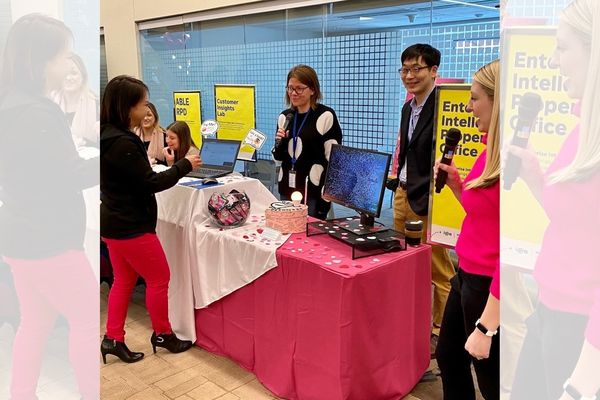
Entrepreneurial Movement: Your head will be in the clouds until you start doing personal work and connect back to who you are.
This is a conversation I don’t think I’ve ever had before with anybody. It’s super important. There’s an authenticity thing going on here. That’s what I’m hearing you say. I’ve gone through a similar journey. I’m curious, if you’re comfortable talking about it, but if you’re not, that’s fine. How did that come about for you, the self-awareness, let’s say? Is that a fair word?
Yes.
How did that come about for you?
It started with some work we were doing in the company that was around inclusion. This started in our IT department. We had multiple generations in the workforce. We had expanded to more of a multinational workforce. There were a number of mergers of different technology groups that were coming together. Part of the change was that there was an effort that we were making. It was around inclusion and people being able to bring their whole selves, and then accepting and recognizing others for who they are versus coming in and saying, “There’s something that’s different here,” and having judgment and all of that.
I was part of this change agent group. In our first session together, we had an activity that was called a Journey of Our Differences. We were asked to reflect on what were the messages that you received as a child and when you realized you were different. We were in this small breakout group. The others in the breakout group had to draw. They asked us to use images. They’re jumping in and drawing, and I’m like, “I’ve never asked myself these questions.” We had 15 minutes, and I was sitting there for 10 minutes in shock. When I saw I only had five minutes left, I was like, “Let me start drawing.”
In my drawing, I drew this winding road, and then I drew myself as a child with my head in the clouds, starting from when I came from the Philippines. There were these moments where the sun started to peek out, and when I started to become aware. There were experiences that I had as a young kid where, in my neighborhood, most of my friends were White, and I was the only one who was Asian. I remember a gentleman walking by and saying, “Chink.” I was like, “Who’s he talking to?” With experiences like that, I started to realize, “He was talking to me.” That’s when I started to notice differences.
There are also experiences when I was a youth advisor. Growing up, in the youth group that I was a part of, our parents were first-generation immigrants. We had migrated. Everyone was trying to fit in. It was all about assimilation. Everyone was trying to fit into their groups. We wanted to watch movies together, have parties, and go to Great America.
For this youth group I was advising, they were the second generation here in the US, and they were hungry to understand who they were. They wanted to bring in historians, community advocates, and people who helped with identity. I started bringing these speakers in, and I was amazed at how much they knew. I was the one taking notes because I’d never thought about any of these things. From my interaction with those young people, that was my first questioning and reconnecting back to that part of my identity.
I would talk to the ones who were more my age and my peers. They weren’t interested in that, or that wasn’t something that was on their mind until they had kids. When their kids started asking more about their culture, history, background, language, and things like that, that’s when they started to realize, “I don’t know. I haven’t explored any of that.”
We’ve almost tried to suppress it, especially in our day-to-day lives. Those were the first inklings of that personal work and those things that started to come up. Going through coaching programs and all of that, as a coach, you need to have a clean ship before you work with anyone else. That continued the work, going deeper.
Getting Into Some Side Projects
That’s super cool. Here’s the way I think about an entrepreneurial mindset. When we pursue things that are interesting to us in ways that are useful to other people, we tend to flourish. There’s an authenticity thing here. I’ve probably said this before on this show, but I don’t think of entrepreneurship as a business discipline per se. I think of it as a formula for human flourishing. I want to double-click on something you said. I don’t know if I got my head around it yet. You were working at Allstate and doing your tasks, but then you started doing some side projects. Do I have that right? Help me understand what was going on there.
This time, too, our CEO was very much an advocate of how we’re a purpose-driven organization filled with purpose-driven people. For a number of us, we took that quite personally, like, “What is my purpose? How am I adding value, and how am I contributing to that?” That was my lens. I started the Asian American Employee Resource Group.
Some of my clients were some of our first internal ventures in the organization. One of them was struggling. This was our first internal venture. He said, “They say I’m a startup and for us to move fast, but it’s like an act of Congress to change strategy. My team is fearful. They’re fighting and bickering with each other. I don’t understand. They’re fearful of failing.” I was the twelfth consultant, internal and external, that they brought in.
At that time, I went and researched what’s happening in the business world and used some of the terms he was using. He was saying fail fast, learn from that, and all of that. I brought him the HPR article on how Lean Startup is going to change everything. This is 2014. He’s like, “This is exactly what I’m talking about. Can you write a white paper as to what people are doing in large organizations using this method?” It wasn’t something that we normally do, but I said yes because I wanted to do it. Also, I had come off a thesis, so I’m like, “This is nothing compared to a thesis.”
I struggled finding anyone to talk to because the book had come out, so I started going through the names in the book. We reached out to Bennett Blank of Intuit. Whoever was named in there, we were reaching out and saying, “Can we talk with you?” That’s how we wrote this white paper. We found that there were companies that were using it.
There were companies like Amazon, where it was ingrained into their culture and how they expect people to operate. There were companies like Cisco, where they had this rubber band theory that if you have an idea, Cisco may be the first one to invest in your idea to spin out. They’re saying, “We’re going to invest in you as long as we have first rights to potentially buy you back if you do well.”
There were these innovative things that were happening. We brought that back. I found myself with these executives on these Lean Startup weekends. We were driving the entrepreneurs nuts because we were in analysis paralysis. There were a number of us who were moved by it. We were moved by the pace, the boldness, and the energy of these founders.
We kept trying to bring those tools and methods back, but we were all in different departments, so when we brought them back, we would get shut down. We’d come back together depressed. It happened a few times. We would get re-energized from each other. We’d go back again and then try to do it. By the 3rd or 4th time, someone said, “This should be an employee resource group because this is a diversity of thought. We have ideas that we believe could help the company, and there’s no way to be able to bring those ideas forward.”
Since I had launched an ERG previously, I knew the process. We applied for it. We applied the Lean Startup to ourselves. We did our own research because we said, “We have to acknowledge. If we’re the only five that believe in this, then maybe we’re a small club.” We found people. We found people sitting on ideas for a year or two years. We ended up with eleven executives, some of them reaching out to us, saying, “Can I be a sponsor?”
They found themselves feeling like they’re on an island, trying to move an idea forward. We got that off the ground. What we also found was, like entrepreneurship, not everyone got it. We were trying to diversify our sponsor group. Initially, it was like, “Who’s like an entrepreneur? Who do you see has that outlier thinking?” When we started to reach out to others who don’t seem entrepreneurial, we got responses like, “Why do people need this? They need to do their jobs. This is dumb. This is a waste of time.”
When my background changed, what I encouraged my team with, because we’re all volunteers, and we’re all doing this voluntarily, was, “Let’s focus on the believers because we will waste our energy by trying to convert. We’re going to do this by word of mouth. We’re not going to do mass marketing. Gary, you’re an entrepreneur. You know others out there. Bring one person to the next meeting.”
Logistically, we couldn’t find rooms. We would be in a basement, and we would have signs saying, “Go here.” That’s how people would find our meetups and stuff. That’s how we operated for about the first three years as an ERG. In our third year, the president of the company reached out and said, “Can I get involved in some way?” That was the year that I was like, “We’re ready to go mainstream.” He sponsored the challenge.
In those three years, we created a Spark Tank, which is like our internal Shark Tank. What we saw was that people were sitting on ideas, but when they started to bring their ideas forward, they were pretty awful. They were a one-liner, like, “Here’s my idea,” or it was a pitch deck that was 150 pages of research, but they’ve never talked to anyone. They were handing them over to us as though we were going to go and execute them. We were like, “This is your idea. You’re going to move it forward. We’re here to help support you.”
We started what we call a Startup Challenge, which is a three-day business hackathon. We taught them the Lean Startup process. We brought them through problem definition, market research, rapid prototyping, and then pitching, because we saw that there was a need to do more capability-building, because people didn’t have that muscle.
What we also found was that there was a sour taste in people’s mouths regarding innovation. Employees felt like it was a glorified suggestion box that they would put their ideas in, and they would go nowhere. Maybe one day, some of the ideas went to market, and they were never involved with it, nor were they ever acknowledged.
It’s like, “I gave my boss a good idea, and he didn’t listen.”
They’re like, “All of a sudden, it’s going to market, but I’ve never gotten recognized for it.” Also, on the business side, people would throw their ideas over the wall, and they’re expecting someone to catch it and run with it. They felt like there was no accountability. For us, we saw the gap. The gap was the mechanism in between. That’s what was causing the disconnect there. There wasn’t anything facilitating, but everyone is thinking it’s the other person’s fault.
You Don’t Need Money To Be Entrepreneurial
I need to get my head around this because you’re saying some things. What I immediately thought of was that I was reading some Gallup research that was funded by Shopify. Almost 2/3 of Americans say they want to be their own boss, but an infinitesimal fraction of them ever do it. The number one stated reason is that they don’t have money.
You already know where I’m about to go. You don’t need money to be entrepreneurial. It goes back to what you said earlier. You’re in the experimental phase. Money is harmful to you in the experimental phase because it allows you to build the thing you think everybody needs, and they probably don’t. My work has been studying entrepreneurs every day, not the high-tech venture-backed billionaires.
How do people with nothing create something? What you’re helping me put together are the pieces. Stop me if I’m getting this wrong. What you found is not everybody, but a significant percentage of the people in the organization, add some kind of entrepreneurial impulse. There were cultural reasons for not acting on the impulse, but there were also ignorance gaps. It’s a mean-sounding word. I don’t mean it in a mean way. They didn’t understand the process.
Maybe there wasn’t a process.
They think you give somebody an idea, and they go, “Great idea. Here’s some money. Go do it.” I talk to people who run CDFIs and SBDCs. They have people walking in their door every minute of every day, saying, “I got a great idea. I just need $100,000.” That’s not how it works.
Also, starting with the solution, there are exceptions to that. There may be solutions that open up possibilities that you’ve never imagined. In my role, I’m an Angel VC and a VC in quantum tech and advanced compute space. It’s understandable because those technologies are going to unlock possibilities to solve problems we never imagined before. For the average person, you have more possibilities for success if you are truly solving a problem that people are willing to pay to have solved. That’s what I would suggest for people to start with.
That’s what I’m saying. Thank you. Find the problem first. I’m like, “Look for pain.” Here’s the hard thing about that. People have learned to tolerate things that they don’t know they’re tolerating. The example I use very often is that before 1980, we didn’t have coffee shops in the United States. We had crappy 7-Eleven coffee that was $0.25 in a little styrofoam cup.
Nobody was walking around saying, “I need a $3 latte or a $5 latte.” Nobody was asking for it. Nobody was saying, “This coffee sucks.” It’s underneath. You can’t surface the problem without trying a little experiment. That’s the hard part. It’s not like finding a job where you can go to a recruiter, a bulletin board, or something. The opportunities are invisible.
Invisible from us.
I said this in my book. Opportunities are everywhere. It’s not that they’re hard to find. It’s that they’re easy to overlook. This is also interesting to me. Our brains are inundated with billions of bits of data that pour into our five senses every second. Our brains filter out almost everything irrelevant and non-threatening. It doesn’t even get through.
In the corporate world, we’re conditioned to what we focus on. If you think about that, most people have been conditioned out of paying attention to these other frequencies.
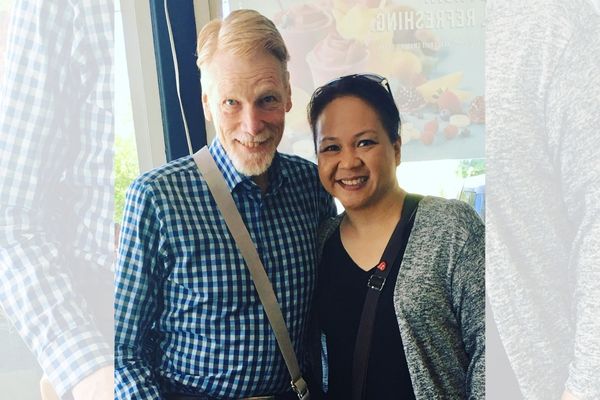
Entrepreneurial Movement: In a corporate world, we are conditioned to what we focus on.
Did you ever see the gorilla in the basketball video?
Yes.
It’s that. It’s like you’re too busy counting basketballs that you don’t see the gorilla. It’s so straightforward. People don’t understand it. They think that entrepreneurial behavior is some sort of mystery. This ties back to something you said about your own cultural awakening. The entrepreneurial mindset only seems mysterious to us to the extent that we are steeped in managerial culture, which is very rulebound and compliance-oriented. We follow rules and procedures.
I’ve looked at the research here. The more rulebound an organization is, the less likely people are to have insights. When you see that, it’s like, “Duh.” What’s so interesting to me is that when you started doing this, people started coming out from the nooks and crannies, peeking their heads in and saying, “I have an idea. I want to be part of this.”
The question we would get from our sponsors was like, “What if you do these things and no one shows up?” We were like, “That’s the data. Everything we do and every result from it is going to be data. We need to keep a pulse on that and then continue to pivot until we find what makes sense.” People were coming out from everywhere. One of our challenge winners was a seventeen-year claim adjuster who had a number of ideas, but had no idea how to bring those ideas forward. We had customer service reps who were hearing customer irritants all the time, sitting on ideas for a year or two because there were no pathways.
The more that we heard these things, the more that we were like, “That’s what we need to build. We need to build pathways. We need to build platforms.” Then, we started to learn, “These ideas come forward. The bottleneck is how they can get implemented and tested.” We started to create what we call talent chairs, where people could get a certain period of time and resources to be able to work on their ideas and work with experts in the organization. We kept building where we saw another gap, and that seemed to be effective. That’s what entrepreneurs do. They see gaps and fill them. They see another gap, and then they fill that.
There’s a natural human inclination to do that. That’s what I want to bring out of this conversation that I don’t think people understand. The desire to contribute is innate. That’s hardcoded into us. I mean, contribute through our own initiative, ingenuity, and effort, not contribute like, “I hit the goal you set for me.” It’s not a jump-through-hoop contribution. It’s like, “I bring myself to it, and I contribute.” That enables us to access a much deeper dimension of human potential.
How To Deal With Organizational Antibodies
I’m freaking out now because I realized there’s no way we’re going to get this conversation done in one shot. It’s so interesting to me. Group dynamics is funny. Antibodies try to kill you like you’re a foreign object. The organizational antibodies, did you experience that in the early days? What I’m gleaning from your comments is that you started doing this unofficially in the beginning. Can you talk a little bit about how the haters came out?
Absolutely. You hit a wall, take a step back, assess, and then figure out, “How do we navigate around this?” For the Startup Challenge, it’s a three-day business hackathon. People are stepping away from their jobs. We’re asking for three days.
Do you do that onsite?
We would do onsite, but we also had team members in other countries or across the US, so we would always do a hybrid approach.
It’s three days.
It’s three continuous days. What we heard was, “My manager wasn’t supporting me on this. What we started to do was we engaged our executive sponsors, the sponsors that were sponsoring the challenge, but also sponsors of our employee resource group.” We’d ask them to reach out to the managers. We’d say, “Here are the people who have signed up. We’d appreciate it if you could reach out to the managers and thank them for their investment in their people’s time and being able to dedicate to this employee development experience.”
Those are some of the things that we had to learn to navigate the immune system. This was employee development, which it truly was. They were getting ingrained in a strategy that most people don’t get an opportunity to get involved in. Recognizing the managers coming from executive VPs and people in the organization who are much higher, acknowledging that this is something that is sanctioned. While it wasn’t anything that was officially written, we made it officially written. That’s one of the examples.
Some of the other examples were that there are innovation groups all across the organization. Sometimes, it would feel as though we were encroaching on their territory, so what we did was involve them. They taught certain pieces, especially after our first year. Our first year was, “Gary, you’re a great facilitator. Could you learn about problem definition and then teach a workshop on problem definition?”
Our first year was pretty scrapped together and pretty bootstrapped. Then, our UX designers and UX researchers came forward, and they said, “We could help you with the market research segment.” We started involving the experts, and then they started to take part ownership. All of a sudden, they’re feeling vested in the success of the initiative.
We did a program. There’s a National Innovation Day, which is February 15th or 14th of the year. What we started doing was a National Innovation Day. We invited every innovation group from across the organization, even if they were a team that was like a skunk works team that was doing something. If you have something to highlight or share with the rest of the company, like, “Here’s this great work we’re doing,” we invite you. It was very open. There were 30-plus teams and groups that would come forward. We would do an expo, and we would highlight them to the company. There would be collaboration that was coming out of that.
Our way of navigating that was involving people. We would do some adjustments, and they would adjust, like our patent team. Our patent attorney, when we first started working with her, her response to people was like, “Don’t talk about any ideas to anyone because it will nullify and void any protection.” We were like, “Wait a minute. Maybe we can find a middle ground. Maybe we could bring you in super early, so when people apply for our Spark Tank, you can have a first look at the ideas before we even make any selections on who’s going to pitch on stage.”
We started involving them early, and then we would negotiate how much people could say when, and then help educate. My belief is that the immune system protects the company from bad ideas as well as good ideas. Its only intent is to protect the host and to keep it safe. Compliance, legal, HR, and all these different roles are trying to protect the company. If we work with them and work with the folks who have an open mind in those different areas, we can find ways to make it work for everyone. People felt good being part of it.
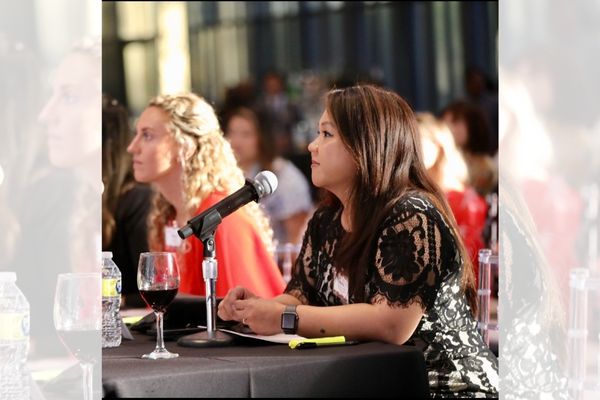
Entrepreneurial Movement: A company’s immune system protects the team from both bad and good ideas. Its only intent is to protect the host and keep it safe.
I did that at a college in LA. I wrote about this in my book. It was amazing. It’s the same thing. It was almost like this bell jar was taken off, and this energy came out. The president of the college kept saying to me, “What the heck is going on over there? I’ve never seen this level of engagement.” Here’s the thing I want to get to. One team figured out how to solve a problem. I don’t need to get into the problem here. It doesn’t matter.
Let’s say they save the college $1.5 million a year. Pretty quickly, solving an initial problem. I don’t know if this is true in the corporate world, but in the academic world, it is silos. It’s like, “Stay out of my lane. It’s my lane. Stay out of here.” What I found is that people were aware of problems, but they didn’t know they had permission to solve them or to go out of their lanes.
How Lots Of Little Ideas Lead To Bigger Ideas
I think about this through two different lenses. Maybe you can help me. The corporate world or the intrapreneurial world is super fascinating to me. Do you see this as an engagement play? Engagement goes up. You and I take that for granted. It’s a continuous improvement thing. It’s not necessarily that someone’s going to come up with the next great idea that’s going to catapult the company or some huge spin-off that’s going to make billions of dollars. What is the motivation, do you think, for a company?
That’s where I would suggest you pick up that conversation with Gifford Pinchot III, who coined the term. You know Gifford. He’ll share examples of companies where it’s the intrapreneurship that created strategic differentiators for companies. An example that I remember is, at Nike, he talks about how the strategy for women’s apparel or women’s shoes was to shrink them and pink them. It was the same model, but shrink them and pink them.
There was an entrepreneur in the organization who believed that there were other needs and possibilities if you could cater to the female athletes. They started developing new models and designs that were tailored to women’s sports and women’s needs. That’s one of the highest-performing arms of Nike. Engaging the brilliance within your system could truly be a strategic value proposition that’s untapped. Engagement is one piece, but there’s talent that could be untapped in your organization.
You’re helping me understand this better. It’s like a continuum. Lots of bad ideas lead to good ideas. A better way of saying that is there are lots of little ideas that can lead to bigger ideas. It goes back to the bamboo analogy I made earlier. The problem-finding and problem-solving muscle needs to be developed. You said it in your own experience. I hear this all the time, like, “I was a little girl. I was looking for things to do and ways to find and solve problems and do interesting things.”
I interviewed a guy on this show who owns eight Marco’s Pizza franchises. He started as a delivery boy. The guy said to me, “Even when I was a kid, and I had a job, I was always thinking about, ‘How could I improve this? If this were mine, what would I do differently?’” The problem-finding and problem-solving muscle is like you’re doing pushups. You’re not in their boxing ring, fighting a fight. You’re at the gym, doing pushups.
You’re training for it.
That’s also part of the value of what you bring to an organization. People have ideas, like, “Let’s not put the trash can over there, but over there. It makes more sense.” There are stupid little improvements that don’t move the needle or do anything, but the problem-finding and problem-solving muscle develops. The question I wanted to go with from there is, how do you handle people who have ridiculously bad ideas? Do you tell them it’s a bad idea? How do you handle that?
Our intent was to develop people through the process. The things that we were building were to meet them where they were. The only way for them to grow from that experience is to give them feedback. It’s tough love. They need to understand where they are hitting the mark and where they’re not. Our team was always responsible for giving people feedback, and then something that could help them to come back the next time with a much better proposal.
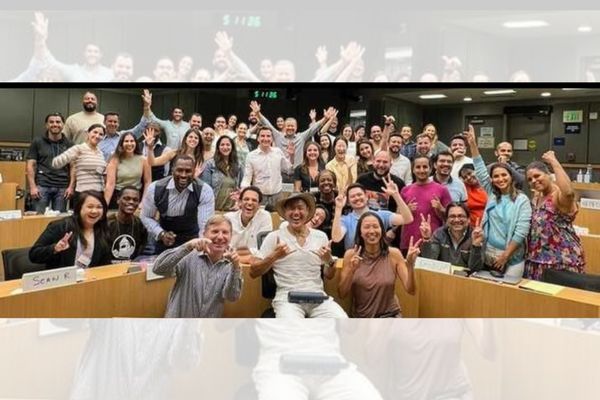
Entrepreneurial Movement: Meet the team where they are. The only way for them to grow from that experience is to give them feedback.
We would offer coaching or feedback, even outside of the programs that we were doing. This was one of our sponsors, who was the head of innovation of the organization at that time. He said, “Let’s give them some guidance on the startup challenges. Let’s choose strategic problems that need to be solved by the organization.” We gave them some parameters, especially since that was more of a skill-building. It was our way of being able to engage the different executives in the corporation.
We would invite them and say, “What’s a problem you’ve been wrestling with that you’d find value in crowdsourcing and getting solutions from people in the organization?” That gave some parameters around what people were developing in those times. Our Spark Tank was open. We still had some guidelines. There needs to be something that aligns with our core capabilities and our strategic direction. That’s how we navigated that piece.
That’s interesting. I did a research project for the Cisco Entrepreneur Institute in 2008. I may have mentioned that in my talk in Chicago. That’s where I started doing ethnographic interviews with everyday entrepreneurs all across the United States. One of the things that I gleaned from that research, I sometimes call this the simple secret hiding in plain sight.
It’s like this. The entrepreneurs who fail are trying to solve a problem for themselves. They’re like, “I want to be my own boss. I want to make more money. I like to do X, so I’m going to do X business.” They go racing down that hill without ever understanding the opposite is true. The ones that succeed solve problems for other people.
There’s another orientation in their underlying assumptions that they can’t even articulate to you. It’s what we talked about a few minutes ago. It’s the problem-finding. They need to start with the problem, but they don’t. There’s that other. The orientation is towards the other. It’s super subtle, but it’s the differentiator.
That sounds more like an inventor or someone who’s creating out of their own personal curiosity, versus trying to solve a problem that’s out in the world. Once someone understands that fundamental logic, all of a sudden, you stop counting basketballs and start seeing gorillas. That’s the magic formula that comes back to the flourishing piece, in my view. We’re hardwired to do that.
There is something I think about a lot. Maybe you can help me flesh this out. I’m going to call it my 3C model. There’s compliance. These are rule structures, whether it’s the teacher telling you to stop looking out the window. The external rules of a company, society, an organization, or a family, and then there’s conformity, which is your own need to fit in. That’s no small thing.
If you’ve ever seen some of the research on this, people will deny what’s right in front of them to go along with the group. Compliance and conformity are these forces. The third C is the desire to contribute. This is the organizational dilemma. You need the compliance structures. You can’t scale without it. There are people who are like, “We don’t do that here. This is the way we’ve always done it.” There’s a way to help leaders undo that. There are some areas of the company where maybe you can’t mess with IRS rules.
I gave a talk at Purdue. I was talking to an executive from Rolls-Royce who was saying, “We can’t experiment here. We’re making jet engines. People die.” I’m like, “I’m not advocating you put 300 people in a plane and try something out. I’m talking about micro experimentation.” You also said it earlier. In the margins, you still have to do your job. It’s out on the edges. That’s where it happens. Didn’t you say that, like creating a little bit of time and space to make it happen?
Yes. Keep those side projects or side gigs alive. That’s what we would always advocate for with the entrepreneurs. At the end of the day, you know, your day job is most important. Do that well, and then give yourself this time to be able to explore beyond that. Your model makes me think about a flower that hasn’t bloomed yet. The compliance and the conforming are like that closed flower. For contribution, if that desire to contribute could be strong enough and those systemic parameters or constraints could be loosened a little, that’s the flower blooming. Their employees could flourish.
I’m going to publicly ask you that we’re going to have to do version two in a few months.
I would love to. I enjoyed this.
Unlocking More By Connecting With Our Purpose
There’s so much depth to what you’re saying that I feel like I’m not even scratching the surface of it. As we’re winding down here, is there anything you’ve learned about yourself or about human potential, your own potential, that you’ve learned through this journey, starting as a little girl selling stuff in your basement to becoming a corporate intrapreneur out in the entrepreneurial world, which we haven’t talked about yet? Does anything stand out to you?
There’s so much more in each of us that could be unlocked if we connect to what our purpose is in this world, if we could tap into that sense of service and the things that we’re passionate about. I think about it because I have a group of girlfriends from high school and elementary school, and I’m the only one who has ventured off outside of an institution or corporate world.
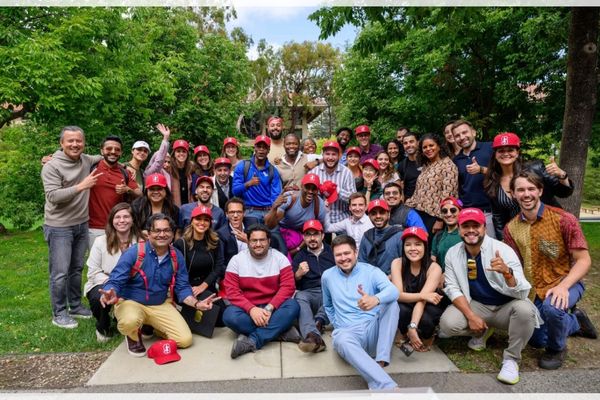
Entrepreneurial Movement: There is so much more in each of us that could be unlocked if we connect to our purpose, our sense of service, and the things we are passionate about.
We’re at that age where the talk is all about, “I can’t wait to retire.” I said, “Quite honestly, with where I’m at today, I feel like I never want to retire. I feel like you know I could do this. It feeds my energy in ways that I’ve never felt before.” Leaving corporate has been terrifying, but it’s also been the most exhilarating thing. I feel more alive than ever. Even into my later years, I want that to continue. What it takes shape or what it’ll look like, I don’t know, but I’m not looking for that day to not do anything.
I feel like we all have that potential to feel that way. It is hard work to unlearn what we’ve learned. It is hard work to build that problem-solving muscle. It’s scary to make that contribution be stronger than the need to fit in and the fear of not being compliant. For folks who are willing to step in, build that muscle, and take that journey, it’s fulfilling. It doesn’t have to be an either-or. It could also be a both-and, especially where future work is going.
I’m so happy you said that. I was going to try to find the quote, but I’m not going to bother. There was a Unitarian theologian named L.P. Jacks. He said something to the effect that learning, work, and play are supposed to be fun. They’re supposed to be rewarding. They’re supposed to be something you lean into, not something you tolerate. Once a person experiences that, they’re changed forever. You switch from like, “Thank God it’s Friday,” to, “Thank God it’s Monday.” I see the same thing. People are counting the days to retirement. I’m like, “That’s a sorry way to live.”
Gary Vaynerchuk said something to the effect of, “If you live for weekends and holidays, you are broken.” Let’s leave it there for now. I’ll circle back to you. We’ll do round two to get into what you’re doing and how this transitioned out of the corporate world, now you’re out in the real world doing entrepreneurial things. I enjoyed this conversation. Thank you for doing it.
I did as well. Thank you.