
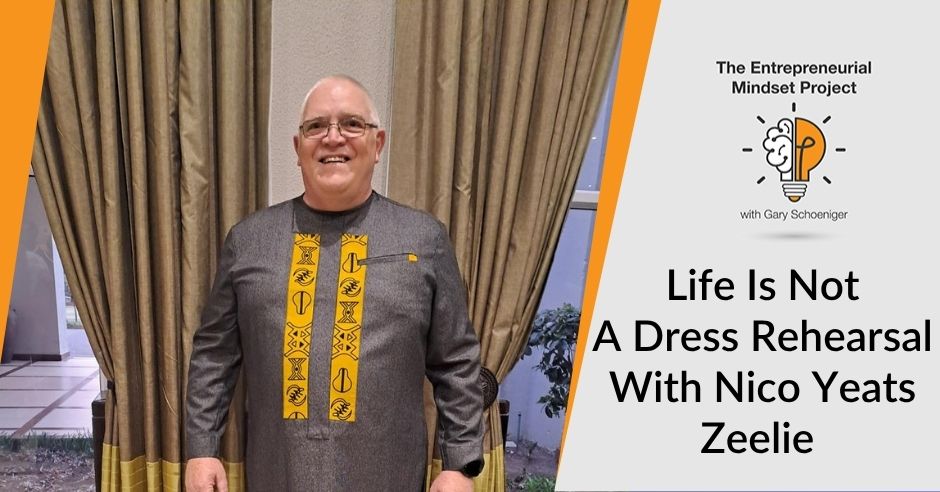
If life is not a dress rehearsal, then what will you do with it?
That’s the question at the heart of this conversation with Nico Yeats Zeelie — an entrepreneurial mindset facilitator from South Africa who, after attending a faculty training workshop with ELI, took a simple framework back to his students and watched it change the way they saw themselves and what was possible.
In this episode, Gary and Nico explore what happens when students stop waiting for permission — and begin to see themselves as capable of creating value, shaping their future, and changing the trajectory of their lives. They discuss agency, identity, purpose, and the idea that life is not something that just happens to you.
This is a conversation about human flourishing — and what becomes possible when ordinary people are given the tools to think differently.
—
Listen to the podcast here
Life Is Not A Dress Rehearsal With Nico Yeats Zeelie
Life Is Not A Dress Rehearsal, This Is The Only Run
Nico, welcome to the show.
Thank you very much, Gary. Glad to be here and I’m honored.
We met I think in Johannesburg as part of a teacher training we did for career and technical education teachers. That’s what we call them in the US, you call them TVET lecturers. That’s how we connected originally.
That is correct, I was in that group in Johannesburg.
You were in the TVET space at that time?
Appointed To Start Over The Entrepreneurial Culture In The TVET System
That is correct. I was appointed at a TVET college to manage and to just basically start off the entrepreneurial culture within that college.
Why were you there? That’s my first question, Nico. What was your interest like why did you show up? Did your boss tell you to go to that or did you volunteer? Like how did you get involved?
I was told to go, but without any resistance on my side. At that stage, I was in the position just over a year and started to learn more about what the requirements and the challenges were at the time. We were a big group. It was nice to be there and meet people that’s in the ecosystem of TVET and that’s got a passion for entrepreneurship. It was without resistance that I said yes.
You weren’t like a skeptic per se. I hear that from a lot of people they get like their boss, they get voluntold to come to our trainings and they have one idea about entrepreneurship and maybe they’re not really interested in it, sometimes they’re actually not really excited about it at all. When they hear about entrepreneurial mindset development, they think differently about it.
For me it was a matter of there’s so much to learn that it’s just a matter of rock up, open mind, and just see what it’s about because I wasn’t a lecturer at that time. My role is to develop entrepreneurial thinking and the entrepreneurial culture within the organization, so it was much easier to then go to something like this without basically preconceived ideas or how it will affect my my job description. It could only enhance it and not affect it negatively.
The Training Challenged Assumptions About Work Status In Society
Can you just talk a little bit about how you experienced that training? It would be interesting just for my own benefit, sorry to the readers, but I would love to hear how you received that training, what that experience was like for you.
Okay, so the training was very informative. I liked the energy in the training. I liked the fact that I was challenged to also look internally and do a lot of reflection into my own heart and into my own mind and what I’m busy with because at the time, I was late 50s and you’re looking at life a little bit differently and you know that the piece of stick is getting shorter as you as you go on, and career wise, it’s getting shorter. For me, it was an eye opener.
I even remember the one question you actually asked, it was in one of your sessions, and the question was, “How does that make you feel?” I still remember I said, “it really angers me.” I come from banking, and banking is very status driven. You get certain level of accounts for certain people with certain professional qualifications. I still remember I said, “It actually it makes me really angry to think that people in TVET, people that are trained in skills, the plumber, the electricians, the chefs, and the hairdressers, that they have to validate their position in society.”
I think something switched in that I come from a place where the one person gets a professional account but the other one is a blue collar worker, they can’t. I think it really changed something for me and the training challenged me to the point of taking action. From first to myself and then to say, “Taking this back to a college, what are you going to do with it? This is valuable. What are you going to do with it?” I had a very positive experience. I was like a sponge. I just sucked it all up.
The training challenged me to the point of taking action. Share on XThank you for those that that insight. There’s so much I want to unpack there, but let me just say this. I think what you and I, where we’re kindred spirits is that I see entrepreneurship as an accessible pathway to individual empowerment and economic mobility. It’s available to anyone. I think that’s what you’re getting at. That’s why I’m so keen on mindset. I’m less interested in the process than the underlying assumptions, the deeply held taken for granted assumptions that we abide that we may not be aware that we’re abiding. Does that make any sense?
Abiding By Cultural Assumptions Inherited From The 1930s Depression
Definitely makes sense because I come from a family where the guidance that was given was from parents that after the depression years of the 1930s. They had to just carve out a path that says, “Get a good job. Work yourself up in your job,” because those days management wasn’t a career choice it was a pathway it was an end to a means and get make sure you get a pension. Make sure you have a medical aid that you can look after your children and your family, and just do your best. You don’t have to be happy, but you have to do your best.
Happiness is just really not even thought of in that context. I love that you said that. I wrote this in my new book, The Entrepreneurial Mindset Advantage, like we’re still abiding by those fundamental, I don’t know what you’d call them because they’re not really rules, but they’re like cultural assumptions.
Definitely cultural assumptions, but it was born in a time when it was really tough. There wasn’t much around. Through job creation, through the government initiatives, people then went and worked in in state organizations. My father was a railway man, and so my mother’s two sisters, their husbands were railway men. I married a wonderful wife whose father was a railway man. There was no entrepreneurial nudging. However, my brother used to paint houses for money for his studies and I used to help him. You do it for the family, you don’t do it for entrepreneurship. The money goes to him for his studies. I wasn’t studying, I was in school.
You get exposed to people that are entrepreneurial. My mother-in-law was a swimming coach for over 50 years. In between life, we started a swimming school with my wife being a coach during the summer after hours because we still have jobs. My kids are now involved in that. Life pushes you in a certain direction that helps you to see there’s different ways of doing things.
I’m very glad that my kids can be in a house where they can see entrepreneurship being practiced, albeit not perfectly, but that it’s practiced and that you need to make a plan, you need to make plans to make ends meet, but then there’s opportunity. Through that swimming school, we could put them in a high school that’s of good quality. My daughter has started studying this year, my son has studied and one could assist in that but it’s because we were not stuck in a 9:00 to 5:00 job mentality. I think that’s a benefit.
That’s really it. I study this a lot. It’s so subtle but so powerful, Nico, that the ways in which that what I’m now calling the managerial mindset affects your awareness, it affects your patterns of beliefs and behaviors in ways that you may not be aware of. I’m not saying that managerial thinking is bad, I’m just saying that you need entrepreneurial thinking and managerial thinking.
What you’re speaking to that’s so interesting to me is what it comes down to in my mind, Nico, is you’re either involved in other-directed value creation or you’re involved in self-directed value creation. I think what you’re describing is like you go to your day job where you’re more or less involved in other-directed value creation, but you’re still engaging your mind in the margins to engage in self-directed value creation. That would be the swimming coaching, right?
Snapping Out Of The Nine-To-Five Job Mentality
Yes. To get out of that, for many people, I think it’s a very difficult thing to grasp. You have to snap out of it. I had a call from one of our entrepreneurs at the previous college where I was. He said, “I just want to talk to you about something because I’m struggling with a decision. Shall I continue with my work in the one company at which I do enjoy and it was what I was trained for, or there’s this other opportunity? I just want to hear from you as an older gentleman that says you know a father figure.”
That person is now wanting to create a different value you know for the client and for himself at the end of the day. If I haven’t grown to a point where I could have applied it in my own life, how then can you give guidance to another person? We always say practice what you preach. I think that is the wrong approach, we should preach what we practice.
I think that goes into a whole separate conversation it could about like mentoring and finding more capable peers and just looking for mentors. I also want to point out that I think a lot of people think that entrepreneurship means taking big risks. The data don’t support that. It it’s not really about taking big risks. What I’ve gleaned from the lived experience of everyday entrepreneurs is they keep their day jobs and they use their discretionary time to explore and experiment and de-risk before they make the leap. Does that make sense to you?
Definitely. That is what we do in our lives. We have the day jobs and the and we started the swim school after hours. Obviously with permission from your day job people because you don’t want to moonlight, you want to do the right things. Again, coming back to this young man that spoke to me where he’s now taking the risk to go more on a basic plus commission basis which is more entrepreneurial which is in line with his sideline business that he had or that he’s got, leaving the more permanent salaried employment to make it a more of a full time hustle.
Also mentioning to me from his perspective, he said, “I am unattached, I am single, I don’t have much responsibility, and if ever I need to take this leap, which I’m very confident about, a good time is now because the risk is so much lower than to have a family and dependents and things like that.” It’s really exactly what you say, it’s evaluating the risk at a different level and make it very calculated and lower risk. He’s going into a direction that’s part of his passion, things that he has practiced on the side.
This is something I’ve been thinking a lot about. I don’t know if we talked about this in Johannesburg. As I wrote my new book, what I became very interested in is the ways in which everyday entrepreneurs develop what I would call like a minimally viable product or service, an MVP, as a way to test their ideas. It’s like a scientific experiment.
Bear with me for a moment, Nico. This is a really cool idea nested in the observation of everyday entrepreneurs. Since they don’t have access to large amounts of money resources, this constraint forces them to micro-experiment. One of the points I want to make right there is that the desire to be entrepreneurial, the desire to be your own boss, to follow your purpose, to follow your passion is very powerful motivational force.
The desire to contribute meaningfully is a powerful motivational force. When it’s properly harnessed, it can cause an ordinary person to do extraordinary things.It can also lead us astray very easily. It makes us very vulnerable to all manner of cognitive biases. What I’m saying is that giving money to people who want to start a business is usually a very bad idea. Does that make sense to you?
The desire to contribute meaningfully is a powerful motivational force. Share on XPre-Funding Guidance And Mentoring Is More Important Than Post-Funding
Absolutely. I recall the days back to banking and the start of my more business consulting career that I adopted the saying that money makes you stupid.
I say that all the time. It makes you lazy and stupid.
You do silly things because money can go to many places and if you so pre-funding, guidance and mentoring is more important than post-funding mentoring. At the end of the day, if the person has not developed a clear understanding as we say in the material of their usefulness and how they want to apply it in their own lives and how they want to serve people.
One of the things that I often speak about comes from the people that I mix with is that you connecting two ways in this life. The one way that you connect is you connect through faith with your creator. It can be the people from different walks of life, but you connect through faith. It’s an upward connection. You connect through service to your fellow men.
If you don’t understand your usefulness and you don’t understand really your gifts and your talents that you were given and how you can apply it as a very happy employee and similarly, as a person that can then in a job situation that is satisfying but that you can extend that usefulness into creating that and do that micro-experimentation. Try a couple of things and see how it works for you and then to latch on to some of that and build it up.
Change as you as you need to change because situations require of you sometimes to change. I think it’s one of those powerful things that you might even be a counselor but you don’t charge but after work, you counsel somebody or you tutor children because you did well in school but then to understand that you can be transformed into an income generating opportunity as well.
You really got to the heart of what entrepreneurship means at least for me. I don’t really care about business per se. That might sound strange from someone who spent 30 years studying The Entrepreneurial Mindset. What I’m interested in, Nico, is human flourishing. I think you just nailed that. We all have gifts, we all have talents and capabilities, and when we’re able to pursue those in ways that are useful to other people, to people in our community, people in our tribe, people in the world, other people, we tend to flourish. I think that’s the formula for entrepreneurship.
For sure because what people underestimate sometimes is this immense dependency to be a job seeker. They’re like, “I’m studying because I want a job.” I think back to the days when I started studying it was what 1997 and I would study at night and it’s hard and it’s tough and you work during the day. There’s an ad on the TV or radio that says, “The lotto for tonight is one million rand,” in our currency. I think to myself “If I had that one million rand, I don’t have to study this hard. I’m studying to earn more money.” It’s a trap. The only way I could get over that was really to go and sit down, take that million rand and work out a budget. I would work out the budget, “What will I do with this money?” I punch holes in the page, I put it in my file and I flip that page over.
There’s the studying that’s on the other side of this thing that distracts you, this thing that keeps you captured because you think you study for money and not for knowledge which is also part and parcel of the of the mindset, is that knowledge hungriness. Once you get to that point where you say, “Knowledge teaches you that you need more knowledge to learn more so that you can grow more,” and that allowed me then to study even further.
I graduated when I was 59. Part of the unlocking and part of the opening up was the training that said to you, “If you have a clear vision,” I was able to do that and I’m trying to help people to say, “You have to have a vision.” I speak with people around when I say, “Please quickly write down your vision for me.” They can’t because it’s like, “I have to think about this but then it’s not clear.”
A Clear Vision Creates Hope For Future Generations In South Africa
I remember because I gave attention to it because I was made aware of this in the training and as I was telling other people about and training The Entrepreneurial Mindset methodology and content. I realized “Nico, where’s your vision?” I remember very distinctly I was sitting waiting for an appointment the person was late they phoned me and said, “Sorry, I’ll be there in twenty.” I sat down and I said, “I’ve got twenty minutes.” The following came to me and I think it was birthed deep inside but it had to find expression. “To create a positive impact in South Africa through entrepreneurial development, creating hope for future generations.” that gets me up every morning.
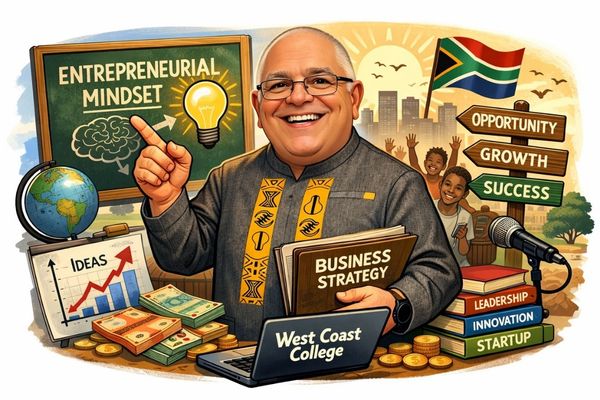
Possibility: I want to create a positive impact in South Africa through entrepreneurial development and inspire hope for future generations.
I got to tell you something. I interviewed a professional soccer player on this show who told me the only reason he got to the professional level in soccer was because he had a vision. He went to a basketball camp when he was 15 years old and the coach encouraged all these kids, 14, 15-year-old kids, to sit down and envision. He said all the other kids were laughing it off and they were embarrassed and giggly and he took it seriously. He said within a few days I saw the improvement in my skill. He said, “I still do it every day to this day, I do it before games.” Exactly that.
I want to double click on what you just said because there in the Ice House program, we have these eight life lessons we call them, these core competencies, these common ideas, these common and predictable ways of thinking and acting that have emerged from hundreds of interviews with what I would call everyday unlikely entrepreneurs. This is really important and it’s really easy to overlook. They all have some idea in their mind, something they’re striving to achieve. Something that does not yet exist.
That is, to my way of thinking, Nico, the single most important factor that’s empowering the entrepreneur. The science on this is very compelling. Maslow called it autotelic. Other more modern researchers call it transcendent thinking. What research shows us, Nico, is that when we’re training our brain and the subconscious mind starts moving us closer and closer to those goals without our awareness, it’s really powerful.
For sure, but then how do you translate that? That came to me, that thinking and I’m always trying to think, “If somebody can’t pen a vision, how do you get what is in inside of them, how do you help them to get it out?” I remember I was sitting one day and I was looking at a word but it was the lighting was very bad. I won’t even say the word that I saw or what it was, but what I saw was, “Through.”
Now when I speak to people, I say, “If you can’t pen a vision, if you don’t know why you are here or what is it really that you should be doing,” I use this little acronym of “Through-For-To.” I said “You need to understand that through you something should happen because you were born for a time this.” You were not born 100 years ago or 200 years ago. You were created for a time this to serve your fellow humans and the people around you, so through you something should happen. For whom?
If you can identify that, then it makes it easier and then you can say but Through-For-To to achieve what? What should be the impact of what should happen through you for those people that you’ve identified? Somehow it narrows it down a bit and people start to think about it and say, “I can do that. I can now go back with those three words and I can start play with it and something can birth inside and then you start to think about it because it is important that you understand why you are here. You’re not just floating through life. You have a very specific purpose, that you have to give expression to.”
Again, Nico, you’re getting right to the heart of it and I want to unpack that a little bit. There’s a great quote from Hillel the Elder, an ancient Hebrew scholar, who said something to the effect of, “If I am not for myself, who will be for me?” if I don’t look out for myself, who’s going to look out for me. That’s the first half of his quote. The second part of it he says, “If I am only for myself, who am I?”
I think that really speaks to what you’re saying and one of the most important things that I’ve gleaned from my 30 years of studying everyday unlikely entrepreneurs is they’re focusing on others. The entrepreneurs who set out to start a business because they want to be their own boss, they want to make a lot of money, they to do X so they start a business that does X, they’re more likely to fail. It’s the ones that think about what do other people need?
They find the problem first, they focus on the other first. By doing so they empower themselves. That leads me to my definition of entrepreneurship which is the self-directed pursuit of opportunities to create value for others. You can adopt that mentality at any job, in any situation. It’s a subtle but powerful mindset shift. That’s how I think about it.
Definitely. We started with a group of students at West Coast College where I am now and there’s a whole system that we’ve created that that’s a different topic. When we started it, I’m telling the students that it is required of you to think an entrepreneur in today’s time and day and age because you have to have that ability to not be boxed in and not to be labeled.
In that you have to adopt the task of being a job creator because if you have The Entrepreneurial Mindset and you have a job creator focus, then you can go and work for a big corporate company but you because you’re there and you are entrepreneurially thinking, you’re taking action, you’re building, you’re expanding that business because you’re creating value for other people, automatically that business will do better. If that business does better, they will attract more customers, if they attract more customers another position is created for another person to have employment. You can be a job creator in fixed employment and you can be a job creator through self-employment.
If you think of the broader economy, the value that you add and just to build the whole system up so that people are actually well sorted because the entrepreneurs can then because they have money the entrepreneurs can provide other services that corporates don’t provide and the whole system is built up. I find it difficult that people and our children are not taught this system and how it works and how money should spin through that that way of creating. It starts with creating value.
I find it difficult that people and our children are not taught how this system works and how money should flow through this way of creating. It starts with creating value. Share on XI wouldn’t even say job creator. The words that I’m focusing on lately, Nico, are agency, adaptability, and value creation in any context. You might not add jobs to the company you’re working at. Maybe that’s a secondary tertiary effect of your behavior. If you know how to identify and solve problems, try things, adapt, move, you’re going to stand out among your peers. It’s that simple.
Let me go backwards for one second with you here, Nico. I want to go back to the comment about your students or people that you encounter that struggle with the idea of vision. I think that’s a really important point and I want to ask a question that is maybe turns the question inside out, but why don’t we use vision? Why don’t we have a vision of a compelling future? It’s almost asking the question in some an upside down, inside out way to get people to think about their own thinking.
In other words, here’s the way I say it sometimes, Nico, to people like, “Do you have a compelling goal? If not, why not?” That’s my 21st century adaptation to Hillel the Elder’s idea. “Do you have a compelling goal?” If you don’t, that’s worthy of thinking about. That says something to me about your underlying assumptions and deeply held values, that you don’t have a vision.
Number one, that’s a starting point. I think it’s also most of us draw from our memory in order to navigate the future. We draw from the past to navigate forward. That’s where a mindset becomes a mindset, a fixed way of thinking and we just get trapped in that. We assume the world is the way it is, I am who I am and there’s nothing I can do about it. That locks us into familiar ways of thinking and acting.
I think the very act of allowing yourself to envision a future that looks different from the past is a really important exercise. To the student that you described, I don’t think it’s something you sit down and do and it happens and you’re done with it. I do think there’s value in putting pen to paper and allowing your brain to relax a little bit as you said you did in that little twenty-minute window of opportunity that you had when someone showed up late.
Investing Time In Reflection Instead Of Spending Time On Social Media
I had one of two choices. The one was to think, and the other was to take out my phone and go to social media or to be prompted by somebody else’s thinking.
I talk about that in Who Owns The Ice House? spending versus investing. Instead of spending your time on your phone, you invested the time in your future.
I think that is something that people struggle with because they allowed themselves to just be influenced by external information without the opportunity to reflect on life and what they’re busy with. I used one of the quotes from Uncle Cleve in the in the group and I said, “You know what? He always said to have fun is to have a future and not to have a moment.”
We are caught up in this this instant world of ours that we live from moment to moment. People walk past you and say, “I can’t wait for Friday.” I said “Please, can we just please wait for Friday? I’m aging way too quickly because you’re wasting our time through wishing towards Friday. The quicker Friday comes for you, the quicker I’m older because I’m always expecting tomorrow something wonderful might happen.” I don’t want to go to payday, I don’t want to go to weekend, I love a Monday because a Monday creates opportunity. Can’t we change the narrative a little bit and just fall in love with life and the opportunities that it can provide?
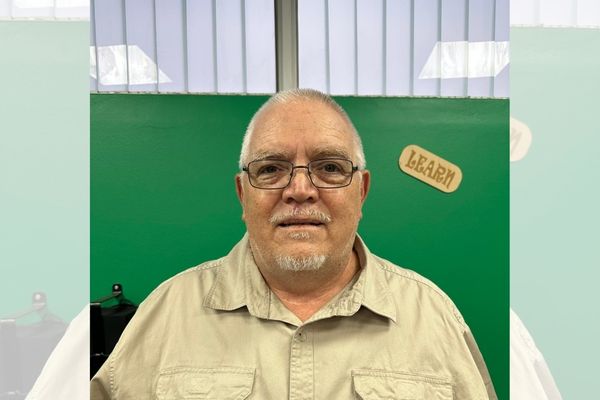
Possibility: We are caught up in this instant world that we live in, from moment to moment. People walk past you and say, “I can’t wait for Friday.”
To come back to something that you’ve said is about the living for self is one of our pastors in our church he made this comment and he said, “To live a life for self is too small a purpose.” It can’t be this small that I’m just self-absorbed. It simply cannot be that small, there’s so much more to it that one can unlock for yourself if you can just get past that the lines that were painted around you. In some cases, yes, it might be walls that’s built up and trauma and things that, but often time it’s just lines that’s drawn and you just need to step over it and be willing to be honest with yourself and talk to the guy in the mirror and be real with that person.
That’s so powerful what you’re saying. I don’t deny that external barriers exist, but the place to start is within our own minds. That’s counter-intuitive. In psychology, there’s a cognitive bias if you will, it’s called the self-serving bias. It works like this. When things go properly in our lives we take credit for it, but when things aren’t going properly, we tend to blame, we tend to look for external attribution. I think that’s a lot of what our work is about. About pause, look at where you are, do where you want to be? How might I be contributing to outcomes I say I don’t want? That is a powerful question.
I want to go back to your thank God it’s Monday comment. That’s a powerful thing you said there, Nico. What I want to draw forth from your comment is that what I think you and I are doing is we’re trying to help people understand that learning and work are supposed to be a source of fulfillment and reward, not drudgery and toil. That’s really what it comes down to.
There’s another point that I lost a few moments back. It’s tied to the goal like you’ve got something in the future you want to make happen. That moment where you had twenty minutes and you had a you were aware that you had a choice, I could either just look in social media or I could stop and use this time to reflect on a clarity on a vision.
What’s hard to understand is that to me the 8 life lessons, the other 7 lessons which are about opportunity, action, about learning, about being resourceful, being reliable, creating a community, and persisting, those are all empty platitudes in the absence of a compelling goal. This is what Maslow talked about, Nico. When you have a compelling goal, you are less distractable. It’s just that simple. You have something to apply yourself to. Whereas if you don’t, it’s the absence of a compelling goal is where people lose their lives, isn’t it?
The example that I use when I do the training is that if you stop to throw a stone at every barking dog, you will never get to the end of the street.
That’s Churchill, that’s beautiful. That’s exactly it. If you don’t know where you’re going, I can’t remember the poet’s name, I’ll think of it in a moment. She said, “Tell me what you’re going to do with your one wild and precious life.” that’s it. I think the most powerful thing in Ice House or in anyone’s journey in life is the threshold moment when you start to do that, when you start to imagine a future that looks different from the past.
Yeah, but again, life is not a dress rehearsal. This is the real thing. There’s a number of days that’s set out for us the heartbeat will stop at a certain time and if we do not make it our business to really assess it out for ourselves and that we that we get so distracted by everything around us that you’re going to get to that stage where you say, “I thought this was just a practice run.” This is the only run there is, so we’ve got to make the best of it and just go full throttle at the end of the day.
Nico, I think what you’re expressing and what you’ve expressed thus far in our conversation is the underlying values and assumptions that make you really good at teaching entrepreneurial mindset. I just want to bring that out for people who are reading this episode. What I hear you saying in your comments, Nico, is that you’re a humanist. When you sit in front of an individual or sit with a person or stand in front of 100 or 400, you’re assuming that those people are all capable of more than they believe. Do I have that right?
Empowering People To Be Better Than You Is The Goal Of Leadership
Yeah. I often speak about it especially when talking to people in leadership and people that’s got influence over other people, lecturers and the likes. If you stand in front of a group and they get all the opportunities that you received, so all the opportunities I got in life, if the people in front of me take hold of such opportunities and I do not believe that they can be better than what I am currently, what business do I have to want to teach them or help them?
I have to believe that if they really go for it, they can be better than me. Therefore, what I sow into their lives will not make me stand out as the hero, but them becoming heroes in their own lives because they can look back and say, “There was a person, that person assisted this way or that way, and today I look back and I can say ‘I’ve actually surpassed that person.'” Not because to brag, but to say that I’ve used my opportunities, therefore I have grown to the point where I am at nowadays.
I think also thinking of our leader John Maxwell, how he usually looks at leadership and how you help people is to you need to empower people to be better than you because surely, I’m not the pinnacle of what it should be, far from it. There’s much more. We need to understand that if we do it from that point of humbleness and focus and not to overemphasize it, then we will even do more to empower the others. We will go and read more.
Many of the quotes that I’m using here, it’s quotes that I picked up what other people have said and that I have adopted into my life. When my wife reads this, she’s going to say, “Why did you say that?” We had a problem with wallpaper in our room and it was just a mess and all the wallpaper came down. I should have used a skilled person and not do it myself. However, now the wall is there, it’s ugly, and the one day we came home and there was this quote that really stood out. I wrote the quote on the wall.
You must see that wall now, it’s still an ugly wall from a painter’s perspective, but it’s full of quotes. The other morning, I was lying there and I looked at this one quote again and I say, “One for the week.” You start to think like that. You start to adopt these things because you have this growth mindset. You want to know more and your ears and your eyes are open for these things. It helps you then to help other people.
However, if you have this closed mindset and if you have this stuck mentality then it’s going to things are going to pass you by and you you’re not going to even notice it. I always say to people, “When is the opportunity to learn?” People are going to throw a lot of gravel and gold nuggets on the ground, and you need to decide which you’re going to pick up. If your mind is not open to it, it’s not going to happen.
People are going to throw a lot of gravel and gold nuggets on the ground, and you need to decide which you’re going to pick up. If your mind is not open to it, it’s not going to happen. Share on XOne guy sat by me one day and he was struggling to get it out and I said, “Okay, what car do you like?” he says he would to have a red BMW, sorry for advertising them, but this is the model and it must be this series. I said to him “Okay, when you go home now and you’re going to travel on the bus, count for me how many blue cars you see on the road.”
He came home, he sent me the message, I phoned him and I said he said he saw something twelve blue cars. I said, “Why did you see them?” He says, “Because you asked me to look for them.” He stayed quiet and he said, “I get it. I just need for to look for these opportunities that I want in my environment, in my community. I wasn’t looking for opportunities because I was stuck on what I want and not what the people need.” For him it was an “A-ha.”
I love that, Nico. That’s really what mindset development is all about, noticing. The way our brains work, our brains are inundated with billions of bits of data that pour in through our five senses. We can only deal with a handful at any moment. What happens our brains just filter out everything deemed non-threatening or irrelevant. All you’re saying is this is about widening the aperture a little bit.
The Scottish psychiatrist R.D. Laing said something, “The range of what we think and do is limited by what we fail to notice.” He went on to say that, “And there is nothing we can do until we notice how failing to notice shapes our thoughts and deeds.” That’s really what you’re talking about. It’s like opportunities are everywhere but if you’re not training your brain to look for them, you’re going to step on one, look right past it several times a day. It’s not really that complicated.
The power of quotes is not insignificant also, I use them a lot as little nuggets of inspiration and wisdom to keep moving myself forward. I said this on social media. Here’s what I’ve discerned from interviewing hundreds and hundreds of everyday entrepreneurs. The people who are looking for opportunities find them and people who aren’t, don’t.
It’s as simple as that. That’s what the work you and I are doing and I think it’s important to show people relatable models. Show people that here’s somebody that came from similar circumstances that that is succeeding by embracing this way of thinking. It greatly increases the likelihood. Using Richard Branson or Elon Musk as an exemplar of entrepreneurship, I don’t think that’s a great idea for most people. I think it’s better to show them someone that they can relate to that might be a few steps ahead of them but not so far away as to be unattainable. I remember Nico being in Johannesburg. During the time, I think it was April of 2023.
I was in an Uber car and I have similar conversations with Uber drivers and it’s interesting because Uber drivers are often in this in-between category. They’re side-hustling but they’re still not thinking for themselves. The fact that you’re an Uber driver tells me you’re side-hustling, you’re looking for something more, but you’re just being told what to do by a boss that’s electronic.
I was engaging with this young guy in a car in in Johannesburg and he was looking at me in the rearview mirror and I was talking to him a little bit about what is he interested in what does he do? He asked me about my work in entrepreneurship and I just said, “Here’s an example. Why don’t you turn your Uber car into a university, into your own private university?”
“Why don’t you get yourself a little day planner and ask every person that gets into the car to write down one little bit of wisdom that someone gave to them that helped them in their life? Every single person. Just do that.”he’s looking at me in the rearview mirror this is some brilliant insight. I’m thinking to myself, “No, it’s just the way I think because I believe I’m in control of my future. It’s a subtle underlying shift. It has nothing to do with brilliance.” Does that make any sense to you?
Yeah. I think that a lot of it has to do with the way that one comes through life. In my life, there was a time where I was nudged to think differently to the way that I was brought up of get a job, get a pension, get a medical aid and have a house for your family. You get exposed to it but there’s a nudge that takes you a little bit further that makes you a bit braver to do something irresponsible in some people’s eyes and realizing that the frustrations that you experience in life, you have control over that.
You can make a decision about that. It’s very good to do that if you have people around you that love you and support you, which I was very fortunate to have. To take that leap of faith or just to do that other thing that allows you to just get out of the rut because we are products of our past. Something that I would like people to understand is that where you are today is because of it’s a product of everything that has happened before.
Now, you have a decision to make. Are you going to stay a prisoner of that or are you going to think differently going forward? Don’t deny the fact that you are what you are at this very moment but you cannot stand there and accept that I’m going to be this same person, still stuck in this position, a day, a week, five years from now. It means that you have stopped at a stage and you’re going to say to people, “I feel like I’m stuck.” It’s because you’ve stopped to think that there’s a better way going forward.
I like the material that speaks about the barriers that one experience, the internal, the external barriers because they are there but it is your responsibility to say, “Am I going to make a plan about it?” The plan can be as simple as, “I’m so stuck that I need to speak to somebody that’s trained in psychology, psychiatry.” It doesn’t matter. Whatever the situation is, try make a plan. You have power to do that.
I was at a stage and it’s something that I think a lot of entrepreneurs struggle with is the loneliness of being in your own business sometimes. One’s got to be able to speak about the things that hurt. I am able to tell people that depression is real. Be real with yourself, but if you don’t face it, it’s going to hurt you. If you deal with it it’s going to set you free at some stage. I realized that and it was personal circumstances that created it and personal meaning extended family, father that was sick with cancer and study pressure and a lot of things that created this situation.
You look in the mirror and you say to yourself, “Okay, there’s something wrong, and what are you going to do about it?” The next moment there’s a questionnaire from your medical aid and it talks about something going wrong in your life. You have a choice to complete it or not or to just shrug it under the carpet.
You make a decision you complete it and you make an appointment with your doctor and doctor says to me, “What how can I help you?” I say, “Yes, the questionnaire I completed, what do you think?” He says “I think you’re quite right.” There’s a solution to that. Lo and behold, as soon you’re out of that place of despair or darkness or situation. From there, you can look forward whilst you looking back and say, “How did I get out of it? I had to make a decision.”
As you go through life you can then take those good lessons that you’ve learned for yourself and then apply it again going forward because life is still going to throw you a couple of curveballs but you need to know how to deal with that as you learn and grow but if you’ve dug yourself into a hole, that’s where you’re going to stay.
Life is still going to throw you a couple of curveballs, but you need to know how to deal with them as you learn and grow. Share on XI think we have the responsibility then if we have such wonderful material and such wonderful resources and opportunities to then preach what we practice. Again, you can start by practicing what you preaching, it’s a good place to start but if you can apply it into your own life and you can start using these things, it becomes a natural outflow that you get an opportunity, you walk past a classroom and say, “Here’s the entrepreneurship guide, do you want to speak to the class?”
You look at the class you ask 1 or 2 questions and you think to yourself “I see a lot of community issues in this class.” They surround themselves and then you just dig into it and say, “Is this person sitting next to you your friend?” They say, “Yeah.” I said “Are they going somewhere or are they going nowhere?” nowhere people are going to take you where they going because they don’t care about where you going because they going nowhere.
However, if you’re a somewhere person surely you care where you going because you’ve got a goal. Surround yourself so you can latch onto these lessons and you can apply it in various situations because you’ve made it your own because you’re practicing it and because you can say no to people in your life and say, “That relationship is not going to benefit me, walk away.”
I think you’re speaking very eloquently to the idea of the awareness that we have a choice and that’s really what mindset development is all about. I’ve said this many times, Nico. My work is 99% mindset, it’s 1% entrepreneurship. It’s really that simple. If we can get people to think about their own thinking.
I say it like this sometimes, Nico, to people. These workshops, these conversations these courses about entrepreneurial mindset development I think are mostly about giving people the opportunity to illuminate, to bring their deeply held values and taken for granted assumptions up out of the depths into their conscious awareness and expose them to them. Give them the opportunity to say, “That’s the underlying assumption or value.” At the break, there’s a buffet table over there where we’ve laid out the underlying values and assumptions of everyday entrepreneurs. Go have a snack and we’ll reconvene in ten minutes. That’s how I think about it.
It’s life. I recall the training or session that we had where the people afterwards said, “For me, I had a glass ceiling or I believed there’s a ceiling, I can’t go further in my job.” They’ve joined a training course at that stage the online campus of Northlink College and they said. “I’m stuck.” You go through this program and afterwards the person says, “You know what? I thought I was stuck. I thought that I can go nowhere, but I still have a promotion or two in me in my current role in the organization that I’m at.”
The fact that I could reflect on certain things, the fact that I can do a bit of introspection because reflection is really your best friend even if it hurts. They’re your best companion because if you go through a day and you haven’t reflected on what happened at some point, then you’re not going to look back at the day and you’re going to look and say, “This was a wasted day.” He said “I’m actually going to nail this course and I am going to go for that next promotion because that is what I want.”
I needed to hear what was said and it’s not what I said, it is merely conveying a message of things that work, things that are practical, things that’s been resourced and been researched and made available for us to then share with people. I remember the one time, just to latch onto that, the person that helped me with the training, she phoned me afterwards.
I did it online so it was difficult to do powerpoint and the talking checking the chats and everything so I asked somebody to assist, running the powerpoints in the background and playing those wonderful videos you guys made with our South African entrepreneurs in Jo’burg. When I gave time to reflect and I said “You can unmute put up your hand unmute,” and she said that person has been in her class, she’s never heard that person speak.
The person is on the spectrum and that person actually spoke for about a minute or two just telling what this meant to them. She said she’s never heard that that young man’s voice. It was a time for him to say, “This is valuable and I’m going to speak about that.” I can recall the conversation it’s two years later of how that just being able to help people you say think about the thinking and taking hold of stuff.
Picking up that gold nugget and polish it a bit and then react to that. People being very honest with themselves. There’s this one exercise that you do like what is that one thing that I must stop doing and what is the one thing I must start doing and the good things that I do, that little self-reflection exercise and how real people get.
They put it out there, “I really think I need to stop I must drink much less. This is because I’m not building my personal brand so it’s not helping me and I need to make better decisions so I think I must stop drinking,” in an open forum. If people are brave enough to say that they hear it. They hear themselves say it. I think that is so important because if I don’t hear myself say it or I haven’t written it down or I haven’t made it a concerted effort to give attention to it, it can pass you by.
At some stage, you’re going to be reminded, “Remember in that training, you said you’re going to do less of this that you now continue doing?” By the umpteenth time that you come across that thought that you’ve passed and that you made known, it’s going to drop in your spirit and you’re going to say, “Actually, I think I’m going to now stop and I do it completely.” It creates the change that is needed.
These are powerful things that one learn along the way from the people that’s undergoing it but somehow many of the things that I experienced, I had to experience for myself because this is not theory this is not read and repeat. This is read get the information internalize it and then apply it and then you can share it with other people because it’s fundamental. It’s helpful. It’s powerful.
I appreciate you saying that, Nico. One of the things I think about is in terms of wasted human potential it’s staggering when you look at the data. I’ve tracked some of this through the Gallup organization when they’ve been following this for a couple of decades. In the US or I think it’s North America, two-thirds of students leave high school not engaged in learning. Gallup calls this the engagement cliff.
At fifth grade, about three quarters of students are engaged and that goes down to about 30% by the time they graduate. The longer they stay in school, the less engaged they become. Specifically in a day and time when we’re constantly called upon to learn unlearn and relearn, that’s a travesty in and of itself. As a side note, this data’s been available for decades it’s unbelievable to me that we just keep doing it in spite of the data.
More broadly, Gallup’s also showing that globally 87% of workers are not engaged in their work. That 1 in 5 is actually hostile to the organization. They’re paddling backwards. That’s 20% of the population is hostile, but 87% are just phoning it in. When we look at entrepreneurial people, they seem to be optimally engaged, they seem to be intrinsically motivated. That, to me, is the real power of entrepreneurial mindset education to my way of thinking and I thought you’ve done a great job of articulating that thus far.
I want to move on and talk about what did you do with our training once you completed it in April of 2023? What did you do and what happened? I want to back up and say to you, again an observation I had that was quite stunning to me at that training. I think we had maybe 225, 250 TVET lecturers, career and technical education teachers in that room.
I don’t know what the numbers are today but at that time three years ago, the youth unemployment rate in South Africa for youth age I think it was 16 to 24 or 25 was at about 60%. Many of the TVET lecturers were expressing a lot of anxiety about that. “We’re preparing young people for a world that doesn’t have a job, doesn’t have a place for them.”
Every night, I would go across the compound after the training and interview local entrepreneurs, almost all of whom said to me in one way or another, “There’s opportunity everywhere here in South Africa.” It was striking to me the difference. You all live in the same country, in the same community, but one of you sees lack of opportunity and one of you sees an abundance of opportunity. I just thought that was fascinating.
Adapted The Program By Using Bite-Sized TikTok Videos For Engagement
That is definitely so. To come back to the question, what did I do with the training? Now obviously, if something is important enough for a person you will look for an opportunity to give expression to what you’ve gained. The difficulty was that if people are brought back into a known situation where there’s certain pressures, they might fall back into old habits and not necessarily adopt what they’ve received even though very good.
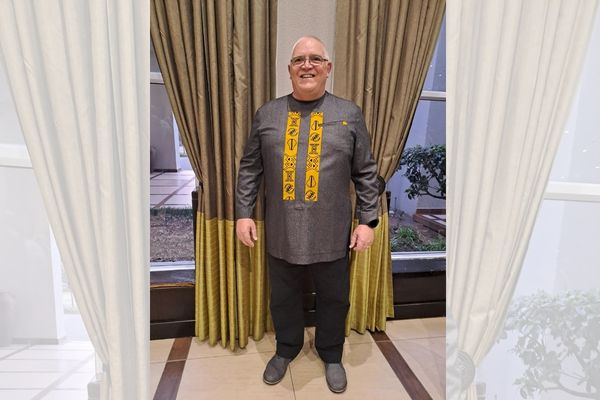
Possibility: If something matters enough to a person, they’ll find opportunities to express what they’ve gained. The challenge is that when people return to familiar environments with pressure, they may fall back into old habits & not fully apply what they’ve learned—even when it is valuable.
My basic outgo was that where would I find people that would be willing to listen to this and to the content of The Entrepreneurial Mindset and the eight lessons that’s locked up in it and how will I then engage with them?” I went about and I invited as many people as I could and say, “I think this is powerful, if you want any assistance, please just shout. I’m here, my responsibility is entrepreneurial development, I’m here, I can help you, but you need to call out. You need to put up your hand.”
That really didn’t happen that well. I looked for an opportunity and I found a campus that was not that didn’t have a representative of The Entrepreneurial Mindset methodology at their fingertips. I looked for a partner there because I knew and that was the online campus. I found the right partner that is also passionate but has a family of entrepreneurs in in it.
She has seen what entrepreneurship has done, father-in-law has a business, the husband that works in a business and although she was in in the TVET space with the partner creating the opportunity. We specifically focused in on students during the orientation because it’s online learning, we decided to do it online and not to do it face to face. That gave them the opportunity to actually learn to use Microsoft Teams, as a means to and that was helping the lecturers.
We went through the program and then you look at it and you say, “There’s a certain pedagogy that’s described in it, but it’s not fixed.” You can adapt it. I adapted the program that one the one lecture would be a lecture where I do most of the talking and just sharing the information but then the next evening, and we did it 7:00 to 8:00 in the evenings. The next evening, I would then go back to the previous evening and say, “Now let’s discuss it. What did you learn about this? What’s your voice?” Get them into the chat unmute and speak to us and keep asking the questions that brings it forth.
That’s how some of the comments I’ve actually looked at that says, “Such a good way to start, it helps me to unlock and understand that I’m now in control.” Lecturers came back and said, “What did you do with this group?” They said to the to the head of department she says, “Why are you asking?” She says “Students are more engaged. They voice their opinion less aggressively, they speak when they ask the question they just don’t say stay silent and they are more respectful to the whole group. Just do what you did.”
I also got to know that training is a difficult thing and you need to find ways to make it stick. This is something that I’m still working on. We started to make tiktok videos. For instance, I would break the whole curriculum down into 60 to 90 second snippets. I would say, “Vision. Okay, so in this course that we did, we spoke about Vision or Choice as a topic and under that, there’s the vision and the reaction compared to response those types of things.” I would deal with each one of those. I would do an introduction to Choice then I would deal with each one of those in 60 to 90 seconds and then we would close it off. That gets put on social media and we make it known to the broader population at that stage of Northlink College.
Ever so often, you have to then ask the question, what is the call to action? Information stays information unless you ask people to do something with it. You say, “Have you done your dream chart? Don’t you think it’s time that you sit back and really think about what you want to do? I really hope that you’re going to do your dream chart this week. Speak to you again, have a nice day.” You end it off. Ever so often you just put in that question and say, “What are you going to do with this information? It’s just information.”
I remember there’s one of the tiktoks that had quite well in South Africa if you get 5,000 views I think you’re quite cool because of the population. The magic word is yet. How I just spoke about that as simple thing and say, “What you’ve got this choice you can say ‘I can’t’ or ‘I can’t do it yet.'” things that and one day I got my family member that said to her husband, “These weights in the gym is too heavy I can’t lift it.”
He says, “Remember what Nico said, you can’t lift it yet.” She laughed and she says “Okay, got that, and we will train until I can lift those weights.” It is for everybody. This is not just for an entrepreneur but it is that mindset that unlocks the human potential, as you rightfully say in the second book that that’s seen the light of day which is actually lying on my desk, by the way.
I’m busy working through that it doesn’t read as easy as the first one, Gary, I must say, but it’s so valuable because there’s such a lot of substance in it that one. Sometimes I have to read and re-read the pages just to make sure that you get the understanding of it. One of the things that stood out is that entrepreneurs don’t learn normal people in a classroom. When we get engaged with people in entrepreneurial training we really need to think of ways to make it really palatable for the people that that should hear the message.
One shouldn’t just go with a set mindset again in how you train and how you teach because you need to think of how the people learn and not how you teach. I’ve got so much to learn still, there’s so much I need to still get the hang of to make it even better that people that it’s really palatable and that the training can stick because we need to get that. We need to nail that.
That book was written for you, Nico. I thought of The Entrepreneurial Mindset Advantage more of a leadership book. It is dense. There’s a lot packed in it. It took me ten years to write that book. You said something a minute ago, I lost where I was going to go with that. It’s about learning. In the research for that book, I spent a fair amount of time studying evolutionary psychology.What I’ve learned is that Entrepreneurial Discovery Learning, as I call it in the book, EDL, actually is very reflective of how humans have learned for hundreds of thousands of years, long before we had a written word or a known language or books or classrooms, let alone tiktok videos.
It’s learning that occurs without effort or awareness. It’s learning through play, it’s learning from experiments, but the point that I want to get to is that the thing that educator I think you really nailed this, Nico.If we do this right, entrepreneurial mindset development creates a very powerful incentive to learn. It reawakens that natural curiosity where learning becomes fun and energizing and exciting rather than drudgery or something to be endured.
I think that’s an important idea that’s nested in entrepreneurial mindset development and I thought you did a really good job of speaking to that.Talk to me a little bit about what happened. You found a partner to help you at this online university, how did students respond over time? Did people come to you immediately or did the class grow and grow through word of mouth? How did it evolve?
I think that initially, it was a bit of a grudge buy. They were told that they have to do the program as part of their orientation and that they had to now commit that time because there was a window of opportunity between registering and starting their own online learning, waiting for certain processes to release. There was time available and it’s also to get them in that rhythm.
What happened after that was that when people speak about it, and I would even find that some of the students re-do it, and they would come back into the group when they enroll for another subject in another semester they would actually come and re-do that. It wasn’t a natural growth of people talk to people as much as bringing it into the process of the college or of the online school and say, “This is what we do here and it has a benefit,” it is then encouraged. The numbers tend to stay. You could see that there was a general improvement in people. We have a baseline and an endline assessment just to see what is the shift that happens, but that you see that more people stay within the program.
I look at the comments and I look at the chats that because they’re online, they don’t speak to other students necessarily, they never meet them really face to face, but it’s that the lecturers now become involved and say, “That’s valuable. You need to go and do that. It will change the way you think about life.”
It didn’t grow much but we just take the groups through the process and make it as palatable as we possibly could and make it easy for them to journey with us and then checking who starts and who finishes. As you intensely said, not everybody that starts finishes as they go through life. We gained that momentum that more people started to finish than in past groups because there’s value in the whole thing and in the presentation.
Not everybody who starts finishes as they go through life. Share on XYou were treating this as an onboarding course, like before their more formal studies started it was presented as that? What timeline were you delivering this, over how many days, weeks? How often?
Give Enough Time For Reflection
Obviously with any curriculum driven type of training, time is really of the essence. I have adopted and I’m very strong on my opinion about it. You cannot do this in a one-day course because you do not give enough time for reflection. What we did was we started on a Friday evening from 7:00 to 8:00, then we would do the orientation session, do the baseline, do a bit of an introduction, get a little bit of the expectations.
The next week from the Monday to the Friday, we would do so it’s in total it’s six hours. Monday evening, I would do lessons 1 to 3 with the powerpoint, with the videos and I put as much as possible of that in and try to get as much as possible response from the people in asking questions in the chat, coming by something and say, “Tell me quickly, are you a reactor or a responder?” after we’ve dealt with it and then you get the answers. Tuesday, I would go back to lessons 1 to 3. I say, “Okay, under lesson one, we spoke about this. What do you think about that? How do you think this can help you? Do you have a vision? Can you recall an opportunity where you reacted instead of responded?” You get them to speak about that.
Now the peers are listening to their voice. I think it’s important because now it’s not me. Although I have been blamed that I’ve got a voice for radio by the students, they’re not listening to me now. Now they’re listening to their peers and we just recap the necessary the real we in Afrikaans we’ve got such a lovely word we call it pitkos, that soft, juicy meat that you get from it so you focus in on that.
We go to the Wednesday, I do lessons 4 to 7 and Thursday, I discuss that. You go slower through it and I really try to stick to an hour to also show them that I have to respect that. On the Friday, I do persistence, resilience and grit. I go through that, have a bit of a discussion and the last half an hour. We then do the end line assessment and we just do a reflection session.
All in all six hours and it’s served well. An hour online is a max. Also to give it a week so that they can actually hear it, think about it, reflect on it and then go through the process. Afterwards or actually at the beginning of it, we’ve there’s a small learner guide, it’s a 23 page doc that was designed by Allan Gray the Inspire group, and then we send that to them as well on their whatsapp groups. They can go through the material in their own time and they can then further reflect on it as they go about. We obviously ask them to join the social media and there they can see some of the videos and the tiktoks that we’ve made about the topics and reflect again on it and that calls to action.
Clifton has become a mentor and a dear friend to me and you’ll recall he Zoomed into our training years ago. He would probably get a huge kick out of it if you have an opportunity to let him Zoom into your class to the speak to the students.
That would be fantastic so you will have to create that that connection with him. I would love to speak to him.
I am going to. I’m just going to send an email introduction to you and Clifton and let you guys take it from there. He practically had tears in his eyes when he told me what it meant to him to take this work to the African continent. He was really moved by that.
On that day that we had a chance to do a Q and A with him, I was sitting there and I say, “Really? You can’t even think of one question to ask this man? You’re sitting here in the gold mine and you can’t think of a question?” I was sitting there you were mesmerized people because it just became so real in that moment that I was just sitting there and I thought to myself afterwards ,”You could have had a chance to ask a question, but you’ll get your chance.” Now here we are.
Nico, this has just been such an enlightening conversation, energizing. To me, you’re the epitome of what an entrepreneurial mindset facilitator is. I just want to wind up here just to say thank you. What you’ve done with this material is astonishing. It’s so fantastic. I’m just grateful to have this conversation with you to be able to share your story with people. It’s just fantastic. I think this is what every educator wants. It’s a powerful story.
No, I really appreciate it. It’s been an honor.
Maybe you can share one of your tiktok videos or something. That might be fun to see what other people are doing about with the Ice House material, The Entrepreneurial Mindset stuff. Nico, thank you. Thank you from the bottom of my heart for everything you’re doing. Thank you for taking time to share it with us on this show. I can’t wait to see where you keep going and keep pushing the boundaries.
No, it’s a great pleasure and it’s an honor. I really am thankful that everything was presented to us and for all the whole ecosystem that came together to make it possible, from the Allan Gray team and it was just fantastic. I’m just glad that I was there and that we had the opportunity and it definitely changed my life and I think that is why it becomes effortless to talk about it and speak about it because it changed my life.
For that, I’m thankful to you that you also offered your time to come to South Africa and to assist us and help us see a different light that can reflect a better future for ourselves. At the end of the day, we have to believe that life can be better and so for this year I’ve adopted the words, “What if?” what if we just do things a little bit different? What can happen? Thank you very much. I really appreciate it. Go from strength to strength and let’s do it.
Let’s do it. Thank you, Nico.