
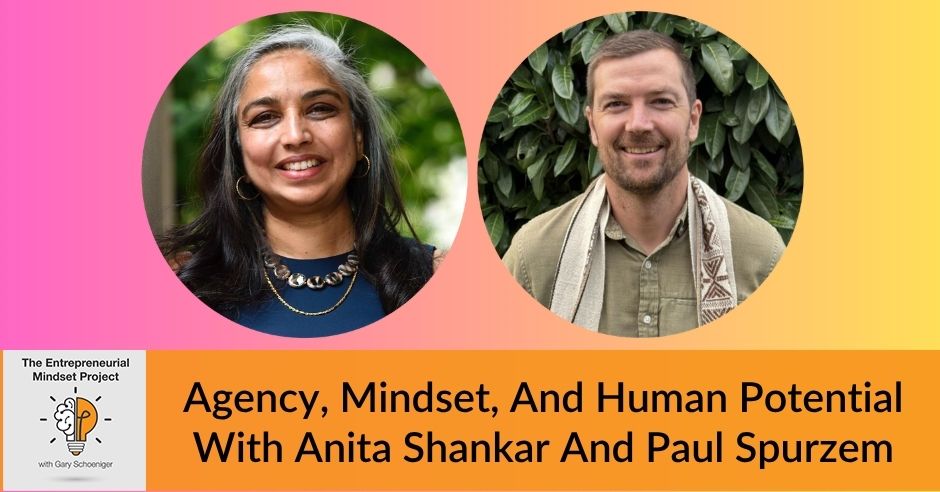
Welcome to the show, where we explore the hidden logic that enables ordinary people to accomplish extraordinary things. I recently sat down with Anita Shankar and Paul Spurzem from Johns Hopkins University to talk about something I’ve come to believe sits at the root of almost everything we care about, agency. The ability to make decisions and take action on things that matter. Now that may sound simple, but the implications are profound.
When people begin to believe that their actions actually matter, something fundamental begins to shift. What Anita and Paul have discovered through their work around the world is that agency is not some abstract idea. It has very real consequences. It affects our health. It affects motivation. It affects learning. It determines whether people stay stuck or begin to move.
As you’ll hear in this conversation, it may be one of the most overlooked dimensions of entrepreneurship, education, and human flourishing. This is a wide-ranging conversation about mindset, culture, identity, social influence, and what it takes to help people see new possibilities for themselves. Without any further ado, I hope you enjoy my conversation with Anita Shankar and Paul Spurzem.
—
Listen to the podcast here
Agency, Mindset, And Human Potential With Anita Shankar And Paul Spurzem
Anita, Paul, welcome to the show.
It is lovely to be here.
We have been trying to get together to do this for some time. Anita, I think you and I met at some event at Harvard.
That is right. It is a flourishing place.
We just bumped into each other. We were both interested in what the other was doing. Paul, I think you got dragged into the conversation somewhere not long after that. You guys study agency at Johns Hopkins. Talk to me a little bit about what put you on that path. Anita, I will start with you, and then Paul, you can chime in.
International Health And The Pivot To Personal Agency
I do international health and development. I am a medical anthropologist by training. A bulk of my work has been focused on infectious diseases and trying to figure out public health interventions that can help move the needle toward enhanced health. I spent about fifteen years out of my 35 years living and working overseas, testing a number of program activities.
Twenty years into my career, I realized that many of the public health programs that we thought were making a dent were not really having the impact that we should be able to make. If anything, we were making people slightly healthier in poverty. Something has to change. We are not really getting to the people in a way that they can change their lives.
I made a major pivot in 2010 in both my thinking and my research. I needed to convince myself that there could be ways that we could better engage with folks on the ground, from wherever they are in terms of their thinking or their environment, to help them figure out what they want in their life and what tools they would need to be able to get there.
We started doing a number of research trials, mostly with very vulnerable populations. We worked with sex workers in India, the rural-urban poor in Kenya, and HIV-positive pregnant women. Once we started testing various iterations of these psychological and social exercises with these populations, we saw dramatic impacts on their outcomes. Sex workers, where about half the population was HIV positive, and they had been sold into their work by their families, were all of a sudden finding their worth, saving money, and getting checked up at the doctor to become healthier.
The thing that shocked me most from that research with the sex workers was that, after about a year of doing this personal agency training, 30% of those women were able to pay off the brothel owner and leave sex work on their own. Sometimes they left with a partner or a lover. I was like, “We have got to do something differently in public health.” That is where it was a lot of, “What is the path forward?”
I was writing grants and doing more research because it has to have an evidence base. You have to be able to prove to yourself, and I had to prove to myself in a rigorous enough way to say, “There are some significant improvements that we can make in a number of different areas, not just health, but savings, livelihoods, interpersonal relationships, and reductions of gender-based violence.” We were able to actually launch the Self-Empowerment and Equity for Change Initiative in 2019. We call it SEE Change.
I love that stumbling into that. There is a lot I want to unpack there. Paul, how did you come about this?

Human Potential: Agency is about the psychological way we see ourselves and what we believe about our ability to reach meaningful goals.
My background originally was in business. I was a CPA and a bit of a management consulting type with large corporations. In my free time, I was involved in some Rotary Foundation and Rotary Club projects that were supporting young women in Peru to design projects and get involved with issues in their communities. That was my first exposure to a lot of the methods that we are trying to spread in SEE Change, things that can help people do non-stereotypical things.
It is normal for an adolescent girl to feel a little bit of nerves when proposing an idea to a community leader, which is not the norm. What are the ways that you can help build confidence, help people see their worth, act on it, act on what they see, and not wait to solve problems that they want to see solved? There is a lot of generational lag in places that have gotten so much aid money for so long that the older generation expects that someone will come and save them, and the younger generation cannot afford to wait. I really enjoyed working with education leadership programs like that. Several years later, I am now doing it with Anita and the SEE Change team in a lot of places.
Defining Agency: More Than Just Empowerment
That is super exciting. The overlap in our work is really powerful. Can you guys give me a lay definition of agency? A lot of people do not understand what that word means. I was having a conversation with an entrepreneur who sold his business for hundreds of millions of dollars. I used the word agency. He said, “I do not know what that word means.” Tell me what that word means.
It is basically the ability to make decisions and take action. The key component of agency is to be an agent, to be able to take action on things that are important to you.
The key component of agency is the ability to take action on things that are important to you. Share on XI like that a lot. It is Uncle Cleve, right?
Exactly. We really struggled with this because people talk about empowerment all the time. What is empowerment? There are so many different definitions, but we took it directly from psychology and the psychological literature because it really focused on exactly what we thought was missing. Empowerment can be a lot of things. “Someone gets a sewing machine or goes to school, and they feel empowered.” With agency, we are talking about the psychological aspects of how we see ourselves and what we think about our ability to reach the goals that are important to us.
That is what is so interesting to me. That is why I am so obsessed with mindset. You guys can help me with this. I’m trying to put like nail-dial the definition of mindset, which is probably a fool’s errand. I define mindset as deeply held values, taken-for-granted assumptions, and cognitive frameworks like mental models that influence our behavior largely without our awareness. That’s on top of my head. You are not aware of your sense of agency. Awareness is so tied to your ability to develop it or increase it.
Our mindsets are part of us and constantly evolving. We often feel like we do not have control over it, but it is so complex. It is what we have learned, what we have been taught about how you are supposed to be, and what we have experienced. Our brains have been functioning within that setting. It can also change. We hear things like “After 35, your brain goes downhill, you will never grow,” but we know that is not true. Mindset encompasses so much. It is a lived experience and how we function in the world.
The Biopsychosocial Model Of Stress And Agency
I think of it as the software underneath there. Paul, you were going to say something.
I like the software metaphor. It is almost like the software that can reshape its own hardware at the same time. There is a lot of the biopsychosocial model of stress in the brain. The way we think about what we see can chemically affect how our brain is going to process it. With cortisol levels and social stress, what I think someone is going to judge me for can feel just as threatening and release chemicals just as if I were in danger from a lion. These things can pile up.
I find it easier to define agency by talking about what it is not. When someone has a really low sense of agency, they are basically hopeless and helpless. They believe that no matter what they do, their future is not determined by them. It does not matter if they participate in this program or win the lottery; nothing is going to change.
When someone has a low sense of agency, they feel hopeless and helpless. Share on XDepression is almost the antithesis of having high agency. That is how the positive psychology folks talk about it. A lot of our work and where we are getting traction with this term is putting it into common terms of what the skills are to be able to act in line with your values. You have to know what your values are at the beginning to do what is important to you.
That will vary person by person and household by household. The process when we try to target the agency starts with getting awareness around this, the skills to shift and remember your strengths, and not just dwell on your mistakes or your situation. There are behavioral tricks to act on your opportunities there.
It is a mindset intervention that you guys are talking about.
Yes, that is correct.
Ten mindset interventions combined.
Hacking At The Root: Why Mindset Interventions Work
What makes me so excited about what you are doing is that I feel like you guys are hacking at the root. For every thousand men hacking at the branches, there is one hacking at the root, because it all comes from agency.
We think so. If you look at cultures over time, what leads to progress is whether societies allow human beings to exert their agency. We know that is the root of creativity and innovation. There are plenty of things that make it harder for us to find our own agency and use it. It is just a lot easier to go with the flow, to do what we think is expected of us, and to think that we are small.

Human Potential: Across cultures, progress depends on whether people are allowed to exercise their agency.
What you are getting at is these micro interventions, like pauses. You can get people to think about their own thinking. Anita, if all you see is people behaving in a certain way, you are just less likely to deviate.
People believe what they think.
Do not believe everything you think.
You cannot believe everything you think. That is a hard thing to believe.
That is going to be the title of this episode.
It is scary to think you are responsible for what happens to you. It is scary to think that you have control over your life because every time you fail, you think, “I did this to myself. It is too much to bear.” It is a lot easier to say, “It is my life. It is good enough. I seem to be doing okay. It is safe.”
It can be scary to believe you’re responsible for what happens in your life — and that you have control over it. Share on XOvercoming The “Safe” Trap Of Stagnation
Mindset intervention. Let me back up for a second. My way of thinking, mindset is the right word. It becomes a fixed way of thinking that tends to draw from the past in order to navigate the future. It creates powerful incentives to do that. It becomes a fixed way of thinking that we do not ever stop to really look at. The other thing that I want to point out is that mindset intervention is best done when someone is in a corner or in pain.
Suddenly, we are like, “Wait, things are not happening the way we want.”
What you just described is someone saying, “It is going okay.” That is not the person who needs a mindset intervention. I’m cool with that.
I would argue with that because I think we all need to be woken up about the possibility that we all have. We sell ourselves short in our lives.
That is where you and I are like brother and sister from another mother.
You see this over and over again. People make excuses for staying stagnant.
We sell ourselves short in our lives. Share on XThey argue for their weakness and their limitations.
They get to be our age, and they are like, “Where am I now. Let me get something exciting so I feel like I’ve actually lived my life.” What I’m saying is no, you can live your life right now, right where you are. You do not need any other resources.
The overview effect is a psychological phenomenon that happens to an astronaut when they see the Earth from outer space. They become compelled to abandon their career at NASA and become a humanitarian. I have interviewed 700 or 800 everyday underdog Uncle Cleve type entrepreneurs all over the world. These are people whom I cannot often really discern any brilliance or charisma. These are normal people. There is a different dimension. I have to agree with you, Anita, that you can almost say to anybody you are capable of more than you believe. Unless you are talking to Michael Jordan or somebody, it is probably true.
It is. Part of that has been because all of our work has been international for the vast majority. I am doing work in Baltimore now. You see individuals who have suffered and have so many challenges and so few resources. There are still these heroes that are showing up, and they find a way. You cannot help but be inspired by that.
Now you are getting into my territory. You just said it so beautifully, Anita. In every community, there are people like that who do not have any advantage over anyone else, yet they manage to rise above the circumstances. That is what I have been doing. What is common and controllable in their stories? What it comes down to is a pattern of beliefs, values, and assumptions.
It is the intersection of what you were saying. When people are in trouble and feel things need to change, they are able to have their vision, or they meet someone who inspires them, and that gets them moving. It is a combination of both.
I have to backtrack on my assertion that you have to be in trouble. Paul, I do not know if you felt this or witnessed this when you went to the Ice House training, but very often, people come to our facilitator certification training expecting to learn something. The ideas impact them. They are confronted with the same idea you just mentioned, Anita.
They are confronted with a lot of people who get to be 35 or 40 years old, and they accept this idea that “I am who I am and the world is the way it is, and there is not much I can do about it.” The agency has surrendered. Let us back up a minute. I am assuming that you are operating on the same premise as the positive psychology folks, that we are all born helpless and agency is a capacity that is developed. Do I have that right?

Human Potential: All of the language was taught to you by somebody else. All your ideas about how the world works were influenced by other people.
Yes. It is certainly the default. There are several different aspects around it. One is going to be our biology and our genetics. The second is the social constructs and our environment through which we grow. Where do we get information? What do people tell us? How do we form our beliefs? How does that interface? How does that bubble up from one’s experience through life?
It is all of these forces on individuals. Part of the way we see the work of SEE Change is how we create the environment that increases the likelihood that agency will emerge. That is a language issue and how we talk to each other. It is an interpersonal relationship issue and an information issue. What we are exposed to, where we go, and what we see.
The Role Of The “Unreasonable Optimist”
Let me turn that question upside down or inside out. I think about this a lot. What are the forces that inhibit agency? Let me just qualify the question. The forces within us and the environmental situational forces, because there are both. A lot of us want to say, “I want to do cool things, but the world will not let me.” There is that side of it. There is the opposite side, like Uncle Cleve, saying, “The world will not let me, I am going to do it anyway.” How do you guys think about those ideas?
Paul, do you want to start? We talk about agency a lot and individual decision-making and responsibility. That often gets critiqued with people asking about society and culture. It all starts with our social relations. All of language was taught to you by somebody else. All your ideas about how the world works were influenced by other people.
No matter if you are in the hyper-individualistic West or a super collectivist, motivated part of the world, all language is social. What you think is possible comes from your parents, your friends, and Uncle Cleve. You have interviewed hundreds of entrepreneurs, and someone has put that seed in them somehow that something beyond this is possible.
There is considerable evidence for that. If your peers are entrepreneurial, it is two and a half or three times more likely that you will be.
The more that you have unreasonable optimists around you, the more that the culture supports and communicates that. That is human progress. Generations ago, they could never have imagined what we are doing here today. They had to imagine that something was going to be worth the struggle and surviving even on the darkest days. This is like a universal cultural accelerant of human progress. You see this in lots of cultures. It comes from that one weird role model or that unreasonably optimistic uncle in your village. These types of people can give the ideas and the language, and then other people can foster it.
Paul, this is a side note, but I was thinking about how we are in the middle of rebuilding, revamping, and updating Ice House. It occurred to me that on the outside, the Ice House was a business that sold ice. On the inside, it was a classroom where learning was taking place deliberately. Cultural transmission was happening deliberately.
Clifton once told me he could point to half a dozen people that came from Glen Allan, Mississippi, a town of 500 or 600 very poor people that are now retired doctors, lawyers, military, or entrepreneurs because Uncle Cleve plucked them one by one out of the cotton fields, taught them some basic things, and then said, “Get out of here. There is no future here. Go in the military, go to college.” It is kind of cool. To your point, Uncle Cleve was a modeling agency. They called it gumption. It is much less probable that you will be it if you cannot see it.

Human Potential: The more that you have unreasonable optimists around you, the more that the culture supports and communicates that.
That is why immigration and cultural exchange are so important. You see other human beings, and “Wait a minute, they have families, they are making food, and they have jobs, but it is different.” Maybe there is a different way people can be, and maybe we could try it here.
Do not even get me started on that. Here is where I really wanted to go with this. There are two things I want to say. I am also very obsessed with the idea that these industrial era cultural paradigms are now so deeply embedded in our individual and collective consciousness that we are not even aware of them. Part of my thesis is that mindset is to a person what culture is to a group. They function more or less the same way. It is a collective operating system.
Bourdieu ties that together, saying that culture is just an amalgam of mindsets or vice versa.
When I started reading Edgar Schein’s stuff, I realized you could scratch out culture and write mindset in every one of those sentences, and it works. Now I can hang my hat on that. Those two things are important because mindset can shape culture, and culture can shape mindset. You cannot point to one or the other.
That is a constantly evolving inner exchange of information.
Sense, Shift, And Act: Finalizing The Circuit
Paul, you just said it. There are a lot of people who overemphasize cultural influence and neglect the individual’s sense of agency.
There are a lot of people who overemphasize cultural influence and neglect the individual's sense of agency. Share on XPeople in collectivist cultures also have a huge influence, and there is actually a lot of variation in different cultures about what motivates them. You can go to different communities and understand that what is going to motivate a woman to start a business is not to achieve personal greatness. It is going to be to earn the respect of people in her community. There are going to be different variations on what motivates somebody to do things.
When it comes to what is going to help them do the things, that is all in one person’s head, and how they are making sense of things. If they are going to take one rejection as a global rejection for them forever, or just one opinion, and they are going to get ten more. These mindsets help people move towards their goals. Several mindsets help in several different situations. A growth mindset helps if you feel like your first effort was bad and you are worried that it is going to define you forever.
Other sorts of mindsets and beliefs around stress can help in different situations. There is a growing number of mindsets that are being studied. The psychologically wise intervention literature focuses on a ton of these. Belonging is one. How do you believe belonging works, if it takes time or if it happens automatically? There are a bunch of them that seem to be helping. It really depends on the situation and what narrative is holding someone back from taking that step that is possible.
That comes back to what Paul was saying in the beginning in terms of what we do at SEE Change. Self-awareness becomes really important. Sensing and then realigning. It is like sense, shift, and act. Since you become more self-aware, you realign with what is important to you, but you have to know what is important to you. That sometimes takes a little work, and then you actually have to take the action. Without the action, it just stays in your head. You have to finalize that circuit because then you really believe it because you have actually made it go in the direction you want to go.
That is spot on. That is where a lot of people get stuck when it comes to being entrepreneurial. You have got to step into the arena before you have got it all figured out. You do not have the resources. You cannot see the end. You do not know the path. This leads me back to where I wanted to go with you guys a minute ago. I feel like there are deeply embedded assumptions from industrial era assumptions, most notably in our systems of education and organizational structures, that erode agency. Stifle is a better word.
Which assumptions do you look towards? What are the narratives that come out that you think are limiting folks?
Without the action, it just stays in your head. Share on XOther-directed, routinized, top-down. If you are told what to do, when to do, and how to do it, there is no agency. I have studied motivation to a considerable degree. The constant, ever-present punish-reward systems erode agency. That undermines intrinsic motivation.
Here’s the balance. There are so many different things that end up influencing what people do because there is safety in knowing when people tell you what to do. There is safety in getting a paycheck on a regular basis. There is safety in knowing which direction to take in order to get to your job. Security that you get used to. It does stifle growth. It is the balance of whether you are ready to grow and ready to deviate. There is always a little bit of a risk. Someone is going to ask, “What are you doing. What is wrong with working in the coal mines?”
Your grandfather did this.
Exactly.
I am not like the conspiracy theory guy who thinks there is a cabal organized to keep people like minions and robots. The Industrial Revolution was the best thinking we had at the time. Opening a factory was not available to the average bloke. You could have your own little blacksmith shop and make $1.50 a day, or you could stand on the assembly line and make $3 a day.
You have kids to feed. What is the choice? You are limited to your local area. You do not have infrastructure where you can have access to customers and markets. There’s another phenomenon here that the world has changed. A cell phone is now the barrier to entry. These individual and collective assumptions are now deeply embedded.
They are, but they’re also being reinforced by the structures and powers that exist now. All these apps are designed to take away your agency and make sure you pay attention to what people want you to pay attention to.
The Holy Grail: Agency And The Gravitational Force Of Goals
Let us go there for a second, because to my way of thinking, agencies are the holy grail as far as I am concerned. If you have agency, you have adaptability. If you have agency, you can figure out how to create value. If you got agency, you cannot take that away. If someone has got agency, it is Viktor Frankl all day long. You could take away everything else. The entrepreneur stumbles into these agentic conditions without really knowing.
Security that you get used to stifles growth. Share on XI am becoming increasingly convinced that the compelling nature of the goal they are pursuing is acting on the individual. There is an invisible gravitational force that is pulling them into a future. They are no longer just drawing from the past. Some scholars call this transcendent thinking. They have a compelling goal in mind. Maslow called it autotelic.
Suddenly, the locus of control is here. That becomes the big shift because you believe it.
It really helps if you are surrounded by other entrepreneurial people, so the struggle is normalized. Setbacks and failures are normalized. The adaptive capacities become normalized. Does that make sense to you?
That is absolutely true.
I love humanity and our capacity to teach each other without a predictable return for us to do rituals and to be with each other. Giving someone an opportunity to volunteer and help other people is one of the number one treatments for depression. Realizing that you matter to somebody else and witnessing each other gives us so much positive brain feedback from these pro-social things.

Human Potential: Giving someone an opportunity to volunteer and help other people is one of the number one treatments for depression.
It seems to have helped us survive as a species and grow. We have this drive to support each other that seems somewhat deep in our genetics. Agency is almost like helping people realize their creative potential and the potential of their surroundings. Definitely different than the industrial era is how much quasi-magical technology is in your pocket right now.
At the same time, that is a little bit overwhelming to end every day realizing how much potential is in your pocket and how little you actually did. There is anxiety, and it is also human to have this gap between your to-do list and what you ended up doing. I think very few people actually achieve everything they set out to do every day.
I am going to die trying, Paul.
I like that when you see people being a little bit hopeless or overwhelmed in their situation, they have died before trying in a sense. I do not think it takes a whole lot to get people taking baby steps into proving that they can do a little bit more with what is around them. I used to work 60 or 70-hour workweeks as a corporate accountant and realized that this volunteer work gave me energy.
You do not need a ton of time to start exploring something new these days when you have some of this technology and information in your pocket. I often think that the curator agency is addressing what people talk about as a food desert. We have a good friend who is deserting too many people in too many places. If you can have some good friends around you, that seems to be the number one ingredient.
Mental health practices in East Africa are showing that peers can deliver evidence-based therapy conversations. They can do 80% of what a trained therapist can do, and it is just your peers given a little bit of structure and the possibility that they can do that. It is a new day for people focused on agency.
I love what you are saying here, Paul. It brings me back to what I was trying to say a minute ago. We have so much reach ideas. To my way of thinking, what I am trying to do in my work, The Entrepreneurial Mindset Development, I do not know if there is a better way to cultivate agency than to have someone pursue a compelling goal. The autonomous pursuit of a compelling goal is it.
My way of thinking, the single most important factor that distinguishes an entrepreneurial-minded person from a non-entrepreneurial-minded person is a compelling goal, a vision. If you start to talk to entrepreneurs, they will usually use the vision word or articulate a resonant thing that is in their mind that they are trying to get to. It is super easy to overlook.
The Impact Of An Absent Vision
Here is the other thing that you will see. This is why this idea of an entrepreneurial way of thinking is important to normalize. If you ask people what they want, most people do not know, or they will say, “I want to be happy” or “I want to be wealthy.” It is the clarity of a compelling vision that is the force that draws these entrepreneurs to a life well lived and to success.
I do not think you can fully self-actualize without it.
I would agree.
It is like a self-endorsed difficulty. Let us turn the question inside out. What happens to a human in the absence of a compelling goal?
It is cycles of trauma and rewire. The circuits in your brain have just created this feeling that “It is not possible, and you are hopeless.” I have seen this over and over again in so many populations, but particularly with women. I have seen it in my own family. “I cannot go out unless somebody takes me.” or “I cannot speak up because what if I say something and people will laugh at me?” You tell yourself that enough times, and your brain will just melt. That is sadness.

Human Potential: Without a compelling goal, people can fall into cycles of trauma and reinforce the belief that nothing is possible and that they are hopeless.
You can see it in populations, and when you start seeing it in your family and your community, it hits differently. This does not need to be this way. The only reason why I am in this country is that my dad was one of three people out of nine children who passed high school. They said there is this thing called university, and he shows up and says, “Do you want to come to the United States?” My life is different. My mom’s life was different. My sister’s life was different.
My dad was a POW in World War II in a Russian prison camp, and they chopped his leg off. He came here with $50. No leg.
Humans are capable of so much.
Even children. I wrote about this in my book. The way school creates this self-fulfilling prophecy is by infantilizing the child. I started watching a preview for Ken Burns’ thing about the Revolutionary War. Kids fight that war at 14 or 15 years old. It is insane. I do not necessarily think kids should be exposed to that. They are just capable. A year ago, I was walking down the beach in LA, at 3:00 or 4:00 in the afternoon.
These two 13 or 14-year-old kids come out of the ocean with flippers, a snorkel, a mask, and a mesh bag full of lobsters. I just walked up to these kids and asked, “What are you guys doing?” They were all excited. They said, “We go out every day after school, and there is a restaurant in town that buys these from us.” I do not know if it’s legal or not, but they were super excited about it. I said to them, “How did they learn how to do this? One of them pointed to the other and said, “He taught me.” This is the point you were making, Paul.
I asked, “Is there anything they are learning in school that you are this excited about?”6 They just looked at each other and then back at me and said, “No.” That is a part of entrepreneurial activity in the broadest sense possible that I do not want people to miss. Learning and work are supposed to be fulfilling. I get that there are times when it is a drain. Most people treat learning as something they want to avoid. They want to get through it, get the piece of paper, and be done. They treat work more or less the same way. It is the “Thank God it’s Friday” mentality.
This is always very interesting. People talk about work-life balance. I think having different parts of your life and doing different things is good. My life is my life.
I think work-life balance is bulls***. Let me put it out there.
It is your whole life, and there is no balance. You have periods of intensity.
There is a great quote from a theologian, LP Jacks, in which he said something to the effect of, “I do not know whether I am learning or working or playing. To me, it is all the same. I will leave it to other people to figure it out, because to me, it is all one.” That’s organic. That also brings me to another agency topic. We are at this time in history where we are standing on the precipice of a massive tectonic shift, unprecedented since the Industrial Revolution.
AI is making people very uncomfortable. The rate of change has exceeded our ability to adapt. That is what Toffler wrote about many years ago. There is also an extraordinary opportunity for human flourishing. If you have the industrial era mindset, it is terrifying. We are on the edge of the abyss. If you have an entrepreneurial mindset, you can create value from anywhere in the world using AI as your best friend. It is an exciting time. Agency is the whole enchilada.
If you have an entrepreneurial mindset, you can create value from anywhere in the world using AI as your best friend. Share on XOne of the things I am trying to convey in my work and Ice House 2.0 is more of a mindset enablement program rather than an entrepreneurship program. The way I think about this is I want to make the learner aware of all these subtle factors, both in the environment and in your own mind, that are influencing your behavior without awareness. You can consciously and deliberately create the conditions that are more conducive to your flourishing. Getting there is going to require agency. Do we need to explain that to the learner, or do we just put them on the path, and the agency just happens?
I think it is a little bit of both. It is like when you talk to people about neuroplasticity and their brain being able to continue to learn and grow. That in itself is a big eye-opener to a lot of people.
I was having a conversation with a therapist friend who was emphasizing the idea that inherited traumas are in our DNA. Maybe I misunderstood, but it was being framed as, “It is in your DNA and there is nothing you can do about it.”
I would disagree with that because you can have a set of genes, but whether that influences how it gets expressed depends on a number of factors. The attributable fraction of something being in your DNA to what actually ends up happening in your life is very small.
We were in a really nice restaurant, and I was looking around, thinking everyone in here has some kind of inherited trauma. Human evolution is such that those who do not have inherited trauma in their family history.
What is that going to give you? If you go back and say, “I have got all this trauma.” Also, think about, “You do not know, I have a disability.” “Yes, you have disability, now what? What do you want to do? You come from a low-income family. Yes, that’s correct. So what? What do you want to do?” The conversations end up moving forward toward that vision that you were talking about.
There is so much emphasis on the idea that you have inherited trauma, and we have to somehow work through that with you before you can move forward. That is backwards. There is a lot of therapeutic benefit in pursuing self-endorsed difficulties.
In terms of various psychological therapy traditions, cognitive behavioral therapies have been shown to be incredibly effective in helping people move out of depressive states and into more proactive states. That is moving forward. Sometimes it is good to know about your past and your identity, but remember to keep most of the energy on where it is that you want to go.
The book The Body Keeps the Score: Brain, Mind, and Body in the Healing of Trauma talks about how trauma and generational trauma get in your genes and your epigenetic processes, how genes turn on and off. There are two steps of nuance here because we do not want to be saying that hardships are not hard, because they are. Trauma is real.
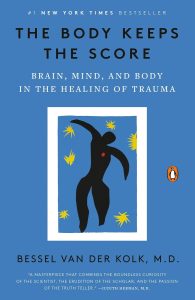
The Body Keeps the Score: Brain, Mind, and Body in the Healing of Trauma
The evidence shows that it determines your starting point and how you might be a couple of blocks behind when you start. None of this evidence says it determines where you are going to end. There is so much variation in where you are going to end, and so much happens between now and then. We can talk about starting at a different point, but the endpoint has a lot less influence on where you start. Does that make sense?
You can change your life at any point in time.
Epigenetics Vs. The Power Of The Endpoint
That is so powerful. I want to know more about SEE Change. Tell me more about the work you guys are doing and how entrepreneurship fits into that.
I am a health practitioner. I am a health researcher. Everything I was working on was vulnerable populations with either infectious disease or chronic disease, or extreme circumstances and resource-poor settings. I made that big pivot to try to learn from positive psychology and sociology to create interventions to have people reflect on themselves as a way to improve health-seeking. That was my plan.
Let’s tell them about themselves. Help them understand the living beliefs. Understand what may be getting in the way of their lives in terms of getting to the goal set or what is important to them. They did take better care of their health, but we found out that people started starting new businesses and getting livelihoods. That is how we got into entrepreneurship. We do this program with these disadvantaged populations.
The capital D disadvantage.
We do not talk about business. We did this study in Rwanda with Congolese refugees, and we just talked about personal agency. We talked a little bit about gender and social norms, and we got a 25% increase in starting a new business and a 60% increase in starting a new skill. This prompted people to focus on the things that are important to them. That is how we got into the livelihoods and entrepreneurship space.
We are at a research institution and want to know what is working, so we do randomized control trials to test our interventions. We are moving the needle for the populations we are working on. We have a strong evidence-based research component in SEE Change. A very large component of what we do is around training and practice.
We want to get our open source materials to anyone who wants to understand them, use them, and test them on their own. We also have several hundred certified trainers in the SEE Change methodology. Whenever a program comes in overseas, “Contact our SEE Change trainer. They may be able to help you.” That is the second big pillar.
We are working to see how we can use technology to help us scale. The technology and innovation pieces are another piece. We have worked in 24 countries in a range of different sectors. A lot of our efforts now are on poverty alleviation and livelihood programs. We also work on women’s leadership in male-dominated sectors.
I will have to talk to you about Ice House 2.0. We should create a version of it. We are designing it in a way that can be easily localized. What I mean by that, Anita, one of the most potent things you can do is expose the person to relatable social models. Not someone from far away or someone who looks different, came from a different culture, or they’re way older or way younger. That is the model of Alcoholics Anonymous. That was the genius of Dr. Bob and Bill Wilson.
The counselor cannot help you. The psychiatrist cannot help you. The jailer cannot help you. Another alcoholic who is a little bit more sober than you is the one who is going to help you. Bandura is very clear on this in his guided mastery. Bandura talks about that. Also, Nisbett and Ross in The Person and the Situation: Perspectives of Social Psychology. Your informal peer group is the most influential means of influencing behavior, either positively or negatively.
Those relationships, when we look at the big business development ecosystem, have so much potential. Fewer people focus on adult learning situations. What about all the adults who are out of school and out there in the world right now? The programs that reach them are largely economic programs teaching new skills and vocations.
Frankly, the return on these programs is not all that high. They are relatively expensive, and the return when it comes to increased revenue is as low as 5%, maybe up to 15% or 20% if the training comes with assets. Even the people who have been leading these programs think there is an impact being left on the table. They are doing a lot and not seeing people act on it.
Translating Theory Into The Local Idiom
I’m talking about entrepreneurship programs or small business or whatever.
Yes. People are frustrated with the lack of growth, knowing how much potential there is in this day and age, with the markets and information you can have access to. It is so easy to reach an expert. Now you can have an expert in AI who you can ask anything at any hour. There seems to be a lot of impact left on the table. A lot of our work, you mentioned, is getting this in the language of peers and authentic relations that people have.
A lot of that comes down to taking these concepts out of the theory and literature. We do not need to talk about self-efficacy and optimism theories. There is other common sense language in different cultures that we go for. A lot of our work is translating this with local programs and partners. We talk with them in sophisticated language. A good chunk of this is finding what idioms and sayings exist in the culture that sound like “You cannot teach an old dog new tricks.”
That is such a good idea, and somebody has already done it. That is the opposite of a growth mindset. “Takes money to make money.” All these dinner table conversations are just myths. There is a great line from the guy who wrote The Little Prince, Exupery. “If you want to teach men how to build ships, you do not show them how to use tools as you show them the vast, beautiful ocean.” That is my theory of entrepreneurial development. You’re getting into the question I want to ask you guys, you are not saying to people, “Come to this course on agency.” Talk to me about that. How do you guys approach this?
We approach it by saying there is a lot of opportunity out there that people are not taking advantage of. The gap is not just knowledge and action. It is the opportunity that people are not seeing. We do use the term agency when we talk at the higher levels within organizations. We are trying to get it into the lexicon a bit more. In terms of the adaptability within any of the cultures, we train people from those cultures, and they are able to help us best communicate the idea.
There’s a lot of opportunity out there that people aren’t taking advantage of — the gap isn’t just knowledge, it’s action. Share on XWe want pro-agentic and pro-social ideas to be in the water and in the conversations that people have, mother to son or peer to peer, teacher to student, in the local words. There is always that crazy uncle or the crazy aunt talking about hopes and dreams. We help you clarify what is important for you and help you understand the relationship between how you are thinking and how you feel.
You realize you do not need to be driven by fear. Has that become part of the way people speak to each other, but also during those moments when they become really important, like, “I have tried something, and I failed. I’m not going to do it again.” Instead of saying, “You are right, you are not qualified, do not do it.” In those moments that do not happen all the time. When they do, you want to be ready.
That is the importance of surrounding yourself with your more capable peers. We tend not to do that. In our default settings, we surround ourselves with people who think and act more or less as we do, and it becomes self-reinforcing. Part of my theory is that, for whatever reason, somebody decides to step into the entrepreneurial arena. You are stepping into ambiguity. In the West, it is probably the first time someone is actually stepping into ambiguity. School has pathways and uncertainty, but there is no real ambiguity.
If the goal is compelling enough, that is acting on you. If you are smart enough, you are going to start going to other entrepreneurs to find answers because the people in your circle cannot help you. They are going to try to talk you out of it. They’re going to say, “I do not know what to tell you.” They’re going to tell you what you think you need to hear. If you can find those more capable peers, I feel that is an enhancement that will likely keep you in the arena long enough to be able to succeed.
A lot of the people we engage with are necessity entrepreneurs. It’s like, “How do I stay alive? How do I keep my family alive?” Now, that is where the focus is. We just need to be able to make it another day in a way that tragedy does not rid us of that. Within that, you have to have that hope. You have to believe there is going to be some way out. You may not be an entrepreneur in the true sense, but the mindset is very similar because you are looking toward that larger goal. It is nothing but ambiguity.
One of the things I think about from time to time, of the 800 entrepreneurs I have interviewed, all but a handful had zero training in entrepreneurship whatsoever. That would lead people to default to trait-based assumptions about the causes of the behavior, the scientifically unfathomable mystery. It is a biological process. How does an organism orient itself in ambiguity?
It becomes hyperaware of its environment and starts trying lots of little things. It does not make big bold bets. That is nature and evolution. That is the explanation because the entrepreneur does not have access to resources. It works in their favor and forces them to micro-experiment and try small risk things to see where there is a hit and see if they can repeat it. Go ahead, Paul.
I love this knowledge-seeking idea. It is deep in the entrepreneurship literature. People who seek out information from other successful entrepreneurs are going to do better. Knowledge seeking is a huge thing, but you do not help someone seek knowledge by telling them that knowledge seeking is what they should do.
You should be a knowledge seeker.
That is how so many of these current approaches are failing. People think knowledge seekers do better, so they tell people to seek knowledge. I think what we are learning from cognitive psychology and cognitive neuroscience is that a lot of people see that person with knowledge, and they do not see them as an opportunity for learning. They see it as a threat. They see someone who is not going to accept them if they ask. People will ask if someone like them can even ask someone like that a question.
The Threshold Moment: Daring To Imagine
I have felt that a thousand times in my own journey. I remember I talked to a guy who invented one-hour photo and had a massive company. He sold his shares for half a billion dollars. When I was launching ELI, I went to him for advice. I was so scared. I was so sure this guy was going to tell me to f*** off. My teeth are sticking to my lips because that was going on. The compelling nature of the goal was overpowering the fear. It was like Covey describing subordinating an impulse to a higher value. I am not just going to go do that randomly. I am not going to go that far out of my comfort zone.
You reach the point where it is more important to take that risk than not. There are a couple of levers to pull here if you are trying to support this mindset. One is getting more experts in the vicinity. People assume people will automatically ask them, and we are saying that does not automatically happen. There are a lot of beliefs around how people will respond.
There are skills to help people get clear on their values. The first step in all of our programs is thinking about that positive future that you can imagine. A lot of times, we are the first program to ever ask someone what they want their future to be like. Some cultures are very restrictive on what women are allowed to imagine for themselves outside of motherhood.
They may say, “Do not put those crazy ideas in your head.” We have to temper it and just say to think and play.
I was just writing about this yesterday. For a lot of people, that is a daring, bold thing to imagine a resonant future. You become vulnerable, but also powerful. I love that, Paul. In Ice House 2.0, I am calling it the power of the pause. It is Viktor Frankl all day long. Frankl was saying to put some white space between the stimulus and the response.
Someone makes you angry, and you do not have to react. You can slow it down. That is a micro pause. There are plenty of reasonably intelligent and educated people in the West who are not asking themselves those questions. That is the threshold moment. “Who am I? Where am I going? What do I actually want to create?” One of the entrepreneurs I interviewed helped bring some clarity to my understanding.
Here’s the fun part about this. I started interviewing entrepreneurs, having no idea what I was doing. I now realize it was ethnographic research. I did have a fundamental assumption that you do not really know what you know. I was less interested in how much money you made or the tactics you used than I was in getting at your underlying assumptions, values, and beliefs. To me, that is the holy grail.
Over time, I started to notice these common and predictable patterns again and again. The entrepreneurs themselves were not really aware of them. Knowledge seekers, I love that term, Paul. We have talked about the managerial paradigm and the entrepreneurial paradigm. In my world, the managerial paradigm was once sufficient. I am saying it is still necessary, but it is no longer sufficient. We need discovery skills now, not just delivery skills.
I have this argument frequently with entrepreneurship educators. They say, “Mindset is fine, but they need to learn how to write a business plan and learn about marketing, sales, accounting, and legal structures.” My response is, “If you get the mindset right, all that shit is in their phone. It is probably better than the drivel you are providing them.”
Facilitating Discovery Over Delivery
We found this in the health sector, too. I cannot tell another mother to feed their child green leafy vegetables so they do not have a vitamin A deficiency. I was just like, “That was it. I’m out.” How do they see themselves? Can they leave the house? They need to be able to make decisions and figure things out. It is a quality of the questions they ask themselves. That’s the only way we find our role, because we do not tell anybody what to do, but we ask them a series of questions so they can reveal it to themselves. Who are they? Where did they come from?
Facilitating discovery.
That will stick because they are interested in it.
It also smooths the technical training. We are embedding things like record keeping and business registration because we know it is going to help them. We have these conversations that feel personal, where we ask them to think about their life history and where they want to go. It helps business advisors and mentors. When you teach business registration, you now have something to connect it to. You can say, “How do you feel?” You have a vocabulary where people are comfortable linking their thoughts with their emotions and their actions. It helps people realize their knowledge gaps. When they see it, they will actually engage with it.
To your point, Paul, we can always accomplish the holy grail. It is really helpful to me what you just said. Helping people recognize the knowledge gap is really helpful. It is the R.D. Laing idea that the range of what we think and do is limited by what we fail to notice. There is nothing we can do until we notice how failing to notice is limiting us.
We have to ask ourselves those questions. Coming back to the adaptation, how does it get localized? That becomes really important. We have this cool program with Inkomoko, which is an organization designed to help provide entrepreneurial services for refugee populations. They also work with host communities. We have had the opportunity to work with five country teams.
Ethiopia, Rwanda, Kenya, Chad, and South Sudan. There are various cultures and a couple of different languages. Paul, I’d like to talk about how we’ve done this. Paul has been so masterful in integrating the concepts and embedding them into what they are currently doing. It is seamless in terms of integrating the content with the entrepreneurial training to reinforce and engage. Paul, talk about that because that is an exciting program.
We start with the frustrations that these programs face. They know that teaching these skills does not lead to people using them. That is frustrating. They know that more businesses could be investment-ready, but they are not following the steps. We start with these gaps and then introduce topics like the think-feel-do cycle and metacognitive skills.
We just listen to where the slowdown is, and they already know what cycles are holding back entrepreneurs. They already know the doubts that refugees experience. This process is helping them voice these things and then teach them vocabulary they can use if they find it helpful. When people are setting goals, you can pause and ask which goal is going to be hardest for them and why they think that is.
It makes these advisory meetings go faster and helps people stay focused. Ideally, they are going to see some improvement in their key indicators. So far, people take to these questions about metacognition really quickly. Half the battle is translating it into the local language and helping them share their own stories. If they do not have the stories, they will not do the topics. We settle on a set of about 8 or 10 lessons that partners pick up and find a way to translate.
Are you using relatable social models? Are you doing that in any way?
We work with the folks who are on the ground and have experience working in those populations, which naturally comes up. It is really just a recognition of what they have seen with the populations that they have worked with. Because they are from that country and have been entrepreneurs themselves, they can speak to that in a way that they are heard. We also wanted the folks on the ground not to feel like they had to give advice, but to be able to ask questions of the refugees to help the refugees come up with solutions that worked for them. You are meeting them where they are and building from there.
I need you guys to give your advice on this idea here. I am trying to reframe Ice House and kind of bury the word entrepreneurship because it is a heuristic that stops a lot of people. It is a blessing and a curse. The three things that I am saying that entrepreneurial mindset development does are agency, adaptability, and value creation in any context. Anything there to take away? Part of what I’m saying is that the attitudes and skills required to discover opportunity are available to anyone. They do not require money, brilliance, or any specific personality. Not everyone is going to start a business, but who does not want to discover an opportunity?
Who among us does not want to feel like their life has had some value?
Now you’re getting at it. An hour and a half in, Anita. This is Deci and Ryan’s self-determination theory. Autonomy, competency, and relatedness are the three ingredients essential for flourishing. The entrepreneur just stumbles into that trifecta. Any final comments you guys have? I could easily go on for another hour and a half. One of the things that’s so exciting about the works that the three of us are doing is that the insights gleaned from these everyday underdog entrepreneur misfits shed important light on human flourishing for everyone. It is counterintuitive, but so exciting.
When I started on this journey in 1991, I was interested in the mindset, what are the underlying values and assumptions driving the behavior? If I could understand that, it could be useful to other people. By the grace of God or whatever, I resisted the temptation to try to interview Jeff Bezos and Mark Zuckerberg. I wanted to find the ordinary people. That turned out to be a really cool thing. It’s like turning all the rocks that nobody wants to turn over.
That’s the beauty in humanity. Most of the population is ordinary people. Everyone looks at those who made billions of dollars, but you can be the best version of yourself and continue to grow until you die. Much of my thinking was shaped by the fact that my mom died of cancer quite early. “She was pissed off. She was not done.”
She did not complete high school because she was pulled out to take care of my grandmother. She always wanted an education and finally completed a GED and went to college at 50 with my sister. She died at 60, and when I get to that point, I do not want to look back and say, “It was all right, I did the best I could.” I wanted to feel like I really tried everything in my power to have the best life possible for me, my family, and my society. That was the vision that was very compelling for me.
The Altruistic Paradox Of Entrepreneurship
I do not think you can really be fully compelled or fully engaged if whatever it is you’re doing is not pro-social and useful to other people. That is the great paradox. The underlying logic is counterintuitive that you are going to get what you want by helping other people get what they want. It is counterintuitive when you are struggling to get your own needs met, but it is like an altruistic paradox. That’s the key to it. The way I think about this work, I feel like this is Maslow. We are all born with things that are unique to us. It is our job to figure out how to make ourselves useful to other humans with our gifts. If we do that, we tend to flourish. If we do not, we tend to suffer.
To your question about whether we should ditch entrepreneurship as a term, I do not think so. Holding onto it has some value. There are a few terms that are loaded. Entrepreneurship, social entrepreneurship feels good because you are providing value for other people. Minimizing the profit motive in entrepreneurship would help more people engage in it.

Human Potential: Social entrepreneurship feels good because it creates value for others. Reducing the focus on profit alone could help more people engage in it.
A lot of people are enterprising enough to organize parties or tend gardens. Entrepreneurship is just effectively doing cool things that have value for people. People get a little stuck on the profit and predatory business models that are seen as predatory, and they can talk a lot about what’s rewarded in a world of entrepreneurship and business. Do not ditch entrepreneurship altogether. You just minimize the profit motive and emphasize that it means doing cool stuff.
The identity of being a creative person seems heavy because it seems attached to you’re not a true creative if your livelihood is not provided by that, but everyone is actually creative. We are all doing a lot more, influencing a lot more, worshiping culture. Lots of things are poetry if you look at them that way. We do not need to be a career poet to see ourselves as creative people. That’s another one of those terms that we should not ditch, but we have to reframe somehow.
That’s an interesting perspective because I would have said it has got so much baggage, but there’s so much about what it means to be an entrepreneur that encapsulates so much.
Reframing The Term: Beyond The Profit Motive
We have to redefine it. A lot of people think of entrepreneurship negatively, like you are an exploitative, profit-oriented person. There is a good reason to think that way, but that is a visibility versus representation heuristic. What you just said, Paul, I said in my book that I have interviewed many entrepreneurs who told me they started out wanting to make a lot of money. Somewhere along the way, they changed. One guy told me he wanted to be a millionaire and have a house, car, and clothes.
He took a credit card and bought a $4,000 carpet cleaning machine. Now he employs 200 people. He’s cleaning like all over thirteen states. He said to me, one day he looked out in the parking lot and saw 100 cars, “I’m responsible for those people.” Profit ceased to be the motive. The entrepreneurs who prioritize profit over purpose fail at a higher rate. If there is not a purpose-driven component to the work, you are missing out, and you are extrinsically motivated.
You’ve got a 50-pound rock tied to one leg because you’re interfering with that purpose-driven motif, which I wholeheartedly agree with what you’re saying. It is really a human sane I do not even think of entrepreneurship as business. It is a more organic way of being in the world. Use your gifts and figure out how to make yourself useful to other humans. Thank you, guys. Amazing conversation. I cannot wait to learn more about what you guys are doing in Africa and show you Ice House 2.0.
We would love to be able to support as much as we can. We are very principally aligned.
It seems like we have been running alongside each other and just did not notice each other. Thanks for doing this, guys.
It was great to see you again. I will be in touch.
Thank you.
Bye-bye.