
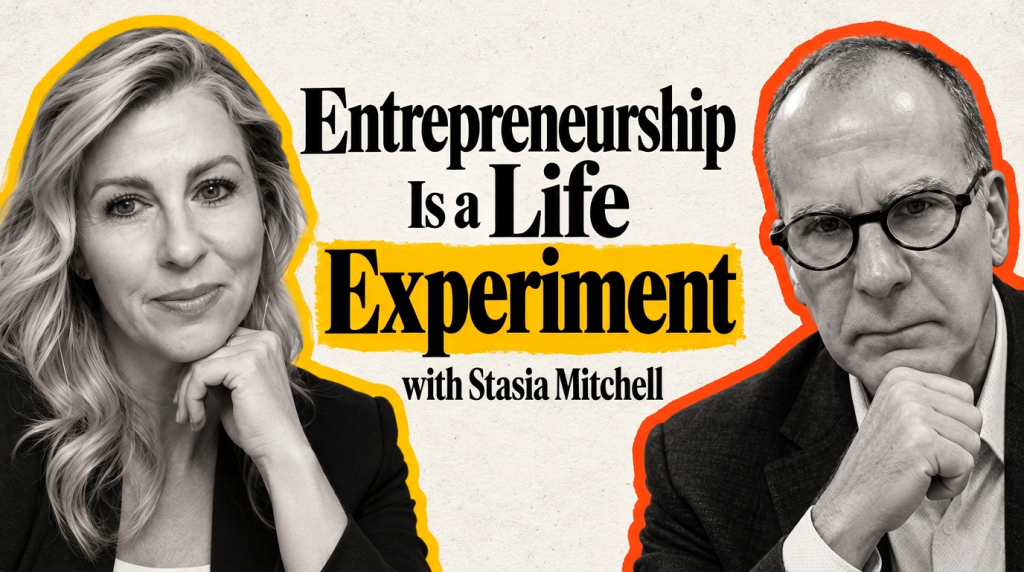
What happens when we approach life as an experiment? When we begin to question our own assumptions and follow our curiosity, we discover untapped potential we didn’t know we had.
Stasia Mitchell, EY’s Global Entrepreneurship Leader, connects and supports high-impact entrepreneurs around the world. Her own path began with her mother, an Italian immigrant who went from seamstress to bridal shop owner.
Gary and Stasia explore curiosity, resilience, and the willingness to question deeply held beliefs. They also discuss why entrepreneurship is never a solo act, and how to keep ego and identity from becoming obstacles to growth.
—
Listen to the podcast here
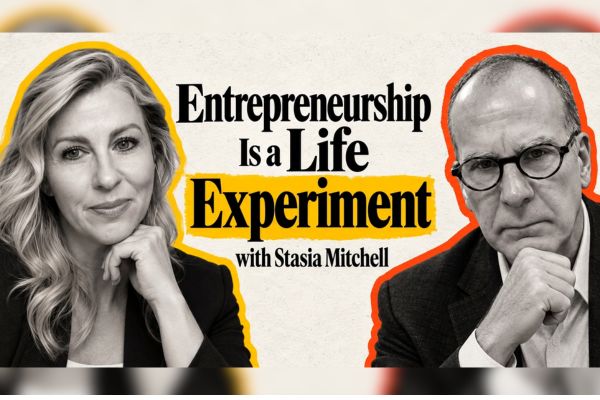
Entrepreneurship Is A Life Experiment With Stasia Mitchell
What happens when we approach life as an experiment? When we begin to question our own assumptions and follow our own curiosity, we discover untapped potential we didn’t know we had. Welcome to another episode, where we explore the hidden logic that enables ordinary people to accomplish extraordinary things. My guest is Stasia Mitchell, EY‘s Global Entrepreneurship Leader.
Through her work, Stasia connects and supports high-impact entrepreneurs around the world, which gives her a unique window into how they think, how they learn, and how they navigate change but her connection to entrepreneurship began much closer to home. Her mother immigrated from Italy and became a seamstress in a bridal shop, which she eventually owned. Working alongside her mom gave Stasia an early glimpse of entrepreneurship as a pathway to new possibilities.
In this conversation, we explore what years of working alongside entrepreneurs have taught her about curiosity, about resilience, and the willingness to question deeply held beliefs. We discuss why seemingly sudden decisions often follow months of learning, how relationships help us see possibilities we might otherwise miss, and why entrepreneurship is never a solo act.
Stasia also shares how this work has changed her personally, particularly what she’s learned about keeping ego and identity from becoming obstacles to growth. Throughout our conversation, one idea kept surfacing. Entrepreneurial thinking reaches into every part of life. It shapes how we approach our work, our relationships, our communities, and our own untapped potential. Without any further ado, I hope you enjoy my conversation with Stasia Mitchell.
—
Building A Global Community For High-Impact Founders
Stasia Mitchell, thank you for being a guest on the show. I am super excited to have this conversation with you, specifically to talk about all the cool, crazy things you’re doing to support entrepreneurship around the world. To get started, can you tell our readers a little bit about the work you’re doing in entrepreneurship and why you’re doing it?
Thank you. We have a shared passion around entrepreneurs and what makes them so unique, which let’s start with mindset. Ernst & Young or EY was founded by two founders. We are a very entrepreneurial company. The Entrepreneur of the Year has additional programs, our EY Winning Women™ program, our Entrepreneur Access Network program, and our Ripples Impact Entrepreneur program. We are all in on the diversity and the uniqueness of entrepreneurship around the world.
We believe in our purpose. Our purpose is to build a better working world. You and I know that the best way to build a better working world is through entrepreneurship. Our passion, the reason why we exist is to target entrepreneurs who are doing incredible things in their industries, sectors, and communities and raising it up to the level of a platform of acknowledgement and recognition. Also, the real value is the connections that you make, the bridges that you build internationally, globally, or sometimes even locally to support what they’re building. In short, that’s the summary of why we do what we do and the value that we bring to the entrepreneurial ecosystem.
Are you looking for people with high potential and you want to elevate their stories and help accelerate their growth?
We recognized back in 1986 that there are builders and creators out there who aren’t being recognized and supported in their growth journey. EY became the renegades of entrepreneurship and say, “We started in the same way. We understand this person. Let’s wrap around finding the entrepreneurs in local markets,” because all of the activity, if you think about the time and energy spent. It’s in those local communities, in those local markets. Recognizing what they’re doing, how we support them in their growth journey, which as you can imagine, one of the biggest support mechanisms is making the right connections.
Providing them that insight to help them grow. Our entrepreneurs become the best ambassadors for us. They’re like, “EY helped me figure this out. EY connected me to this person who did this before.” Curiosity has to go both ways. We’re super curious about them. They’re curious about us. We figure things out on how to work together. What we’ve built here is something so powerful, but it’s a testament to both an understanding and curiosity of how we can work together.
It sounds like what you’re saying to me, Stasia, if you guys are like ecosystem builders. Is that a fair thing to say?
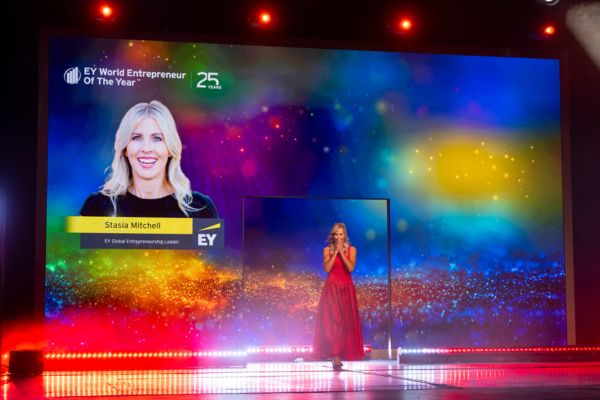
It is. You get a sense of this in the convenings that we have. While we have local convenings, I’ll give you a big scale convening, which is our World Entrepreneur Of The Year™, which we hold in Monaco. We bring all the countries. Think about the Olympics. It is like the Olympics for entrepreneurship. Bring all the countries’ entrepreneurs together.
It is amazing, the magic that happens. They are all trying to do business or they’re doing business in these markets, trying to figure things out like, “Can you help me with this?” The amount of energy and bringing entrepreneurs together in these unique ways, you can’t put a price tag on it. It is beautiful. People are just humans. We want to get our great work done and we want to do good things together.
I love that, Stasia. In my work, I say this to people all the time. Entrepreneurs tend to want to help other entrepreneurs. That’s a super potent resource that’s available to anybody. It’s so true. It’s intimidating to reach out to somebody who’s uber successful. You find out more often than not, they’ll stop and help you because somebody helped them.
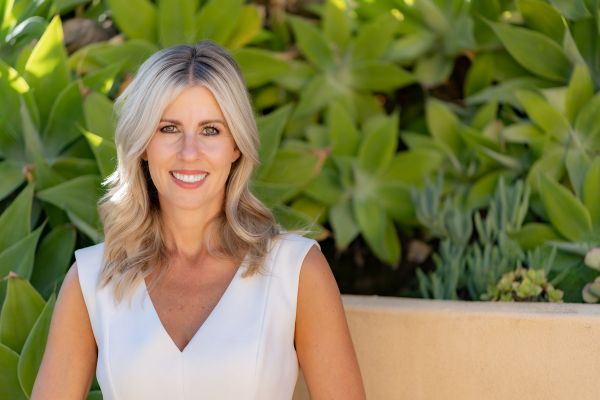
Entrepreneurial Mindset: Our purpose is to build a better working world. You and I know that the best way to build a better working world is through entrepreneurship.
Entrepreneurship As A Life Experiment And Performance Sport
It’s true. The learning there for the audience, because some may be entrepreneurs and may not be entrepreneurs. One of the biggest learnings for me is I thought entrepreneurship or being an entrepreneur was only connected to a business. It’s not. It’s a life experiment. That is how they operate. It’s a life experiment. In fact, I have this little thing that says, “The life experiment.” This is from one of our world winners about what you choose, what you commit to, how you measure these things in your life that make up what you notice.
The last one is what you appreciate. Why I say it’s a life experiment is when I look at all these global entrepreneurs, and if I were to pull pieces of parts of, like, learnings that make them so amazing, because I told you, entrepreneurship is like a performance sport. What makes them so great is that curiosity that makes people think, “That’s only in business.” Not. They are so curious about themselves. They are constantly learning.
They are the great students of change, then they apply it to everything else in their life, their teams, their customers, and their families. That reigns true when you look at the communities like we’ve developed at EY, but if you also look at adjacent communities like Young Presidents’ Organization or Founders Forum, they are as much personal as they are professional. Entrepreneurship is a life experiment.
You’re speaking my language. This is freaking me out. One of the things I’ve noticed, and I’ve said this to some folks, I have no data. I’ve never tracked this in any meaningful, legitimate way. I feel like when I’m around entrepreneurs, they’re much more prone to think about their own thinking. Whereas non-entrepreneurs, maybe less so.
As I said, I don’t have any meaningful data. I’m not making that as a claim, but I suspect it’s because, as you said, like to the entrepreneurial-minded person, like life is an adventure. There’s an opportunity under every stone, around every corner. Since of the ambiguity, you have to, “Would that work? Maybe it won’t. I tried that. Why didn’t it work?” You’re always thinking like that.
I’ll tell you just some examples of some of the crazy stuff I’ve done with entrepreneurs to your point, sheep herding. Throwing yourself in an environment where you have to herd sheep in an amount of time. A lot of the fast and furious entrepreneurs are going to chase after that sheep. They run all over the place. It doesn’t work. You’re over time. The other entrepreneurs will go slow and they open their arms wide. They take steps very slowly to prove to the sheep, “I’m not here to hurt you.”
That’s how you wrangle them in the time that you’re doing. I’m sharing this because the point is, it’s not always a school. Now, are there great executive education classes that entrepreneurs go to? Yes, I just joined one at Harvard. Negotiation was probably one of the most fascinating things that you learn about yourself in. To your point, they are life learners and they love to learn about themselves in very unique ways and very unique environments. The power that they hold that all of us can look at is the networks they can tap into.
The Power Of Networks And Constant Seeking
To your point, I have this idea or I have this question, who can I call that I could talk to about this? Who could I reach out to? They seek. They’re constant seekers. They may not have the right person in mind, but somehow through this network, they’re going to get to someone or some group of people that is going to help them take the next step or not.
I’ve studied that. It’s fascinating. There’s a sociologist named Mark Granovetter back in the ‘70s. He wrote about something he called The Strength Of Weak Ties. Have you ever heard of that phrase? It’s basically the idea that these opportunities come from people way out on the fringes of your network. The people closest to you often think just like you do. You go out to these entrepreneur networks and you get exposed to ways of thinking and opportunities and ways of being that are otherwise invisible to you.
One of the best questions I’ve seen in my forum is, “What am I not seeing?”
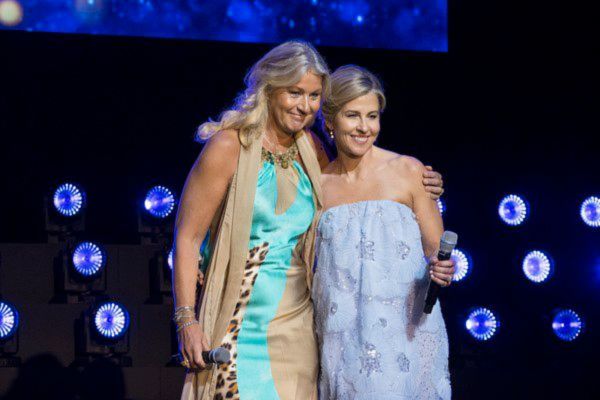
Entrepreneurial Mindset: I just thought entrepreneurship or being an entrepreneur was only connected to a business. It’s not. It’s a life experiment.
We’re going to need four more hours for this. There’s a question I ask myself daily which is, “How am I getting in my own way?” How am I contributing to outcomes I don’t want? It’s mindset stuff. The other thing, I don’t know if you’ve seen this. You just mentioned that entrepreneurs are like these rabid, lifelong learners, like super curious. I found this very often, and I don’t know if you’ve seen this, but like very successful entrepreneurs that were mediocre students in school.
We have a number of entrepreneurs who didn’t even finish school or I was just with someone who, out of high school became a contractor and is one of the most successful entrepreneurs here in the US. There’s no one way to be more entrepreneurial or to be more of an entrepreneur.
I think of it as just a different dimension of intelligence. People study multiple intelligences. It’s just a different dimension of intelligence than like academic intelligence or academic achievement. I’m getting ahead of myself here. Stasia, tell me a little bit about how you got mixed up. You are obviously very passionate about this work. This is not just a role you’re fulfilling. This is something that you’re embodying. Even the first time we met and talked, you just come alive when you start talking about this. Where’s the personal connection?
Roots Of Resilience: An Immigrant Mother’s Legacy
They stick with you. My mom moved from Italy as an immigrant and became an entrepreneur. She was a seamstress at a bridal shop, and ended up owning a bridal shop. That was my first job. I’ve seen the power of what entrepreneurship can do, especially for a woman that didn’t know the language or the rules, but she made her way through it. Joining EY, as I mentioned, I joined the firm in San Francisco, which is now known as our EY-Parthenon group, our strategy and transaction group.
The minute you step into EY, there’s no way you’re not going to be working with an entrepreneur. It’s such a part of our business. Working with different types of entrepreneurs has been the beginning and it will be the end of my career here. As I mentioned, they stick with you because they have different philosophies or methods. You have engineering entrepreneurs or marketing or brand entrepreneurs. The different types of them and how they’re moving and working in the different dynamics of the world.
I always tell people, if you ask me, did it work in the system of education? We got those. It’s a wild mix. Why you have this show is there is something distinctive and unique about entrepreneurs or people who want to be more entrepreneurial. The world needs all of us to be more entrepreneurial now more than ever because entrepreneurs are always putting humans at the center of everything they do, starting with themselves.
I pulled from some of your work, I pulled this phrase that you’re fond of saying, that entrepreneurs are an unstoppable force for reframing our future. I don’t think that’s ever been more relevant or urgent than it is.
Embracing Failure, Adversity, And The In-Between
You and I have seen. We like to show all the flowers, all the successes but the in-between is where all the “learning” happens. They will get knocked down. Their knees chopped up and they’ll get back up again. That’s that unstoppable nature. Sometimes you have to accept that this idea you were so bought into, you thought for sure is not going to happen. They’re able to separate the ego and the emotional side. Sometimes it takes a little time, but they are able to do it, then they’re able to get back up and go after something. It’s just continuing the path forward versus letting it set you back.
I love that you said that because I’ve experienced failure in my own life. It’s like ego. At 22 years old, I started a sandwich shop and I started to work. I was making a lot of money for a 22-year-old kid. I bought a Mercedes-Benz. I thought I was hot shot, then I ruined it because I stopped paying attention to the customer.
I created the whole thing. It was ego. The recovery and the build back is what you just said, you got to let your ego get bruised for a minute, but then you got to pick yourself back up. This goes back to what you talked about earlier about self-awareness. You got to like, “How can I not make that mistake again?”
There’s no one way to be more entrepreneurial or to be more of an entrepreneur.
I can ask you, what allowed you to move through, especially if you were having a successful business which you just think is going to continue. We always think that things aren’t going to change or the market isn’t or the conditions.
Especially when you’re like 23 years old and you’re like, “I’ve got the finest touch.”
Exactly. You’re like, “I’m on my way.” For me, what I hear from entrepreneurs who have gone through this, and I’m asking you too, is you are reminded by the people around you. Hopefully, it’s other entrepreneurs or family and friends that remind you what you have to contribute to the world. Having that realization of, “That was not all there was for me, was a sandwich shop. There’s something more. There’s something greater.” You have to accept it. You have to re-imagine what it’s going to be and then you move something else forward.
Have you heard a lot of these? When you meet these entrepreneurs, they’re already fairly well elevated, I would imagine. By the time you come in contact with these entrepreneurs, they’ve reached a fairly high modicum of success already. Do you hear the failure stories? The stories of how they got there. Can you talk about that?
I love to ask the question. I start off with knowing the day they were born, just something personal. Where it leads me to and we have to realize where you are raised, where you’re born, your environment you’re in, that starting point to your first job to how you’re here is all who you are. Sometimes, I love to see the reflection on their face like, “I came from here. I started working here.” The journey is always fascinating, and it is always riddled with regret. I tried this and it didn’t work.
Extreme Stories Of Desperation And Determination
We have one of our entrepreneurs who sold or had placed one of his organs on the black market to raise money. The desperation. Things that you couldn’t even imagine because they were in a position, but they knew that they had to make this work or they were so passionate about the vision of what they were seeing. I have almost too many stories to tell, especially when you’re talking to people from different countries. Knowing where they started in Malaysia or Philippines or Brazil. The starting point of their lives. That carries forward with who they are. It’s a beautiful thing.
I find that hardship is almost always a part of the origin story. I rarely meet entrepreneurs that hail from like stable upper-class families without any drama or hardship or whatever. I’m not saying they’re not out there. I don’t think any entrepreneur is doing this consciously or deliberately, but they turn adversity into their advantage.
The challenge becomes the opportunity.
What I hear is some variation of like, “That sucked, but it made me stronger. It helped make me who I am. Going back to my previous question. Do you ever meet entrepreneurs that got it right the first time?
There have been entrepreneurs who have had early success, exited, and the next 2 or 3 complete failures and they’re like, “I don’t know what I’m doing. Why did I sell off this business?” Plenty of those stories. What they learn is, sometimes it’s going to happen like that where you have immediate success and you think you’ve got this special formula. It’s going to work across everything and it doesn’t or you have the other way where you’ve had a number of failures up front and then finally, something pops. The connection there is, as I mentioned, you’re going to get knocked down, but you have to have competence, care and remind yourself of your community of people like the mentors.
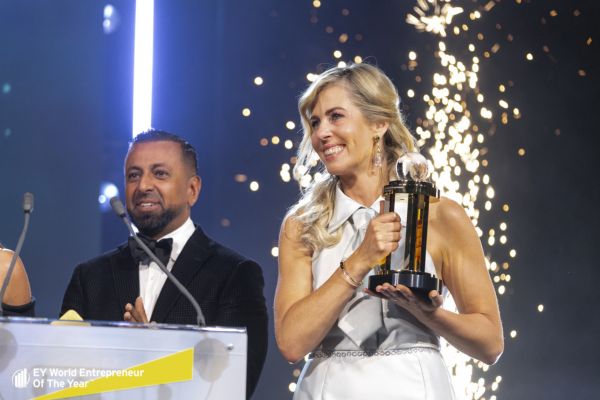
Entrepreneurial Mindset: What people need to realize with entrepreneurs is they are very thoughtful and the majority do seek insights
People who can raise you up and make you see things that maybe you’re blind to or opportunities that you should be considering. Entrepreneurs supporting entrepreneurs is probably one of the best things I’ve seen come out of all of this. Founders become funders. They create these models that support the journey because it is a very tough journey.
The founders become funders. That’s super interesting. You’ve met and interviewed a lot of entrepreneurs probably way more than I have. Is there any story that stands out to you? Is there one or two stories of entrepreneurs that you met that stayed with you?
Mind, Body, And Daily Habits Of Successful Leaders
I’ll share a few things that stick with me. I do meditate every day, but one question I’ve asked entrepreneurs is, “If you were CEO of the world, what would you do?” One of our entrepreneurs said, “I would have everyone meditate just to clear and pause the mind, to stop.” It’s so incredibly healthy and helpful, especially if you’re all jumbled up, constipated with too much information, bad news, all the things, so meditation.
The other thing is that South America was one of our Colombian winners. Start your day with doing two to three nice things for somebody else. It’s like, “I’m thinking of Gary. He has this initiative. I’m going to connect him with this person because it’s going to help, or this person is looking to do these things. What am I going to donate or contribute in this way?” Every morning when he wakes up, that’s the first thing he does. Two or three of those and he said it completely sets a different tone through the day.
I love that. I finished reading Martin Seligman’s book about human agency. This is a little scarier. He talks about the psychological benefits of writing a letter to thank someone who helped you in your life. Going in front of them and reading it to them. He’s saying 90 days later, your sense of wellbeing will still be elevated.
I believe in the power of doing good things. Karma is real. The other thing I wanted to share is, if you’re not healthy or if you’re not in a good place, mind, body, spirit, of your health and wellness is another area to focus on. I have done my array of cold plunges or being in extreme heat, 106 degrees doing hot yoga.
I do love pushing your mind and body to the edges and seeing how you operate with what you’re comfortable in. Many of our entrepreneurs are pilots. We had one of our entrepreneurs from Chile just finish his fifth Ironman in Kona. One of the ways to be curious about is a lifetime experiment. Your physical, mental abilities should be tested. That’s an important one.
That resonates, Stasia, because I feel like the self-actualizing tendency is in everybody. Entrepreneurs figure out how to maximize it. It’s not just how can I grow my business? It’s like, how can I expand my impact? What more am I capable of that I don’t think I’m capable of? In some stupid little way. I was talking to somebody at my gym the other day. I’m lifting more weights at 67 than I was at 37. What the hell?
Now weight training is the most important thing we could do.
Here’s what’s so interesting to me. I had in my mind that 160 pounds is my max on the bench or whatever the machine is. One day I go, “I’m going to go to 170,” and it’s hard. I do it again the next week and it’s not quite as hard in the third week I’m doing it. The body goes, “This is the new normal.” That’s a silly little anecdote to talk about. What you said at the beginning of the conversation, it’s a life adventure. The way you put it, I can’t quite remember, but it’s that. It’s a life quest.
The in-between is where all the learning happens.
I quoted Steve Jobs in my new book. There’s this little video. You can find it online. He just said this is brilliant. It’s back in the day when he was wearing his shirt flattened up and he had long hair after he got kicked out of Apple in the early days. He goes like this, “We’re brought into the world and we’re taught that the world is the way it’s. Our job is to fit into the world. Try to get a good job. Try to save a little bit of money. Try to have a little bit of fun.”
That’s a recipe for a very limited life. It’s like a 90-second video or 60 seconds. He said, “Once you figure out that the people who made those rules are no smarter than you, you can change the rules. You can bend them. You can build something that other people want and need. Life will never be the same.” I’ve experienced it. That’s what you’re describing in the entrepreneurs.
I wonder if that was the impetus to his Think Different campaign. When he came back, he launched, which is just thinking differently. Question, why or why not?
Stasia, another question I want to ask is that you’ve been exposed to a lot of very successful entrepreneurs. What does the world get wrong about these folks?
The world believes that they’re all fast and furious or they’re made up of a particular way. It’s not true. There are cases on both sides. What I find of the most successful entrepreneurs is through experiences, which you do need to have some established maturity in the relationships and people you listen to and the people you don’t. You have to learn that. It’s just going to take time. Patience does play in the role. Sometimes no decision is a decision.
What people need to realize with entrepreneurs is they are very thoughtful. The majority do seek insights. They can be drivers of making decisions, but it’s not across everything. Everything is measured with specifics. That’s what I was using in my life experiment. If you choose to activate something, just know that there’s things behind it to make that decision.
I’ve had people come up to be like, “How did this entrepreneur decide so quickly to do this or make this move?” It was like, “That was a year of learning.” You just don’t know that. The way that they portray the story or the way it comes out to the market is a very specific way. Know that we’re not that far apart. They’re able to switch certain things that maybe we just don’t readily do, but we can do.
Challenging Misconceptions About Entrepreneurial Speed And Thoughtfulness
I buy that, Stasia. I feel like in a lot of ways, they’re ordinary people who stumble into circumstances that tend to bring out their full capacity, if that makes any sense. What a casual observer would do is look at a very successful entrepreneur and attribute their success to who they are without realizing they’re pursuing something meaningful. That elicits from them deeper levels of engagement, deeper levels of problem-solving capacity. The goal is acting on you. The entrepreneurs aren’t even aware of it.
It’s true. Sometimes the awakening can happen internally, but sometimes it happens externally. You’re like, “These are inputs that I didn’t even think of.” That’s why I said, what are we not seeing? What are we not hearing? Entrepreneurs are great at getting the different perspectives around that. Sometimes the awakening is inside, and sometimes it’s not.
This is going back to a comment you made early in our conversation, but I feel like in my own experience, and I’m sure you’ve experienced it. When you’re engaged in work that’s exciting, meaningful, and interesting, work isn’t work. Too many people experience learning and work as a beatdown, as necessary drudgery, and that’s a real shame.
Entrepreneurial Mindset: The bottleneck is at the top of the bottle.
We’re on the same page because that’s why I said I thought when I first started, I thought an entrepreneur was very specific to work or a job or a business or a company. It’s part of life. It’s not separate. You see how entrepreneurs are interacting with their kids’ schools or community or the contributions they make. They bring all of it to their life. It’s not separated. That to me was the biggest a-ha moment. Their curiosity, their seeking to make things better or asking the questions and testing beliefs. That’s the biggest thing. I got to do that a lot more too.
We will hold on strongly to beliefs because they’ve been proven. We were talking about companies. Does it mean that belief? Since it’s been proven previously, it’s not going to change. The willingness to test those strong-held beliefs and experiment is probably the biggest win that the entrepreneurs get out of life because it will take them in new directions that they didn’t even think was possible.
That’s what I’ve noticed in entrepreneurs, their ability to not only learn, but to unlearn. To unlearn and relearn. That’s the new literacy. Sometimes, we hold on to these beliefs that enabled us in one situation and they don’t work in another situation, but we cling to them.
With entrepreneurs, we always have to remind ourselves that the bottleneck is at the top of the bottle. I did a summit around how we make decisions. How do entrepreneurs make decisions? It’s tough because maybe at one point you were the person making all the decisions. You got to bring in teams of people. Do they know what decisions they’re able to make? The toughest decision when I did a survey of all of them, this toughest decision in this environment for entrepreneurs is talent. It’s the who, not how. Do I have the right person in place?
Can they make the right decisions? Can they do the how and the what? That reminds me. I said this in my book. I don’t think you would argue with me when I say that entrepreneurs are the most important players in the modern economy. I don’t think from an economic standpoint, that’s not controversial. I’m not saying anything. That’s just my opinion. It seems to me that we’re creating entrepreneurs by accident rather than by design.
Cultivating The Entrepreneurial Mindset In Education
Why aren’t we cultivating these? Why aren’t we treating entrepreneurship in schools like we would treat Little League? Why aren’t we creating entrepreneurship events where little twelve-year-olds are standing up and showing the problem they’re trying to solve in their community or in their school or their church or whatever? Have people pull out their lawn chairs and sit down and cheer them on.
There’s a movement to do just that. One of our entrepreneurs, he’s an EY alumni out of Brazil. Instead of the teachers being the heroes in education, the students are. I’m like, “This is such a brilliant model, where the hero is in the room.” That’s entrepreneurial.
Part of the reason for saying that is in the entrepreneurs I’ve interviewed, what I can discern very often from the story is like the entrepreneurial muscle was being developed in the basement gym for a decade before the bamboo shot out of the ground.
There’s a movement in academia. You’re seeing it in the universities, but to your point, there’s young programs happening in different parts of the world, but I do agree it should be elementary, junior high, or high school. How do you weave it into the fabric of our education? I do think there’s a bigger movement going on there, especially with AI and education. It’s just going to change things dramatically.
Stasia, I know we’re running low on time here. Let me ask you this. Your exposure to entrepreneurs over the past twenty years or more? Starting with your mom, I suppose. How has the work you’re doing at EY Global Entrepreneurship changed you?
Start your day with doing two to three nice things for somebody else. It completely sets a different tone throughout the day.
Personal Transformation And Keeping Ego In Check
A massive change in just the way I see myself and how I contribute and connect to my family, my kids, my husband, my team, and my community. That’s why I said it’s just as much personal as it is professional. I had to go through a massive change in putting my ego and my identity in check. I’ll explain it, but we have an athlete program. We take elite athletes and help them on their path to entrepreneurship.
If you’re an elite athlete and you’ve won a gold medal, you’re going to hold on to that identity for a very long time. It’s very hard for them to move off of it. I had a very specific identity for myself. Even in entrepreneurship, I identify with it, but I keep it small because I know that there’s going to be something next. This was a personal journey around ego and identity. If you want to be resilient, if you want to be a student of change, if you want to continue to transform, you have to keep those two in check constantly.
As a side note, that’s going to be the soundbite intro to the episode. One of the things I was thinking about, Stasia, when we were talking earlier, I’ve interviewed a lot of entrepreneurs that failed before they got it right. I’ve experienced the same thing. The fundamentals of entrepreneurship are straightforward. It’s like solving problems for other people creates opportunity for you.
A lot of people get that backwards. That’s the recipe for failure. I want to start a business because I want to be my own boss or I want to make more money or I like to knit, so I want to open a knitting shop. The ones that succeed are the ones that find the problem first and then they develop the solution. The ones that fail are the ones that find a solution, then they go out in the world looking for a problem.
There’s truth to that. I have seen successful entrepreneurs who are looking for something that they enjoy. They created it with themselves in mind because it was like, “I’m looking for something specific. I can’t find it. It’s not available, so I’m going to create it because I enjoy it and others will enjoy it too.”
You’re making an important point. I’ve noticed the same. A lot of entrepreneurs find opportunities because they reach a problem in their own life that they can’t solve and they cobble together a solution and then they realize other people need the solution.
Exactly.
There’s a nuance in there, but I feel like when we’re pursuing things that are interesting to us in ways that are useful to other people, we come alive.
That’s the beauty. Do you know why? It’s because the energy is not just coming from one person. That never works. If you’re a builder, guess what you need? You need your influence engine and you need people to join. Your team is so important to continuing the energy and momentum. Entrepreneurship has never been a solo act and it never will be.
A hundred percent. It’s a self-made entrepreneur’s myth. Stasia, this has been a great conversation. I know we’re out of time here. Are there any final thoughts you want to share with people who might think about becoming entrepreneurs or any comment at all?
Entrepreneurial Mindset: Entrepreneurship has never been a solo act and it never will be.
Final Reflections On Authenticity And Creating The Future
My hope is that people will use this as a way to open up time for themselves. Knowing more about who you are and testing your beliefs and your capabilities is a great starting point for us just as humans but I do think we can be more entrepreneurial. Start there and understand the things that give you energy, what takes away energy.
We spend a lot of time and a lot of noise and things that strip out our energy because we think we have to and we just don’t. I say stop it. Let’s create the world we want and let’s be contributors to that. It’s part of who you are. You could see in the world what’s authentic and real versus what’s not. You have to take the time with yourself if you want to be real with yourself.
Let’s leave it right there, Stasia. That was such a great comment. Thank you so much for being part of this show. I enjoyed this conversation. I have one last question for you. How do I get invited to that global event where all those crazy cool entrepreneurs are in the room?
Entrepreneurs speak similar languages. You definitely speak entrepreneur. You are an entrepreneur. Connecting you to the community is something we love doing because the best thing we can do for an entrepreneur is build bridges, make connections that matter and help contribute to the overall agenda. Which is, let’s change the world and make it better.
Stasia, before we go, where can people learn more about your work?
I invite everyone to look for me on LinkedIn, Stasia Mitchell, and then also follow the activities on our EY Global Entrepreneurship page.
Thank you, Stasia.
Thank you.
Important Links
- Stasia Mitchell on LinkedIn
- Stasia Mitchell on X
- EY
- Young Presidents’ Organization
- Founders Forum
- The Strength Of Weak Ties
- EY Winning Women™
- Entrepreneur Access Network
- EY World Entrepreneur Of The Year™
- Jitendra Mohan, Sanjay Gajendra and Casey Morrison from the United States named EY World Entrepreneur Of The Year™ 2026
- Entrepreneurship | EY – Global