

Gary Schoeniger delves into the amazing life journey of Keith Johnson, whose authentic energy and resilient mindset led him to become part of Morgan Freeman’s blues band. He looks back to his childhood in Mississippi, his greatest rejection in HR, and how he fully embraced his musical talents. From singing gospel songs at his local church, forming a high school quartet, to bringing his unparalleled energy to every music gig, Keith breaks down the most important lessons that shaped and transformed his life. Learn how to take calculated risks, welcome rejection, and start showing up consistently in this eye-opening conversation.
—
Listen to the podcast here
From Glen Allan, Mississippi To Morgan Freeman’s Blues Band With Keith Johnson
Welcome to the show. Our guest is Keith Johnson, a blues musician with an entrepreneurial mindset. Spoiler alert, he also happens to be the great nephew of blues legend Muddy Waters. What first caught my attention was that Keith was born and raised in Glen Allen, Mississippi, the same small Delta town that inspired the first book that I co-authored with Clifton Taulbert, Who Owns the Ice House?
It’s one of the most unlikely places to produce a world-touring musician, but that is exactly where his story begins. I first met Keith at the Chautauqua Institution last summer, where he was performing as part of Morgan Freeman’s orchestral blues ensemble. When he took the stage, his authenticity and energy stood out.
That’s not where his story begins. Long before the big stage, Keith was singing gospel in church, forming a high school quartet, and playing weekend gigs,all while working full time in HR. What followed wasn’t luck or even raw talent. It was mindset, courage, and uncertainty, value in small actions, and the belief that you don’t need permission to contribute.
Like many entrepreneurs, Keith didn’t take big risks. He learned by exploring in the margins, testing ideas, and learning from every result. When he lost the security of his full-time job, he decided it was time to bet on himself. This isn’t a conversation about music. It’s about agency, taking calculated risks, and learning to embrace rejection. In the end, this is a story about what happens when you stop waiting and start showing up. Without any further ado, I hope you enjoy my conversation with Keith Johnson.
—
Keith, thanks for being a guest on my show.
I appreciate it, man. I am happy to be here. I am pretty sure we are going to have an exciting conversation.
Looking Back To Keith’s Childhood And Upbringing
I am pretty sure we are, Keith. Just to set the stage here, I want to tell our audience how you and I met. You were part of a blues band. You are part of the Morgan Freeman Blue Symphonic Orchestra. That is exactly what it is. My wife and I went up to Chautauqua to hear you guys. I was absolutely blown away by the whole thing. What caught my attention in particular is when you said in the morning talk, “I am from a little town called Glen Allen, Mississippi.” That got my attention right away. That is where the Ice House came from. Let us start there. If you do not mind, Keith, just tell us a little bit about where you came from, what life is like in Glen Allen, Mississippi.
I grew up in Glen Allen, Mississippi, which is south of Highway 1. It sits on Lake Washington. It sits on the lake, a small town with a population of maybe 500 people now. That is counting everyone on the lake, the people inside the small community. It goes all the way around the lake. I said maybe 500; I could be wrong. It could be 400. I grew up in Glen Allen in the early ‘90s because I was born in 1993. Even then, it was a small community, but there were a lot of businesses there.
The local barber shops were open. The laundromat was open then. Glen Allen had about three stores, two restaurants, even when I grew up. That was like the latter part of Glen Allen. Before then, in the late 1800s, early 1900s, Glen Allen was popping, businesses everywhere. Years later, in the late ’90s, early 2000s, it still had this same effect. It was not as big. Two or three juke joints, juke houses, or cafes. I stayed in the middle of the field because all of it is flat land.
In our trailer on Lock Road in Glen Allen, Mississippi, there were cornfields on one side, a cotton field in the back, and a small road. Across the roads, you could actually see the small town of Glen Allen because I was on more of the outskirts. My family lived in the center, but later we moved to the outskirts of Glen Allen.
What you are saying is that it is a small town, but there was a sense of community still there.
Definitely community was there.
When you were growing up, were you a good student in school?
Yes, actually. I have never been suspended from high school. I got my first referral in seventh grade at Riverside in Avid, Mississippi, for talking. I did not get into fights. I was always just a quiet choir student. For the music, I watched a lot of movies and played Nintendo.
A typical kid.
I was always creative. I had small toys like action figures, and I would always reenact different movies with those action figures, the cars. We went to church. You cannot exclude that. Being a kid, I was a typical kid. I have never been a troublemaker.
It is similar. It is funny because I did really well in school up through sixth grade, like elementary school. I was fine. The teachers like, “Yes, I got A’s and B’s.” In middle school, the wheels started falling off the wagon. In high school, I was checked out, man. In high school, I was just lost.
With me, I hung with the guys because I would say in Glen Allen, from kindergarten through sixth grade,95% African-American. In my classroom, we probably had one Caucasian guy in the classroom, or two, maybe. When I went to Riverside, everything flipped. It went from having fifteen African-American people in that classroom to two.
How was that different? Talk to me a little bit about that. What was that like, and how old were you?
I was in seventh grade, about thirteen years old. We traveled from Glen Allen Elementary School. It was the old high school, the old junior high school. It was still under the Western Line School District. We had to travel to Avon to Riverside. Now you have children from Greenville, Swiftwater, all these different areas, gated communities. A lot of black people were not living like that.
We were still living in the country. We were not as fortunate. It flipped. My best friend in elementary school was a White guy. We talked, we did everything together. It was easier for me. A lot of my peers were not comfortable. They tried to find their clique because we used to go to school with people from Glen Allen.
It was easy for me to switch. The teachers were fond of me because I knew the material. I sat back, I listened, and I participated. It is just my personality. I was respectful. At that age, you have to go off being respectful because you cannot say, “He was stealing, or he was doing this.” If you had a respectful household, everyone you encountered was a yes. It was a no.
You just do what you were told to do. Even in Glen Allen, my mom did not allow us to roam the streets and go out with the other kids late at night. We had a curfew when the sun went down. We had to be in the house. We had to clean the house. We had to do all types of chores and just look out for each other.
I just want to go back to something you said, Keith. Kindergarten, your best friend was a white kid. I do not want that to get lost. I had a similar experience in that my mom was fairly ahead of her time. I was born in the late ‘50s, came up in the ‘60s in a blue-collar community. My mom specifically drove me 40 minutes every day to a nursery school because there were black kids in the nursery school. She was ahead of her time. She just did that. That was radical in the ‘60s. I just think that is important. We have so much more in common. We are afraid of each other, specifically now. When did you figure out music was going to be your thing? You got an MBA, don’t you?
I do.
Talk to me about that journey.
I can tell you the first thing, and I do not believe I have told this story to anyone, but you just made me think of it. I remember singing around the house, of course, but I used to watch my grandmother all the time. This is gospel. She was a gospel quartet singer. She had a radio show, and she sang a lot of traditional gospel, a lot of Dr. Watts, a lot of race music, gospel where you just sing, clap your hands, tambourines.
She sang that, and I tried my best to match her vocal style, which is a Southern voice, a bluesy voice, traditional gospel. One day in the living room, my cousin was singing “Jesus is on the main line, tell him what you want,” an old gospel song. She would modernize, sing with a little R&B feel. I sang it one time in the living room, and my grandmother was like, “Yes, I heard you singing. I knew you could sing the whole time.” That is the first time I actually heard somebody say, “You could sing.”
Somebody recognized that you had an ability. Before that, did you have an inkling that you could sing, or was that just all spontaneous?
All spontaneous. Do not tell anybody, but I was doing a lot of dancing, like Temptation dancing, and Usher and Michael Jackson, just attempting to dance. I was doing a lot of dancing. I was more of a comedian, too. I used to dress up as different people and try to match their voices. Acting was my passion then, acting, being a comedian, and being creative before music.
The music was there because at church, I heard the sounds of the guitar at an early age with my grandmother. That sound stuck with me. I wanted to play, but I did not get a guitar until years later. Vocally, it was my thing. I was very shy at the time. I did not want to be a professional singer or do it as a career. I just enjoy listening to my grandmother and matching her voice, trying to figure out how to get that sound.
How old were you when that happened in the living room when you sang in front of somebody, and your grandmother heard you?
I was probably about 10 or 11 years old at the time.
You told me about how you got your first guitar. Somebody like your grandmother acknowledged that you have got this ability.
She acknowledged it. After my grandmother passed away, I was still home and sang around the house. We joined a church called St. Peter’s Missionary Baptist Church in Glen Allen. When we joined the church as kids, my siblings, my aunt, and my uncle were a year younger than me. All of us joined that church, and the choir left. Something happened in the choir stand. We are new to the church, and my mom has begun to be the choir director. It was a youth choir, then it became the choir because the choir left.
They’ve got no choice.
She said, “I want you to sing in this choir.” I said, “I am not doing any singing.” She said, “You wanted a guitar, right?” I said, “Yes, I do want a guitar.” She said, “If you sing this song in the choir, I will buy you a guitar. Sing this song, I will get you one.”
Do you remember what song it was?
Yes. Chilly Winds bay, Keith “Wonder Boy” Johnson sang the song. “I am going to hide behind the mountain. I am going where chilly winds do not blow.” It was a gospel song. She bought me the guitar after the deal.
Did you get recognized publicly when you did that? Did other people say, “Wow”?
Yes, I did. You always get the “I did not know you could sing.” “You sound good. You sound okay. I like it.” That was it. Around Glen Allen, in the church, singing. At the time, everybody, if you sang at church, you thought you could sing anyway. Even if you could not sing, if you sang at church, you thought you could.
Some people should be singing at church.
It was all about support. Church is about support. You cannot take that and go to a club because now people are actually paying to hear you perform.
How Keith Started A Quarter Gospel Group
People are noticing you, and your mom buys you a guitar. Where does this lead to? Are you still in school?
I was still in high school at that time.
You’re still in high school. The path is clear. Are you going to college?
The path is not clear. When I got my guitar, I was still in high school, and I continued to be part of the choir because I was now getting lessons, trying to find somebody to teach me. I finally found a guy, Reverend Timothy Matthews. He actually is my godfather. Singing is what I am doing now. I started a quartet gospel group. The Delta Sensations is my quartet gospel group. We started to sing around the Delta in Rolling Fork, Cary, and Greenville. We went to Jackson once. Of course, we thought we were something then.
Glen Allen, Anguilla, Hollandale, just in that Delta area. During the quartet days, that is when I met Reverend Matthews, because he had three sons and he taught them how to play. He is a musician himself. He plays bass, piano. He was in the band playing trumpet. He had three sons. One is the drummer, one is the piano player, one is the bass player, and he played guitar. They had a group called the Matthews Brothers. I walked up to Reverend Matthews in Rolling Fork. I asked him, “Can you teach me how to play the guitar?” I am still in high school.
Let me stop you here for a second. You had this little band with three of your friends, like a cappella. I do not want to force the metaphor here, but that is an entrepreneurial experiment right there. It is a powerful idea. Let me go out in the community and see if people like this.
It is. Through my friends, one of the bass players still plays with me today. After I learned to play guitar, I taught him his first bass line, and he is still sticking with it. My mom was the booking manager. We had a small safe. They call it representation. When you pay to go to a group, you pay so you support, then you sing. When it is your time to have a big program, they pay, and they give you the money. The first time we made money was when we traveled to Jackson, and they may have given us $500 to come up there and sing.
I want to double-click on that for a second. When someone is paying you for something, they are saying, “This is valuable to us.” There is a value thing that resonates. Too often, people just think it is all about the money. They overlooked the fact that, yeah, it’s about the money, but I need to eat like everybody else. There is a validation that comes with money. People are validating you, and that is energizing you. Whether you are selling lemonade or singing in a quartet, it does not matter.
You are validating it, saying, “This is a thing.”
“This is useful.” I am just writing an essay about this. The desire to be useful to the group is hardwired into us. It is part of what makes us human.
That will make us, us. They cannot take that identity.
I think that’s lost on so many people. The courage to follow what is in your heart.
It takes courage to say, “You know what?” Not to step ahead too much, but as a working musician and an HR business partner, when the HR business partner was dropped from my name, and now I am just a working musician, it takes courage. When you are consistently getting a paycheck from a company, you are expecting that they are going to pay you. As a working musician, I really have to believe in myself and bet on myself because this is the way I am going to eat. I cannot miss out. “I have to take this seriously and work at my craft.” It encourages you to work hard and appreciate what you have.
It takes courage to know if you are stepping ahead too much. Share on XHaving The Freedom To Determine Your Own Outcomes
Keith, you reminded me of something. I remember when I started my company in 2007. Do you remember the scene from The Sopranos when Tony is walking down to the street in his bathrobe to get the mail?
Yes.
I remember that frightening feeling of going out to get the mail, and the neighborhood is quiet because everybody is off at work.
When I stopped working at the casino, I forgot how everyday life was because I was in a pattern that I got up, got the kids dressed, and left. When I got back, and I would drive from Greenville to Cleveland, it was maybe 6:30. The day was gone. Between morning and evening, I do not understand how everyday life is going because I am not there. Stores are open that I do not go to because they are closed on the weekends or when I get off.
When I walked outside and I heard the birds and felt the wind, and this is how it feels to be in control of your own destiny. I’m not against it. I made an agreement with myself because I like controlling my outcome. I like controlling my schedule. It takes a little more work, or more money management, but I like the control. I am not in this system anymore, that “You work here, we give you a check, you do that for 40 or 50 years, and hopefully you get some retirement or social security.”
You are saying some things here, Keith. The need for autonomy is foundational to motivation. If you talk to people about why they want to start a business, they are going to say, “I want to be my own boss.” What they are really saying is what you just said. “I want the freedom to navigate the world and to think for myself and determine my own outcomes.” It is a scary thing.
You have to bet on yourself. With the Morgan Freeman thing, if I still worked at that casino, I would not know where we would have met. Morgan or someone would have requested me or someone from the club, and I would have met Morgan. I would have said, “Great opportunity. I cannot do it because I have to go to work.”
Let us not get too far ahead. There was a part of your life where you went to school and got a business degree. What I’m hearing and stop me if I’m wrong is that you are doing the music thing in the margins. You are not really thinking at that time, “That it is going to become your thing.” Are you or are you not?
At the time, I was thinking that eventually it would become my thing. I can do two things at once. I am juggling this HR thing. I have all this experience and education. I’ve done the research. This definitely can be my thing. I did not know that HR thing was getting in the way of my music thing. It suffocated it a little because I was turning down too many opportunities. To me, I was missing a lot, too.
Getting Out Of College And Becoming An HR Business Partner
You went off to college, you were a good student, you got a business degree, and you are working in a casino in an HR capacity. Do I have that right?
Yes, as an HR business partner.
You got let go. That was your come-to-Jesus moment.
I got let go. I am going to be honest, I was the only person in my office with a college degree. I knew the system inside out. The team members loved Keith Johnson. It was mor of my supervisor was getting ready to retire. She had been working in HR for 30 years in Greenville. It was time for her to retire. I was getting ready to apply for her position. The people in power just would not allow it. My sister passed. My sister was murdered in June 2024. I missed work for about 3 or 4 weeks. When I returned a month later, they said, “Keith Johnson, we just cannot work with you anymore.”
I went to get a lawyer. I can show you about 5 or 6 awards right now. Keith Johnson, team leader of the year, team member of the quarter. Performance evaluations, everything were great. You would think something is wrong with this picture, but still nobody budged. I got called and said, “We are afraid of that company. We cannot go to war with that company. We do not have enough money. Mississippi is at will.” I took the opportunity. I said, “The stars are aligning.”
“What is the universe telling me?”
I was applying for a job. The interviews were going great. They were talking, and I do not know, but they love me. When they got to the final interview, they said, “Yes, we are just going to go in another direction. We have you and one other candidate. We are just going to choose this guy.” The universe spoke to me. “This is what you should be doing. Bet on yourself. Put all of your eggs in your basket.” If I fail, I’m feeling, “At least I bet on myself. At the end of the day, I still have a master’s degree in business administration. I am going to be okay.
Bet on yourself and do what you should be doing. Share on XThe other thing that you’re saying here, Keith, that I want to bring out is that people always try to characterize entrepreneurship with risk. There is definitely a risk. I do not want to downplay it too much, but a lot of entrepreneurs I have interviewed have done what you are doing. They have a day job, and they are messing around out in the edges with their spare time. They are taking the risk out of it. They are proving the concept on weekends, holidays, and evenings. I like what you did. It got to a point where you just were not starting from zero.
I worked around my day job. When I was working the day job for five and a half years, I went to Brazil. I was able to go to Europe twice. I wrote two books.
In the context of your musical career? Going to Europe and Brazil was like part of it?
No, my musical career. I was playing festivals on the weekend because, as an HR, I was from 8:30 to 4:30. Anything on the weekends and anything after that was free game. I made a mistake, but they knew I was making almost as equal or more money during music as I was on the day job.
You did take a lot of the risk out of it.
They were paying me a decent salary, but I was making a lot on the side just on the weekends. It was 24/7 work. I had to work on the weekends and during the week with my day job, and after work, but I was making money. It got to a point where it became a problem. “This guy does not need us.”
You have to swear your loyalty to the master. That is a threat.
Because of my evaluations during the last year, I knew it was a problem then, and my supervisor wrote, “Keith Johnson is focused on his career.” It had nothing to do with “Keith Johnson cannot do this,” or “He is not doing a great job.” My entire evaluation was personal. “Keith Johnson is focusing on his musical career.” I knew something was going to happen.
I told my coworkers, “Something is about to happen in probably a few weeks. I feel it coming.” The communication stopped. They stopped showing me stuff to get to the next level. I just let the powers be do what they have to do. To me, it is a blessing because I do not feel sheltered or restricted. I am with this Morgan Freeman thing. I plan my own thing. I am writing new books. I auditioned for acting roles. I love it.
How Keith Lost His Job And Jumped Back
Talk to me, Keith. You lose your job, and you think you are going to sue to get some compensation. You were unfairly let go. That is not working out. Talk to me about what happened next. You are out there at the mailbox at the end of your driveway, figuratively speaking. “I’m going to go for this thing.”
I am talking to lawyers, trying to say I can get $20,000, $30,000, or $40,000. That will help me out for a few months. Thinking financially, “How am I going to do this?” People started to call me and book for festivals. They said, “How much do you want for a deposit?” When I was working my day job, I was not concerned about a deposit because I was getting paid for my day job.
When I started receiving deposits, I said, “Let us explore deposits more.” I would get that deposit. It would get me to the gig. I would book another gig, and that deposit would take me on. I would book back-to-back gigs. The Morgan Freeman thing showed up. The opportunity to work with the Sinners project when they visited Clarksdale came. It’s a different opportunity started coming, and it just took off from there.
It is almost like the universe was telling you, “You got a quick day job.”
That is what happened. My aunt and a lady I worked with told me, “Keith, you have become that place. There is a ceiling there. When you stand up, you are above the ceiling. They are not teaching you anything else. You have learned all you can learn about the business. There is nowhere for you to go but sit.” From RU, Reformed University Fellowship, a pastor said, “It will be a waste of time for a person like Keith Johnson to sit behind a desk picking up a phone. You have too much talent. You cannot waste your talent like that.” It would break my heart to see you and all the talent that you have to sit behind the desk and answer a phone.”
That is such an important part of anyone’s story, Keith. You need people to believe in you. Clifton keeps saying that to me. “Somebody told me I matter.” He came up without a dad. He was being raised by his relatives. People believed in him. It is such an important part of the story. It sounds like you had to develop a business mindset. “The deposits, here is how this game is played.” A lot of musicians do not get that memo.
You have to learn how it is played. “This is what I need to do with the deposit. I need to make sure we have hotel rooms. I need to bring a few books, a few CDs. I need to capitalize from the tip bucket.” I started investing in myself by buying more suits. When people see me on stage, “I’ll get this guy because before he plays a note, he looks dressy and classy. When I play a note, I definitely need him now.” With the Morgan Freeman tour, from a business perspective, I created a position of value.
It’s called a brand. It is less than six in A’s house, dude. People think of a brand as a big, fancy word. It’s like a reputation.
For the Morgan Freeman thing, I was hired to play harmonica. When I showed up at practice, there was not a song I could play harmonica on. I was like, “What do I do? Where can I play?” We are playing with an orchestra now. You really have to find your spots because it is not like a jam band where you can just keep cycling the song over and over.
When the orchestra stops, the song stops. You really have to find your spots and not step on anybody’s feet. They asked me to play slide guitar. I was like, “I can back and fit that and still not have a harmonica part. I played slide guitar on 1 to 2 songs.” Before we did our first show, I found spots for my harmonica. They needed two vocalists.
I’m like, “I’ll sing it.” The second song Super Chicken was singing, but he fell out of the loop, and I had to sing Death Letter Blues. I had to sing Death Letter Blues. At the end, I played slide on the intro, Dark Was the Night. I took those small roles, and I was so theatrical with singing them. With my harmonica parts, I made sure that without the harmonica, it would not even sound the same without my harmonica and my energy.
You brought me to it.
They said, “You have to be a part of this because if you are not a part of this, when you are not part of this, we can tell that something is missing and you are that thing that is missing.” When I did miss one show, they were like, “Okay.” Even Linda told me, “Keith, we missed you so much.” I say, “I was in Japan.” Linda said, “I do not care where you were. We really missed you, and we knew you were not here.”
Looking Into Keith’s Deep Musical Roots
I told her you are going to be on this show, and she wants to be the first one to listen to it. Keith, before we get it, I want to ask you how the Morgan Freeman thing came about? Before we get into that, don’t you have deep musical roots in your family?
We talked all day because there is so much. We haven’t even touched the surface of that. I am the great-nephew, technically. The great-great nephew of Muddy Waters, McKinley Morganfield. McKinley Morganfield, aka Muddy Waters, is my great-grandfather’s younger brother. If I were to go down the family tree, myself, my mom, Patricia Morganfield Brown, got married.
She was a Johnson. My grandfather is Ollie Morganfield. Ollie Morganfield’s dad is Fred Morganfield, who is the brother of Muddy Waters. Fred Morganfield and McKinley Morganfield share the same father, whose name is Ollie Morganfield. He is the oldest of the Ollie Morganfield, who should be my great-great-grandfather. Muddy Waters is part of the family. He’s my great uncle. My grandfather’s brother.
It runs deep in your family.
Even Willie Morganfield from Clarksdale, the gospel singer, they’re saying “Thank you, sir. I cannot pay the Lord, but I got to tell God thank you.” I am a cousin of ours from Clarksdale, Mississippi, Pastor Willie Morganfield.
I got to say that in Morgan’s talk, before you guys did the actual show, and the talk in the morning.
The way he described where the blues came from and how it was, I forgot the exact words he used, but I just thought he did a really nice job of explaining the blues. I’m using my words now. It’s almost like a God role expression of love for the people that cannot be held down.
The Power Of Believing In Yourself
The way he gave me goosebumps when he said it. Karen and I got to have lunch with him and Linda in between the talk and the concert in the evening. He and I talked a little bit about that. You stepped out, and you lost your job. You figure, “This is the universe telling me it is time to go where I’m going to believe in myself. This is going to be my thing.”
I had to accept it. At first, I did not want to accept it because I just could not believe it. I was being humble, but I was speaking the truth. I said, “I am the smartest person in this building. I know the system inside out. I am lovable.” They love me, but you can tell something changed when I stopped receiving those awards. I said, “I can go get a job. I know HR. I have the education.” This is the Delta, and many people do not have a master’s degree. They started a job maybe twenty years ago, and they’ve been on the same job. I could not believe it. I thought I was getting another job easily, but I guess it is not the way it was meant.
From the time you decided “I’m going all in,” how did you wind up in a Morgan Freeman thing?
Last year for New Year’s, Morgan and Al Green played at Ground Zero for the New Year’s Eve party. I performed there with my band because I was playing Ground Zero. We performed at that party. Great show.
Are you all in New York?
Ground Zero Blues Club in Clarksdale.
I was there once. We did an Ice House training in Helena, Arkansas. One night, they took us over to Clarksdale to see the Ground Zero club. Anyway, I interrupted you. You are playing at Ground Zero.
I played there for the New Year’s Eve party. The Sinners movie, Michael B. Jordan, Delta Blues, vampire movie. Have you seen that movie?
No.
Check the movie out.
We’ll put it in the show notes.
When we came into town, they asked me to play for Ryan Coogler, the director. I performed, and they had a party at Ground Zero for cast members, producers, and the director. A few people who were involved in music. Big A played guitar, and I joined him on stage with my harmonica. After that, Eric told me, “Keith, would you like to take that harmonica on the road?” I am a guitar player. I would play harmonica now, but as the main instrument, I do it to get back.
When I put my guitar down, I just throw a little extra flavor because I have a harmonica player in my band. I told him, “Yes.” Two weeks later, the manager of Ground Zero reached out to me and said, “Keith, Eric wants you to play harmonica. He really likes your harmonica playing. We’re doing this tour. There’s a funny Blues store, and we’re going to practice. Bring your harmonica.” “Okay.”
Just for our audience, can you tell us who Eric is?
Eric Meyer is the owner of Ground Zero, and he is the executive producer for the Morgan Freeman Blues Symphonic Orchestra Tour.
I met him, too, in Chautauqua. I just want to make sure our audience understands this. You are out there doing your thing. You have talent, and that is opening doors for you. You are showing up, and doors are starting to open for you.
My role went from “Let us find something,” because they really did not know what song to play on the harmonica. They set the songs, but not one song had a harmonica part. I created a position for myself. Someone wants to hire you. “What do you want me to do?” “I do not know. We are going to create something and put a name on it, and we’re going to call it That’s Going To Be Your Thing.” That’s what I did.
Maybe what Eric was saying is like, “It’s not that you are really a good harmonica player, but you were bringing some kind of energy to the harmonica.”
He is saying it is not like you are the number one harmonica player in the world, but the way you play that harmonica, you have something with the harmonica, with your name, and how you present yourself. “Your presentation is what we need.” He kept telling me the first two shows, “Bring some more energy.” That was difficult for me. It was challenging because I was not playing a standard guitar. The two songs I am singing, I am sitting down in a chair with my guitar. I cannot express myself. They told me, “We do not want you to leave the stage. Everyone needs to stay on the stage.” I have all these songs where I am not singing or playing harmonica. What do I do?
Are you thinking you’re in the wrong thing?
I am trapped. I have to do something. “I want you to do something on stage without a guitar, without a harmonica, and without being a vocalist. What can you do?” I’ll be sort of a hype man to Big A, who is beside me, maybe double up certain vocal lines with him, hype him up. I play my harmonica and interact with him and interact with Lady A.
It was more of “How can I fill that space without just standing there looking like a bump on a log?” With bigger roles, there’s so much I can do. For example, for the last show that we just did in Pennsylvania, my guitar engineer broke the tuning peg for my guitar. I have to perform Death Letter Blues with no guitar. The good news is that it is fine because with the guitar, I have to sit down and have a mic stand.
Now those restrictions are gone. I can stand. I can take the microphone off the stand, I can travel, and move around. I have a harmonica in my pocket that I can add in there and tell this story. It turned out to be great because I was not restricted to sitting. When you’re playing guitar, the microphone is not going to move, so you’re listening to it wirelessly. We have to stand in front of the microphone if you’re singing. You’re just learning how to be useful. That is it.

Blues Band: You have to stay in front of that microphone and learn how to be useful.
You are honoring yourself like there is some level of confidence in you. I can just imagine, like you’re in this situation, did you even know Morgan Freeman was involved in this at this time?
I did not know if he was going to show up or not. I knew the name of it, but Ground Zero Blues Club is Morgan’s club. You do not expect Morgan to show up every night. For this, he has been there. I got a chance to take pictures with him and got him to quote a few movie lines.
What’s The Next Big Thing For Keith
Where are you going from here? What’s next?
The tour lasts until January. Anything can happen. I’m looking at it, “One day this tour is going to end.” Every show, you have to capitalize on these shows and make an impact. You can go back to Linda’s comment. The beginning is how I told you that I ended up being in the program. I enlarged that role until it became so impactful that you knew, like, Keith Johnson was not there. If I had not done that, it would have been, “Just get somebody else to do it. Keith has a small role, so you would not miss it. He’ll come back.”
I was so powerful when I made a statement that you had no choice but to miss it. It is just capitalizing on the rest of these dates. I am performing as Keith Johnson and the Big Muddy Band, doing my own gigs and continuing some writing, and just whatever comes up. I believe at that moment, when I was uncertain but trying to figure out, “This is the universe telling me to do this.” More of that is going to happen now since I have given myself up to the universe and said, “Here am I, let us do this. Bring those opportunities. Let’s capitalize.”
One of the things that your story reminds me of, Keith, I say this to young kids a lot. Here’s the first rule of entrepreneurship. Show up at your job fifteen minutes early and stay twenty minutes late. Watch how fast opportunity finds you. There’s something in your brain that just said, “I’m not just going to be limited and sit here and just do what they ask me to do. I’m going to bring myself to the situation.” Maybe you’re not even conscious of it, but it seems like you’re seeking, and I’m like, “Where’s the hole? What can I fix here? How can I make myself more useful than maybe they’re asking me to be?”
That’s exactly what I’m doing. They’re even revamping this show now. The last show was so great. “How can we get Keith Johnson involved?” People tell me, “Keith, you need a bigger role. With what you have, they have to use you more. You cannot just have those two songs. It’s great, but you can do so much more, and they need to capitalize on it.”
I want to go back to the event where we first met at Chautauqua Institution. I heard you say on the main, “I come from a little town called Glen Allen, Mississippi.” Linda immediately texted me. She said, “Does that sound familiar?” I came down to meet you, and I asked the conductor, Martin, “Which one of these guys was the guy from Glen Allen?” He pointed to you. I remember coming up to you and saying, “Keith, listen, I want to let you know that I co-wrote a book that took place in Glen Allen, Mississippi.” You did not miss a beat. You looked right at me and said, “I know. I read it.” I never expected that answer.
I have it, and I read it.
Keith’s Experiences In Writing And Publishing Books
That blew me away. You said, “Clifton Taulbert is helping me write my book.” Talk to me a little bit about your writing. What’s going on there? You have already written a book. You are working on another one.
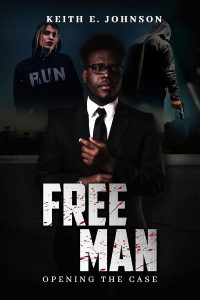
Freeman: Opening the Case
My first book is Freeman: Opening the Case, a crime novel. The second book is based on an original song of mine, Come to Mississippi. Send me your address, and I will send you two books. The writing process for me is “What is it that is easy for you and difficult for others to do?” It is being a creator, writing songs, writing books, telling stories.
A lot of people play guitar, sing, or play harmonica. A lot of people have this from a musical perspective. There are people out there who can do it ten times better. Being a creator, putting the pen to paper, writing those stories, telling those stories, expressing yourself, public speaking, all of that comes easily to me. As you can see if you’re paying attention to the interview, Matin said, “Keith, when you are speaking, you have those people you’re hanging because you knew how to control the crowd when you talk and how you spoke.
Even ask for a certain question. The next day, we had a panel discussion.” There’s something easy for me to do. With that in mind, I could write a song or write a book about that microphone you have and make it interesting because writing comes easily to me.” Clifton Taulbert told me, “If you are not anything else, you are definitely a storyteller. You are a writer.”
Escape The Competition By Living In Authenticity
One thing I am hearing in your story is something Naval Ravikant said. He’s a really interesting tech guy, but I used to call him a modern-day philosopher. He said, “You can escape competition through authenticity.”
That is powerful. You can escape competition. That is correct, because you are not comparing yourself. Comparing yourself kills you quickly. “I am not as good as this person.” When you say, “This is my style.” People that I played for in the past always had a problem with one artist trying to sound like the next artist. They said, “If I wanted that artist, I would have booked that artist. I want you because you are different and you do your own thing.”
A lot of people do stuff for the money, and they do not love it. People go off and be lawyers or accountants or doctors because their parents want them to make a lot of money. If you do not love what you are doing, your life is going to be hard. Miserable.
A lot of people look back and say, “I wish I had done it in my 20s, 30s, 40s. Now, it’s only a wish. All you’re trying to do is you try to live your life through other people.”
I’m afraid to say this. I’m afraid to live with it, but so many underdog entrepreneurs are using adversity as an advantage. I could get pilloried for saying that in this modern political.
This counts the council culture. That’s what they call it.
When you come from not a lot, you’ve got nowhere to go, but up, it’s easier to honor that than if you’ve got parents trying to make you become a doctor or lawyer or something. Do you know what I mean? Wherever you come from, it takes courage to pay attention to that thing.
We have little to no resources. How do you become this thing? Resources have a lot to do with this journey as well, like starting from nothing.
Comparing yourself will kill you quickly. Share on XMy theory is this, Keith, you could just tell me what you think about this. In the beginning, the lack of resources also works to your advantage.
It makes you think, “go get it.” It makes you go get it.
You’ve got to try stuff.
“I have to press all these buttons to see what’s going to work for me.” You gain experience by pressing buttons that may not have worked at the time, but you’ve gained experience because you may encounter this down the road and say, I did this before. I had to do this when I was trying to get to level two. On level one, I had to do this. It didn’t help me get to level two, but I did it at the time. What I did on level one is going to help level ten.
To bring this into just like pure entrepreneurship, like a lot of people think, “You want to be an entrepreneur, come on, we’re going to show you how to go find money, get somebody to give you money to do it.” That’s so wrong-headed on so many levels, but when you’re trying to be useful to other people, you could fool yourself really easily. Giving people money in the beginning, like they just go build it and hope people show up.
They show up with nothing that is authentic about it.
Nothing’s authentic about it. What I love about your story is that you’re a kid in high school. You got a little quartet that came out of the church choir. There’s nothing there. The other part of this that’s so beautiful, Keith, to me is that I use this phrase, it came from Abraham Maslow. He told his graduate students like, “Unless you plan on being like all that you can be, you should expect to be unhappy all the days of your life.” That’s what I hear in the Keith Johnson story.
Once you get complacent and satisfied, and the hunger is gone, and now you’re like, “What now?” To me, there’s something to do, and there’s a goal every day to “What do I want to do next? How do I want to do this next?”
There’s something I want to bring out here in this conversation that might not be obvious to people, because the things that differentiate entrepreneurial people are subtle. They’re subtle underlying beliefs and assumptions. What I’ve heard from your story, Keith, is that like you’re willing to get out and step into a pathway and you cannot see the end of it. It’s not predictable. There’s no assurance of a paycheck. Most people won’t do that. Our brains just don’t like that.
It’s gambling. You’re gambling on yourself. I don’t know how it is going to end, but we’re going to do it.
Keith’s Message To His Past HR Self
Keith, what would you be saying if you could be sitting in a conversation with Keith Johnson working in HR?
You should have a long time ago. That’s what I would have told him. You should have been gone. You should have done your time. When you felt the change because I enjoyed HR enough. I enjoyed the people. One day, I woke up, and I said, “I’ve been here since I was 25 years old. I’m 30. I got the awards. I cannot learn anything else. I’m not saying that I cannot learn anything else from HR, but here there’s a ceiling.”
You hit the ceiling, and other people were telling you.
I didn’t want to believe it because I was still more afraid, and depending on every two weeks, a check is going to come. Whether I sit down all day and do nothing, I’m still getting paid in two weeks. I just got tired of it. I wouldn’t put in any work because I knew a lot of stuff, and on the side, I was working on my music and stuff anyway. Turning down too many opportunities. I thought about it.
What if I turn down opportunities, and when it’s time for me to play music or do something, they’re all gone? I’ve said no too many times, and they’ve moved on. You’re only going to be this age and do the things that you’re able to do at this time. Twenty years from now, I won’t be able to move and talk, and be as good-looking as I am now. I’ll be older, wiser, so you have to capitalize on what you have in front of you.
Learn how to capitalize what you have in front of you. Share on XYou reminded me of something. I met this guy. He actually hired me to give a talk at his mansion. The guy’s first name was Mayo. I forgot his last name, but he was the founder of Hardee’s, the hamburger franchise. He was the founder. It was the original guy. It was this old dude, and I swear to God. Keith, it’s like you’d never picked this guy out of a lineup. He looked like just an old Hick from North Carolina, talking like this.
Do you know what he told me? He said, “When I was a kid, I would go work at the lumber yard for a dollar a week. As soon as I learned everything I could learn, I moved on to something else.” That’s a common seem that, like, he saw his job as a learning thing. “As soon as I learn everything I can learn, I’m moving on. That’s it.” It’s that it sort of embodies that experimental, iterative nature of discovery.
Take all those things you learn, you know.
I define the entrepreneurial process as an opportunity discovery process. We’re trying to find that intersection between our interests and abilities and what other people need. It’s a discovery journey.
That’s it. Once you find it and say, “I know what it takes now.” You’re able to go out and repeat it, repeat it, and deliver, repeat that product.
Welcoming Rejection Instead Of Rejecting It
The other part of it, Keith, I don’t want to get lost here, is that it sounds like what you’re saying to me that I hear a lot from entrepreneurial people, and I define that as widely as possible. For you, learning and work are not drudgery. You’re not saying thank God it’s Friday. You’re saying, “Thank God it’s Monday.” I don’t want that to get lost. Learning and work are something that energize us. It’s like we’re always thinking about what’s next move.
When I had about three days off on this tour, because tomorrow I have to do something, but between the tour, playing for myself, and other stuff, when I have days off, I try to sit back, relax, maybe watch a movie. My brain is like, what’s next? You should be doing something.
You know what’s something, Keith? I’m 66 years old. I’m still like, “That’s it.”
“What’s next? What can I do? Should I be doing something?” One time, I just went online, and I created an actor’s bio and resume, and small clips. I just emailed every actor or every studio I could. Even I auditioned for that movie, that Sanders movie I was telling you about. I didn’t know I auditioned for it until two weeks ago. I auditioned for it. I didn’t get it, but I went back, and I looked at the email when I did audition, and I told the people I auditioned for it.
I met Ryan. I was a part of the tour to Clarksdale. To keep me in mind for any other opportunities, the email back, “Sure, Keith, we’ll keep you on file.” Now, whether that’s something you just tell everybody or not, you don’t want to miss any opportunities. Sometimes you have to go back and revisit. I believe in revisiting and saying, “Remember me? Maybe it’s 2 or 3 years later. Maybe you have something else for me, but I’m just re-circle.”
Keith, let’s talk about that for a minute. Let’s double-click on that one because of rejection. I’ve heard Tim Ferriss call it rejection therapy. I want to just double-click on that for a second with you. I can explain what happens in your brain, but most people will not even go into a situation if they fear they’re going to get rejected. It’s like here’s what happens in the brain, and it’s called an affect heuristic affect is an emotional response.
You think like, “I’m going to apply for something. I’m going to put my name in the hat for a role in a movie,” is what you just said. Most people won’t do that because they fear rejection. What they don’t do because it creates such a powerful emotional response that prevents them from thinking through it, like, “Wait a minute, what’s the downside? I’m going to get no.” The upside is huge.
That helped me out. When I was searching for all these jobs, and I told you, I was just searching for them, and I was applying for a lot of jobs, and some jobs I wouldn’t even apply for because I was like, “Man, they ain’t going to hire me to do this. I’m not going to do that, or this director, they won’t hire me.”
It got to a point that I was getting so many rejection letters was shocking to me, but I was like, “There’s nothing that can stop me now.” Either you just say, “No.” You sent me a rejection letter. “I go to the next thing.” This may sound weird, but I welcome the rejection. I open the door for a rejection to come in. Let me know. The lesson is, what can I do better? Or what exactly are you looking for? A lot of times, rejection is not because you’re not good enough. Where you have too much experience in education.

Blues Band: A lot of times, rejections happen not because you are not good enough.
We cannot match this salary. We have two males working here. We’re really looking for a female. This is in our Black office. We’re looking to diversify with maybe a white female, or we don’t know the reasons for our rejection, but now I welcome rejection because it’s not always that you’re just not good enough. Sometimes it is. Go back and put some more work in. Other times, we’re looking for a certain type, and you don’t fit the type, nothing against you, but it’s a thing we’re trying to do.
What you’re saying, if I understand you, is like, not only do you welcome the rejection because it makes you stronger, but it also means that you look at it as feedback.
Even with performances. I’ll tell someone, they say how much you charge, and I’ll give them a price. Sometimes I’m scared to give them a price. Maybe they’re not going to pay this, or maybe I just want to get, but now I welcome rejection. I’ve created a platform that “If you don’t have the money or that certain price, you just cannot book me,” instead of low-balling yourself just to get accepted. You get stuck there. Now I’m like, “This is why I charge whether you email me back or whether you respond, but I know compared to this price to my resume.” This guy, “We have to pay him this if we want to.” You don’t have to again. It’s just the rejection thing.
I’ve seen so many aspiring entrepreneurs get hung up there. They don’t believe in themselves. They don’t understand the value of what they’re doing. They still have an employee mindset, and they try to low-ball, and then they get stuck in that low-ball thing. It’s really hard. I’ve struggled with it for years myself. I still struggle with it at some level. Is someone going to pay you $10,000 to give a talk for one hour?
No. You’re like, I’ll take 5 or 6. I don’t deserve $10,000 to go talk. I do this all the time. Why pay me $10,000? It happens because you’re worth it. You’re worth the information, the research. A lot of people think it’s just you getting up and talking. Now let’s look at the countless hours of research that you’ve spent studying and doing this and working on your prayer. That’s what you’re getting paid for. You can pay for that. The value of that, not that one hour.
I don’t work by the hour. I just love this idea, rejection therapy. I interviewed a girl in Philadelphia, Serena Moore. Got pregnant in high school, two kids, single mom living in public housing. She’s super successful now, but she really embodied that. She said, “I was applying for jobs that I had not.” She said, “I was nineteen years old with a high school degree. I was applying for the head of HR at big companies.” Young people could just learn so much from just doing that, taking those risks. There’s also something in it that opens doors. I remember early on in my entrepreneurial journey, I was like my brother, and I went to ask these guys for a multimillion-dollar real estate deal.
Keith, I ain’t lying to you, man. I didn’t have I was like rolling quarters. I was working out of a pickup truck. I remember being in this office with these guys are both multimillionaires, asking them to give us access to a couple of million dollars worth of real estate with like no money down. I was so scared. My teeth were sticking to my lips.
I’m scared of listening to it.
I’m sitting in this fancy office like, “I don’t belong here, man.” They have pictures of them golfing with famous people on the wall. A guy goes, “I’ll do it.” What he said next just floored me, and I’ll never forget it. Keith, he said, “I’m going to help you because somebody helped me when I was getting started.”
That’s what it’s about.
Unbelievable. Just like going out there and asking people, just talking to people that you’re intimidated by. I read this uh biography of Benjamin Franklin. It’s a little book, 100 pages. He created this group when he was like 24. It lasted like 40 years. They called it a Junto group. My criteria, Keith, for this group, everybody in this group’s got to be like more accomplished than me, richer than me, more educated than me. I created a room where I was specifically the dumbest, poorest, and least accomplished guy in the room.
To me, even with that being said, you hear a lot of people say, “If you want to become great, change the people you hang with. Change your circle.” If you want to be a millionaire, hang around millionaires, talk millionaire talk. You want to be successful, go hang around guys who talk business all the time. That’s how you have to insert yourself in these different circles. If you’re hanging around your same circle, don’t expect growth because you’re going to continue to do what you’ve always been doing. You have, like what you did, you’ve placed yourself in a different room where someone could help you, or you could just watch someone learn by observation.
If you want to become great, change the people you hang out with and the circles you are in Share on XWhat you’re saying is born out in science, like most of us have default settings. We surround ourselves with people who think and act as we do. We don’t even know we’re doing it. It’s like default. I cannot talk to Keith Johnson. He’s a famous musician. He’s a big guy. He runs around Morgan Freeman.
Lessons From Number One On The Call Sheet
He ain’t going to talk to me. The worst he can do is say, “Man, I don’t have time. Thank you.” It’s so important to understand that dynamic, but this is less than seven from the ice house, by the way. The people you surround yourself with find themselves with man, leave. One thing I want to mention before, as we wrap up here, I got a movie recommendation for you now, Number One On The Call Sheet.
You have to send it.
It’s on Netflix.
I love movies. I’ve never heard of it.
It’s so good. Morgan’s in there, but I might be wrong. They talk about how back in the day, like everybody in Hollywood was saying, “People don’t buy movies with Black leading men in them.” How this group of black actors just changed that narrative. They just changed that narrative, but they’re saying a lot of the things that you just said.
This is the point that I want to make. I love that you said this, Keith, like when you get rejected, you’re not saying, “That guy’s an idiot,” or “That guy doesn’t like me,” or “That’s unfair.” You’re thinking, “What could I have done differently? What can I have?” It’s like the minute you start blaming other people you’re giving away your power. You’re just giving it away, but you’re owning it.
I’ll give an example for the center’s movie, number one at the box office again. When I realized I was auditioning for that movie at the time I’m auditioning for that movie, I’m in the house. I have a 10, 11 month year old son. I have a five-year-old son trying to get them to bed. I’m working at this casino. It’s late at night. I’m not trying to wake up their mother and my niece.
I go into my room. I throw on a shirt. I grab my guitar. I’m trying to sing and whisper, and explain myself and what I should have done better. “I’m auditioning for a movie. It may get loud in here. You may hear me acting. I should have lightened the room up some. I should have put on some lighter colors. I should have made a different song choice for Delta Blues.” I should have played some licks and sung over the licks instead of trying to sing the shuffle.
I just should have clipped it up and should have acted out some things to make myself, “I’m from Mississippi, I’m Keith Johnson, and let’s play the Blues.” It should have been more. I realized what I did wrong, but at the time, I didn’t know the opportunity. I didn’t know what it was going to be. I just said, “Let me do this and turn it in,” without saying, “Let me really put a hundred percent into this.” After rejection, I’m like, “That’s a lot I could have done better with it. I’m not upset that I didn’t hear from him because I should have done a better job.”
That’s so powerful. I don’t want that to get lost. You’re owning it. Maybe they rejected you because they didn’t like the way you looked, or for all these reasons that aren’t in your control. Maybe that happened. You were going, “What part of this could I have done better?” That’s all you could focus on. You can poison your mind if you’re sorry.
I used to run around with it. I was trying to help this guy. This is probably 7 or 8 years ago. Really bright programmer. The guy came up with an idea that was genius. I won’t even say what it was. It could have been a billion-dollar deal. I took him to people who could have funded him. I put him in front of some billionaires who could have invested in them.
They asked him a couple of questions, which started poke holes in his thing a little bit. He would just walk out pissed off. They’re too stupid to see it. He had the patent. He just kept doing that long enough that the patent went away because he just wrote it out for ten years. You know why? He inherited a million dollars from his grandparents when they died. We were talking about earlier how the money.
The money that he inherited told him, “I don’t have to worry about trying to do this anymore.”
Keith’s Book Recommendations
Now he’s got a day job, and he got a patent on nothing. This is such a great story, Keith. I’m so grateful for this conversation. I am fascinated my whole life, my whole career, and my new book is about one thing, Keith.
Send me the link so I can purchase that book, please.
No, you’re not, because I’m going to send you a copy of this book.
I have to read it. I’ve looked at it. It’s like this, like what we’re doing now. This conversation was meant to happen. I’ve looked at that music business book, The Wolf of Wall Street, marketing, and entrepreneurship. I’m reading the book, Whatever It Takes. I don’t know if you have ever heard that book before. All of this stuff I’m reading because I want to learn more about the business side, how you grow. I want to break into movies now.
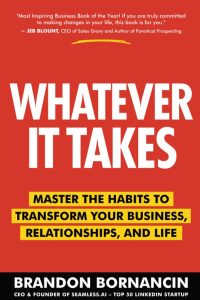
Whatever It Takes: Master the Habits to Transform Your Business, Relationships, and Life
I’m thinking about this. What you have will make room for you. Maybe through my music, maybe through my speaking. I have two speeches next month. I’m a public speaker now. All of this stuff and different opportunities have come up, but you focus on what I can do well? Again, writing. Again, the music, what can I do? I still have a master’s degree that will never go away. I can always save it and build these relationships.
Keep that in your back pocket.
Right now, I think it’s under my Bible. It’s like it’s just sitting. Look, you think I’m making this up. I just want to show you this. I really got to turn the camera around. I just want to show you this. It’s a deck of cards, my Bible, my master’s degree, and my bachelor’s degree. All of it is sitting here. Master’s and bachelor’s degree thing, because I work for that. I can lean on.
Here’s the problem, Keith. Like you had the genies out of the bottle. The toothpaste is out. You cannot put that toothpaste back in a bottle. There’s so much in this story of my fascination, Keith is with how underdogs win. That’s my whole jam. I’m just so grateful for the opportunity to have this conversation with you.
You embody so much of what I hear in these everyday entrepreneurs. It’s like people thinking to me, “Why did you get this musician on your podcast about the entrepreneurial mindset?” You’re going to have to listen to the podcast to find that out. What I see is a young man trying to figure out that it is such a natural thing. Trying to figure out how to use my gifts in a way that I can make myself useful.
Three people have told me something. Before my dad passed away, he told me this. This was in 2018. He said, “I may not live to see it, but you’re going to be a millionaire.” I’m working on my master’s degree in 2000. I graduated in December 2018 with my master’s degree. That same year, I got an African walked up to me.
I’m in the classroom, and I just get on my regular college clothes, and he said, “Are you a millionaire?” That guy from Africa, I’m like, “No.” He said, “The way you talk and the way you walk, you’re going to be a millionaire.” I don’t know his name. I don’t know anything about him. That’s the second time I heard it. I was having a conversation with a guy just like I’m talking to you. He said, “Keith Johnson, you’re mine. You have a million there, mine.
A million dollars will be easy for you to get. You’ll be able to make that in no time. Just keep doing what you’re doing.” I was like, “Okay.” I always kept that with me because basically, what my dad, what the African, and the other guy were talking to, all they were saying was, “You have something in you that you have to get out of the toothpaste to. When it’s released, I will say certain things I cannot go back to.”
A 9:00 to 5:00, I refuse to go back to that because I feel like I have so much to offer. My brain is so free to develop and grow, and create. I’m a ventriloquist. I do puppetry. I have three custom-made puppets from a guy who created the puppets for Sesame Street. He didn’t create them, but he made puppets for the show. Of course, we know who created them, Henson and the crew. I want to do so much. It’s the creative side, and it’s the writing side. I’m into it. I had real estate houses, all of which I want to get into. It’s the entrepreneurial mindset. I need your book in my life. I need this.
Here’s a little side thing. I’ll throw over the fence here. Linda keeps talking to me about “We need to make Ice House into a movie.” Somebody needs to make what do they call that, where you just sort of make a little slide deck, a treatment in a movie, because they call it a treatment? Somebody needs to make a treatment. Linda’s done amazing things with Ice House in prisons in Mississippi, man. I don’t know if you ever asked her.
She talks about it all the time. How she went to Parchment. She said that’s the worst prison that she has ever been to in her life. She talked about it.
Be Crazy To Try The Craziest Things Imaginable
Keith, if just Clifton ever told you the story about how he got his first book published?
He never told me the story, and we talk a lot.
I might not have all the details right, but he was in the Air Force during the Vietnam War.
He was in the Air Force with my grandfather, Willie Reed. I didn’t have a relationship with my grandfather like that. My dad’s father was like, “I know him. I was in the army and in the forces with him. There was the relationships were crazy.
Clifton told me I talked to him on Sunday. He was like, “I told him I was going to be talking to you today.” He was like, “That’s my kin.” Let me just tell you the story. We can end it here. He’s in the Air Force. He leaves the Delta because Uncle Cleve told him, like, “There is no future for you here. Go into the military or go to college. You’ve got to get out of here.” He’s in the Air Force, and he’s afraid.
Now he doesn’t know a dad. He’s been raised by a teen. He was born to a teenage mom. He’s been raised by his relatives. Now he’s at an Air Force base and up in the East somewhere, like in Massachusetts or something I forgot. He was writing stories about his childhood, like on pieces of paper. It was like an impulse. He wasn’t trying to be a writer. He said, “I thought there was a good chance I’m going to go off to Vietnam. I’m never going to come back.”
Once upon a time, we were colored.
Check this out. His bunkmate, who was a white dude, got a hold of it and started reading it and told him like, “Clifton, this is really good. If we ever get out of this jackpot, this mess. You should think about becoming a writer.” He had never thought about it. He got rejected hundreds of times before that book over like over 10 or 15 years.
When we launched Ice House at a big conference in Portland, Oregon, in 2010, the Ice House book, that dude who was his bunkmate, is the chief justice of the Supreme Court in Oregon. They’re besties to this day. They went to each other’s weddings as best men. The dude shows up at the conference with like security guards around him. He’s got the original copy of Once Upon a Time. Keith, they’re in a dry eye in the house. That’s how we lost the ice house book. I’m just telling you.
You just never know.
Get In Touch With Keith
You’ve got to keep pushing out. You’ve got to step into your arena. You don’t know where it’s going to go. You’ve got to step into it. You’ve got to try stuff. You got it. You cannot be crazy, but you have to try stuff, and you don’t know. Most of it doesn’t work, but sometimes it does. People call you lucky. Keith, I don’t want to I don’t want to keep you here all day. I’m just so grateful for your willingness to share your story. I know this is going to inspire some people. Can you tell us a little bit about how people can get hold of you? They want to hire you to do public speaking. You want to hire your band.
The best thing for me is to email KJ139360@gmail.com, and there’s consulting work, there’s public speaking, whether I’m talking HR personnel, whether I’m talking blues, or telling my story or the story of blues guys, my journey in Glen Alley, Mississippi, through college to perform those historical songs, telling the muddy water story. Doing my muddy water tribute shows. I also do a history of the blues presentation from the early mid-1800s to up until today, from African music to talking about the latest artists today. I have like a twenty-slide presentation, and I do demonstrations through that. You can contact me, (662) 588-3603. Email KJ139360@gmail.com and just ask for Keith Johnson.
The Song That Changed Keith’s Life Forever
Keith, one last thing I want to ask of you. Do you remember what the song that you were singing in the living room when you were a little kid, when your grandmother noticed us, noticed your your ability? Do you remember the song?
I remember the song. It’s by The Candon Spirituals. It’s called Searching.
Can you say a couple of bars of that song before we get off?
It would start off, “I’ve been searching for a long time. I knew that it was something that I had to find. You should have seen me waving my hands and crying because it was all because I couldn’t find peace of mind. It was then that I knelt to pray. I said, Lord, will you show me the way? Show me the way.”
Thank you so much, Keith.
Also, I have a mini harmonica necklace that I always wear too. When people ask for solos, I play my mini harmonica necklace.
Thank you, Keith.
Thank you. I appreciate it. I’m happy to be here, and I’ll be back.
Important Links
- Keith Johnson on Instagram
- Keith Johnson on Facebook
- KJ139360@gmail.com
- Who Owns the Ice House?
- Freeman: Opening the Case
- The Wolf of Wall Street
- Whatever It Takes